
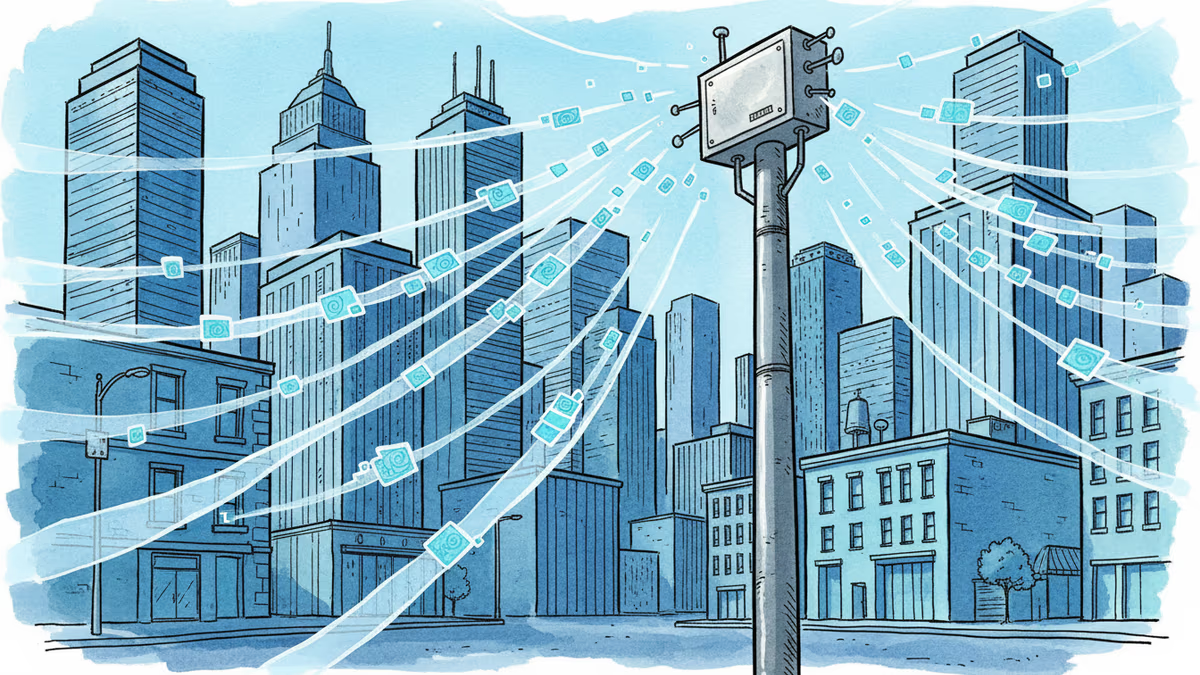
Google Spinoff Taara Shoots Internet Through Light Beams
Taara launches city-focused Beam device delivering 25Gbps internet via invisible light beams, challenging traditional fiber infrastructure with rapid deployment
25Gbps Internet Beams Shot From Street Poles
Google's former "moonshot" project Taara just made urban internet infrastructure interesting again. Their new Taara Beam device—roughly shoebox-sized—delivers 25Gbps internet speeds across up to 10km using invisible light beams. Mount it on a street pole or rooftop, and you're connected.
While previous Taara products connected remote communities across 20km of mountains and water, Beam targets dense urban connectivity. At 8kg and consuming just 90W, it promises fiber-like performance without the fiber-like hassle.
The timing isn't coincidental. As cities struggle with $billions in fiber deployment costs and months-long installation timelines, Taara's "point-and-shoot" approach offers a compelling alternative.
Telecom Giants: Intrigued but Cautious
Major telecom providers are watching closely, but reactions are mixed. For companies like Verizon and AT&T that have invested heavily in 5G infrastructure, Taara represents both opportunity and threat.
"It's brilliant for backhaul connections between cell towers," notes one industry analyst. "But weather dependency makes it unsuitable as primary infrastructure." The technology shines in scenarios where traditional fiber deployment is costly or impractical—think temporary events, disaster recovery, or rapidly developing areas.
European operators seem more receptive, particularly for connecting hard-to-reach locations where fiber installation faces regulatory hurdles or geographic challenges.
The Real Infrastructure Battle

Taara's pitch is seductive: weeks of construction become days of installation. But the reality is more nuanced.
The Promise:
- Rapid deployment (days vs. months)
- Lower upfront costs
- No trenching or permits
- Flexibility for temporary needs
The Reality Check:
- Weather disrupts service
- Line-of-sight requirements
- Unproven long-term reliability
- Limited to complementary role
Smart city planners are the most enthusiastic early adopters. For connecting sensors, cameras, and IoT devices across urban areas, Taara's speed advantage over wireless and cost advantage over fiber creates a compelling middle ground.
Investment Implications: Niche or Game-Changer?
Taara's market positioning reveals a broader shift in infrastructure thinking. Rather than competing head-to-head with established fiber networks, they're creating a new category: rapid-deployment connectivity.
This matters for investors watching the $500 billion global telecom infrastructure market. Companies that can solve the "last mile" problem faster and cheaper will capture significant value, even if they don't replace existing infrastructure entirely.
The question isn't whether light-based internet will replace fiber—it won't. The question is how large the market becomes for situations where speed of deployment matters more than permanence of installation.
Authors
Related Articles

A bizarre Microsoft network anomaly routed test traffic to a Japanese cable company, exposing how fragile internet infrastructure can create unexpected security risks.

Samsung Electronics' union branch revealed that 84% of survey respondents oppose the government's roughly $290 billion (₩400 trillion) semiconductor megaproject in Gwangju. Government, management, the union and shareholders are all reading the same national project in sharply different ways.
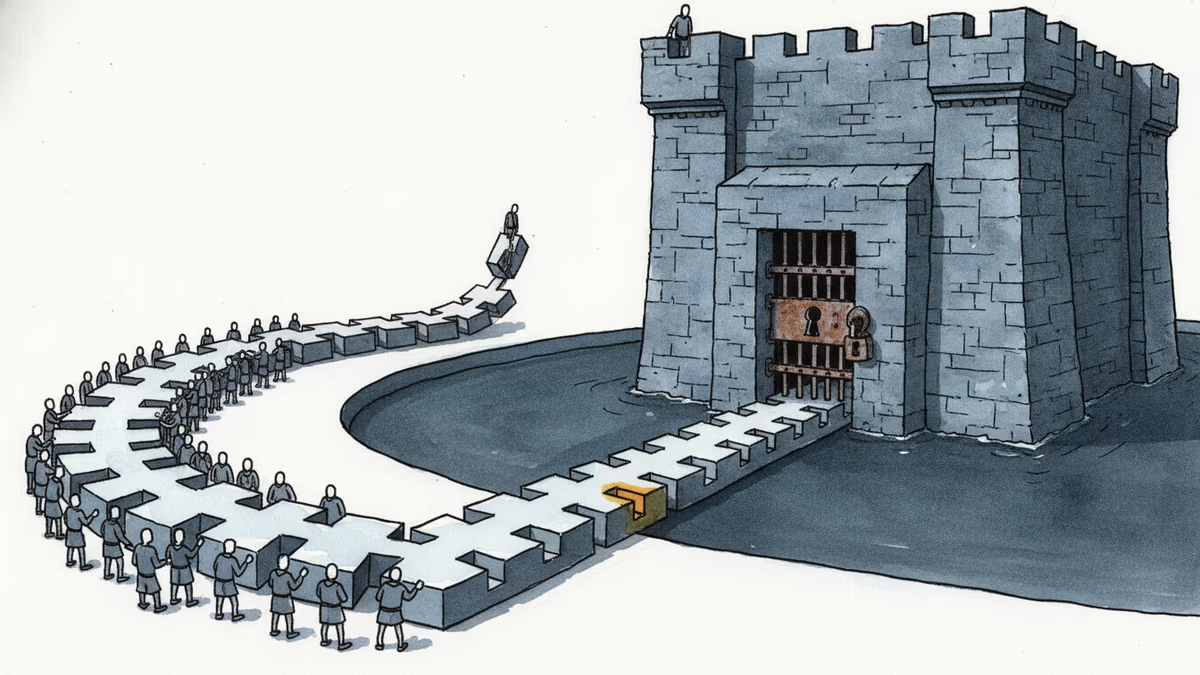
Nvidia shipped roughly a billion RISC-V cores in 2024, then announced it would run CUDA on the open standard. We break down how royalty-free instruction sets and open software stacks are trying to route around CUDA's lock-in. Part 2 of the Semiconductor Sovereignty series.
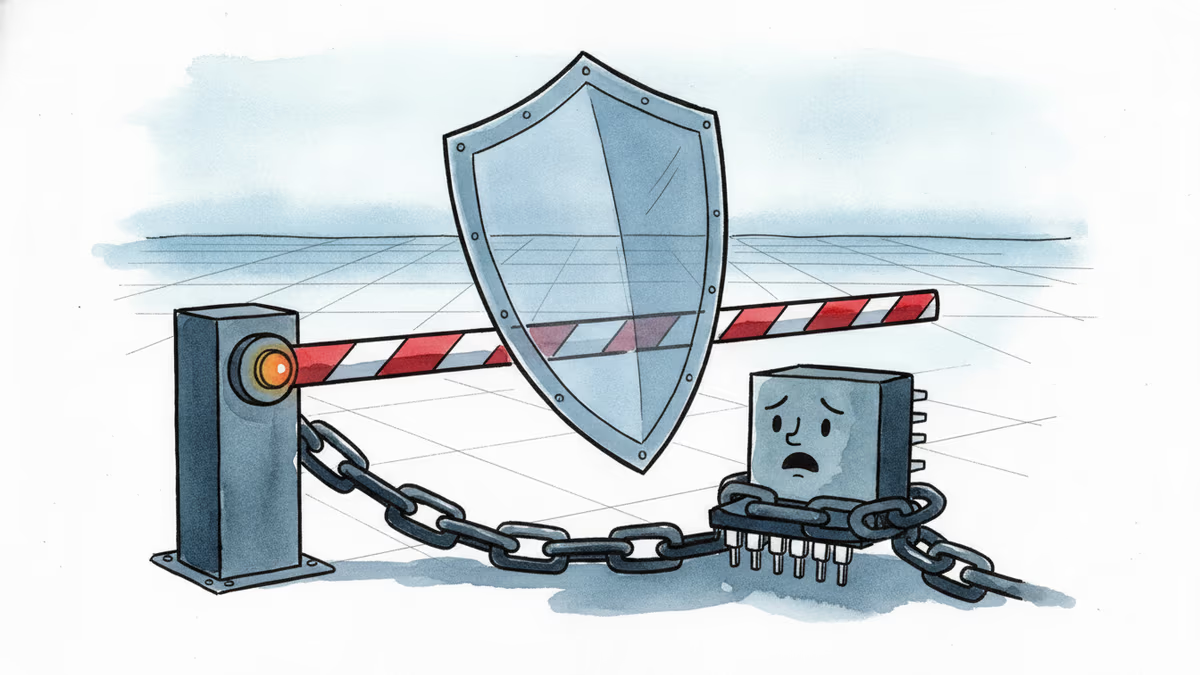
US AI-chip export controls split into three layers in the first half of 2026 — January easing, a May crackdown on circumvention, and a pending bill. Nvidia erased China from its guidance and still posted a record $81.6 billion quarter. A look at the export policy that both shields and cages it.
A bizarre Microsoft network anomaly routed test traffic to a Japanese cable company, exposing how fragile internet infrastructure can create unexpected security risks.
Samsung Electronics' union branch revealed that 84% of survey respondents oppose the government's roughly $290 billion (₩400 trillion) semiconductor megaproject in Gwangju. Government, management, the union and shareholders are all reading the same national project in sharply different ways.
Nvidia shipped roughly a billion RISC-V cores in 2024, then announced it would run CUDA on the open standard. We break down how royalty-free instruction sets and open software stacks are trying to route around CUDA's lock-in. Part 2 of the Semiconductor Sovereignty series.
US AI-chip export controls split into three layers in the first half of 2026 — January easing, a May crackdown on circumvention, and a pending bill. Nvidia erased China from its guidance and still posted a record $81.6 billion quarter. A look at the export policy that both shields and cages it.
Thoughts
Share your thoughts on this article
Sign in to join the conversation