

Google AI Overviews Health Risks Investigation: Why AI Medical Advice Could Be Fatal
Google pulls several AI Overviews health summaries after a Guardian investigation finds dangerous misinformation on liver tests and cancer care. Experts warn of fatal consequences.
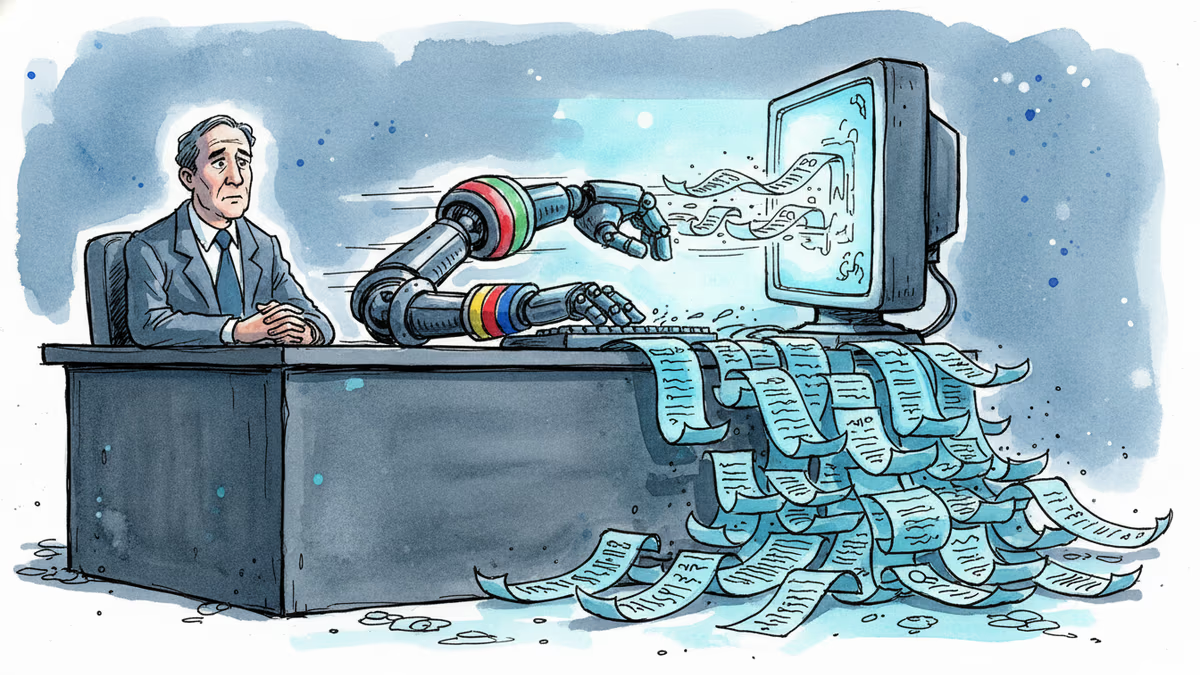
AI says you're fine, but the doctor says otherwise. Google just pulled some of its AI Overviews health summaries after a Guardian investigation revealed that the feature was serving up life-threatening misinformation. For seriously ill patients, these AI-generated shortcuts aren't just convenient—they're dangerously misleading.
Why Google AI Overviews Failed the Health Test
The core of the issue lies in how Generative AI processes raw data without medical context. When users searched for liver blood test norms, the AI provided tables of enzymes like ALT and AST without adjusting for age, sex, or ethnicity. Experts warn that what the AI labels as 'normal' could actually indicate a severe condition for certain demographics, potentially leading patients to skip urgent follow-up care.
The investigation also uncovered a critical error regarding pancreatic cancer care. The AI suggested that patients avoid high-fat foods, directly contradicting standard medical guidance which emphasizes calorie-dense diets to prevent dangerous weight loss in cancer patients. Such advice isn't just a glitch; it's a direct threat to patient health.

The Gap Between Raw Data and Medical Context
In response to the backlash, Google deactivated summaries for liver test queries. However, they've been criticized for a 'whack-a-mole' approach, leaving other questionable health advice live on the platform. The company maintains it's working on improvements, yet the incident highlights the inherent risks of deploying unvetted LLMs in high-stakes environments like healthcare.
Authors
Related Articles

In a post-Google I/O interview, Sundar Pichai acknowledged flawed search results, real AI anxiety, and an AGI timeline that makes the label irrelevant. Here's what he said — and what it means.
Google is building AI agents that search the web proactively, without user prompting. That's not just a product update — it's a fundamental shift in who controls the information you receive.

Google unveiled the 'Googlebook' platform to replace Chromebook and ChromeOS—but revealed zero hardware specs. What's the strategy, and what does it mean for users, manufacturers, and the education market?

After 15 years of fragmented mobile messaging, Apple and Google are rolling out end-to-end encrypted RCS messaging between iPhones and Android devices. Here's what changed, why it took so long, and what it means for your privacy.
In a post-Google I/O interview, Sundar Pichai acknowledged flawed search results, real AI anxiety, and an AGI timeline that makes the label irrelevant. Here's what he said — and what it means.
Google is building AI agents that search the web proactively, without user prompting. That's not just a product update — it's a fundamental shift in who controls the information you receive.
Google unveiled the 'Googlebook' platform to replace Chromebook and ChromeOS—but revealed zero hardware specs. What's the strategy, and what does it mean for users, manufacturers, and the education market?
After 15 years of fragmented mobile messaging, Apple and Google are rolling out end-to-end encrypted RCS messaging between iPhones and Android devices. Here's what changed, why it took so long, and what it means for your privacy.
Thoughts
Share your thoughts on this article
Sign in to join the conversation