

Google Pixel 10 eSIM Transition: Why the Death of the Physical SIM Stings
The Google Pixel 10 eSIM transition marks the end of the physical SIM era. Learn about the history of SIM cards, the space-saving benefits of eSIM, and the UX challenges ahead.
Your smartphone's oldest component is officially on life support. With the release of the Google Pixel 10 series, the tech giant has followed in the footsteps of rivals by ditching the physical SIM slot in favor of eSIM. While manufacturers praise the extra internal space, early adopters are finding the transition far from seamless.
The Google Pixel 10 eSIM Transition Roadmap
SIM cards have been with us since the 1990s, evolving from credit-card-sized plastic chunks to the tiny nanoSIM. However, modern smartphones are incredibly crowded inside. According to industry reports, removing the physical tray saves up to 50% of the space compared to a traditional slot, allowing for larger batteries or improved cooling systems.

- The eSIM standard, introduced in 2016, is a programmable chip soldered directly to the board.
- It prevents thieves from simply swapping your SIM card to bypass security.
- It allows users to store multiple profiles and switch carriers via software.
User Experience: The Hidden Friction
Despite the technical advantages, many users regret the loss of the physical card. Swapping a phone currently involves navigating carrier apps and waiting for digital activation codes rather than a simple 5-second physical swap. This friction point is the biggest hurdle for the Google Pixel 10 as it forces a new behavioral pattern on long-time Android fans.
Authors
Related Articles

In a post-Google I/O interview, Sundar Pichai acknowledged flawed search results, real AI anxiety, and an AGI timeline that makes the label irrelevant. Here's what he said — and what it means.
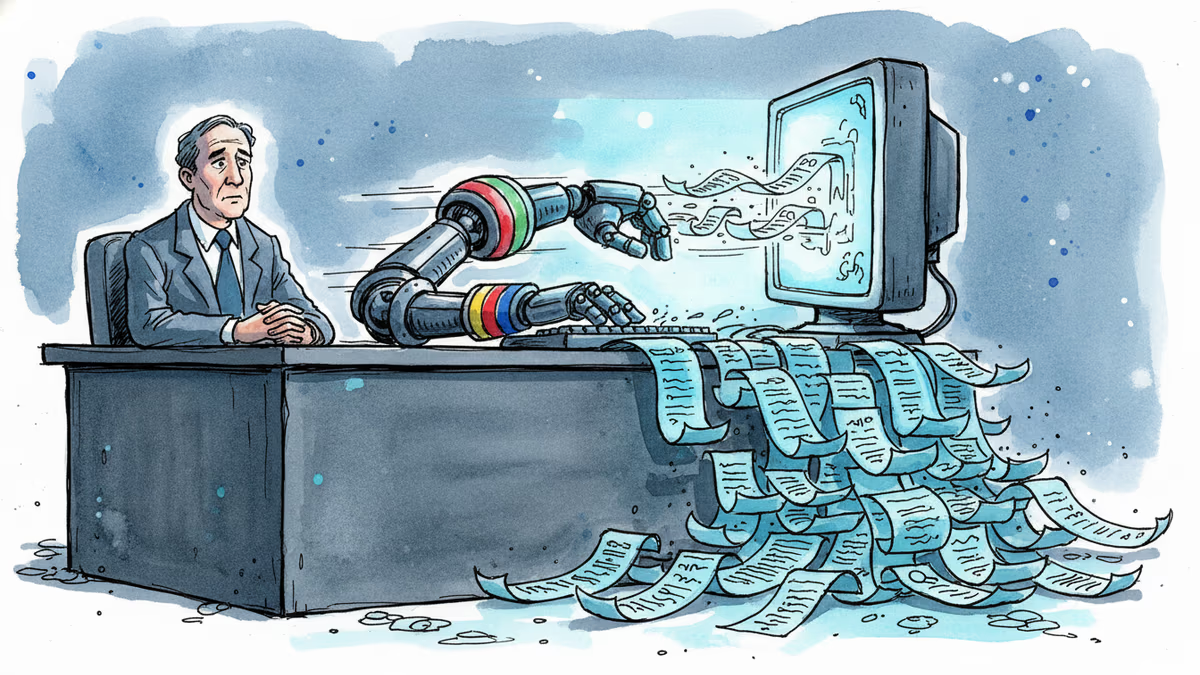
Google is building AI agents that search the web proactively, without user prompting. That's not just a product update — it's a fundamental shift in who controls the information you receive.
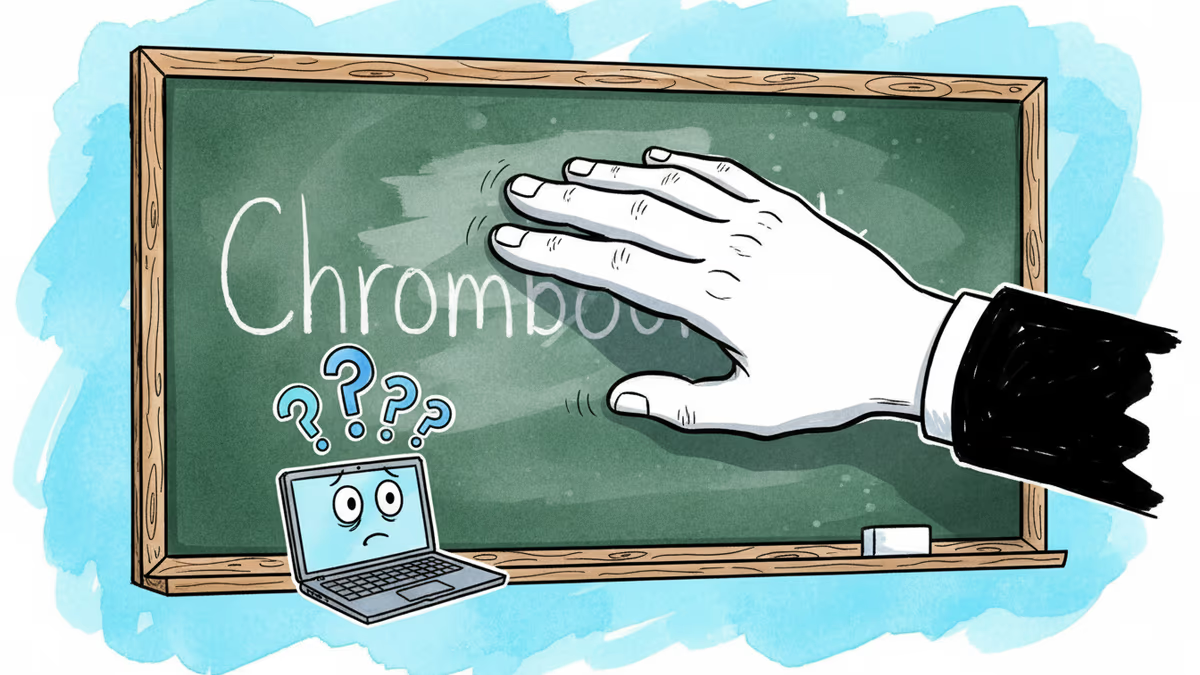
Google unveiled the 'Googlebook' platform to replace Chromebook and ChromeOS—but revealed zero hardware specs. What's the strategy, and what does it mean for users, manufacturers, and the education market?
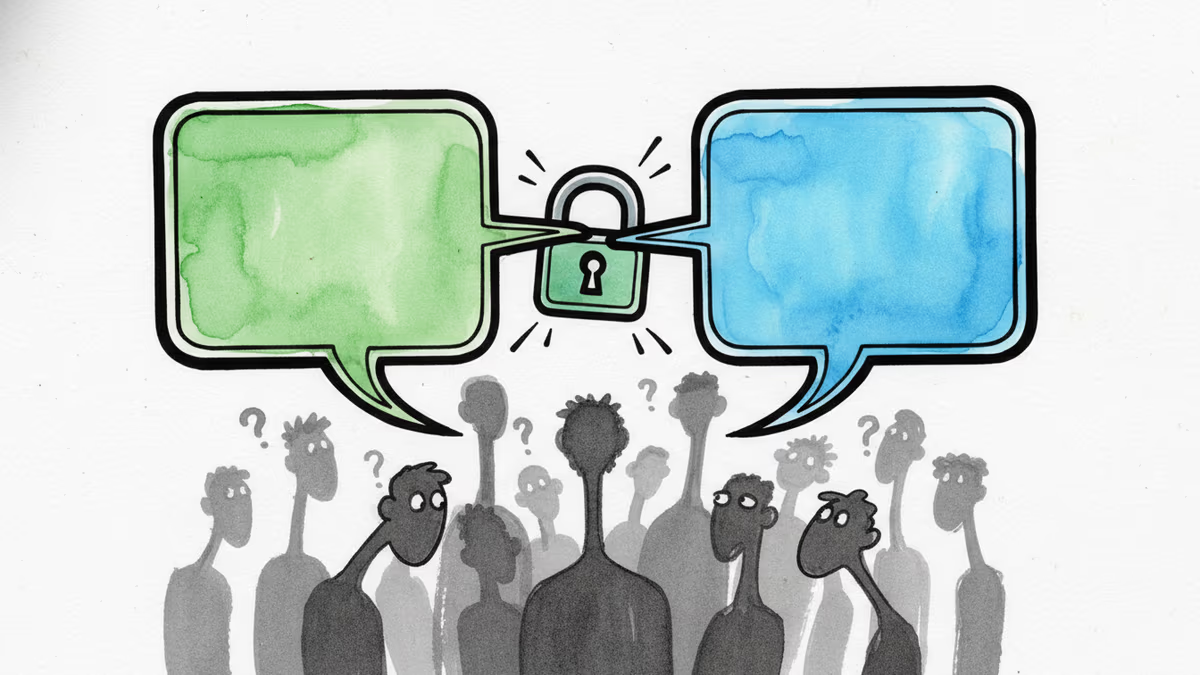
After 15 years of fragmented mobile messaging, Apple and Google are rolling out end-to-end encrypted RCS messaging between iPhones and Android devices. Here's what changed, why it took so long, and what it means for your privacy.
In a post-Google I/O interview, Sundar Pichai acknowledged flawed search results, real AI anxiety, and an AGI timeline that makes the label irrelevant. Here's what he said — and what it means.
Google is building AI agents that search the web proactively, without user prompting. That's not just a product update — it's a fundamental shift in who controls the information you receive.
Google unveiled the 'Googlebook' platform to replace Chromebook and ChromeOS—but revealed zero hardware specs. What's the strategy, and what does it mean for users, manufacturers, and the education market?
After 15 years of fragmented mobile messaging, Apple and Google are rolling out end-to-end encrypted RCS messaging between iPhones and Android devices. Here's what changed, why it took so long, and what it means for your privacy.
Thoughts
Share your thoughts on this article
Sign in to join the conversation