
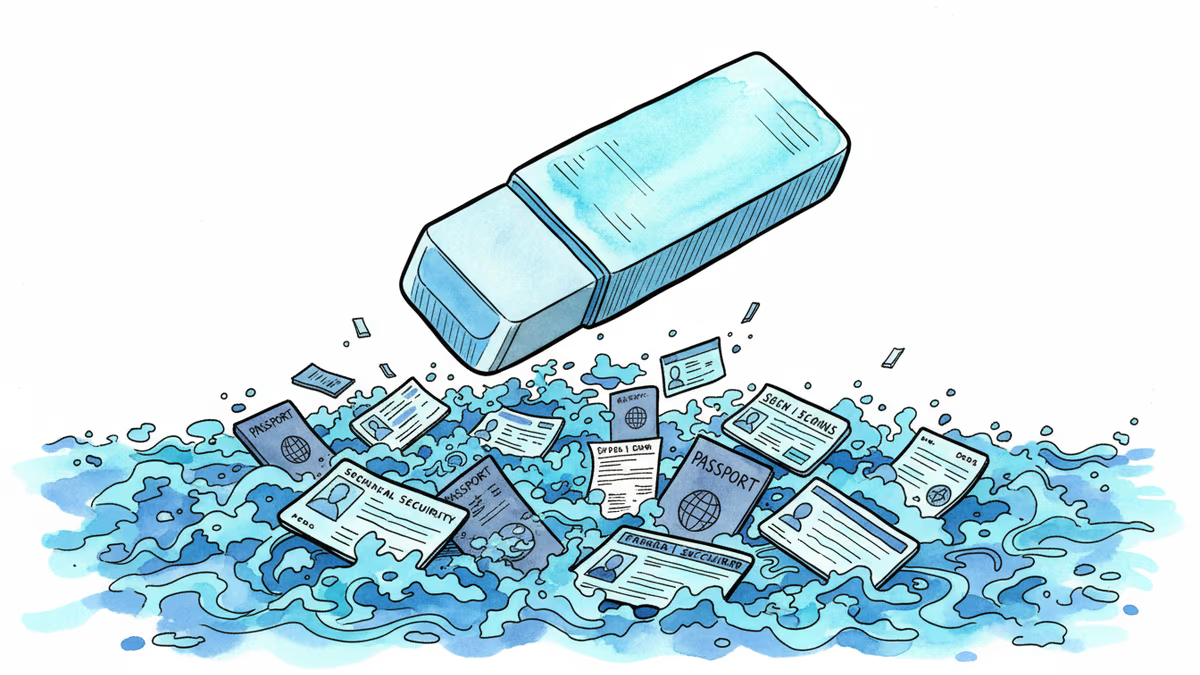
Google Will Now Delete Your Social Security Number From Search
Google expands personal info removal tools to include driver's license, passport, and SSN deletion from search results. A privacy breakthrough or just damage control?
Your Most Sensitive Data Is One Search Away
What if your Social Security number, passport details, or driver's license appeared in Google search results tomorrow? For millions of Americans, this isn't a hypothetical scenario—it's reality.
Google announced Tuesday it's dramatically expanding its "results about you" tool, now allowing users to request removal of driver's license numbers, passport information, and Social Security numbers from search results. Previously, the tool only covered phone numbers and home addresses.
The process is straightforward: enter your sensitive information into Google's encrypted tool, and it'll surface search results containing your data while offering removal options. Users can also sign up for notifications when new instances are detected.
The Data Breach Aftermath Economy
This expansion comes as data breaches have become a $4.45 million average cost per incident, according to IBM's latest report. When major breaches expose millions of records, that sensitive data doesn't just disappear—it often ends up indexed by search engines, creating a permanent digital trail.
Unlike a credit card number you can cancel, your Social Security number is forever. Once it's out there, it's out there. This creates a new category of digital vulnerability that traditional cybersecurity can't address.

But here's the catch: Google's tool only removes results from Google search. Your data could still appear on Bing, DuckDuckGo, or countless other platforms. It's digital whack-a-mole with life-altering stakes.
Privacy Tool or Regulatory Shield?
The timing is telling. Google controls over 91% of global search traffic, and regulators worldwide are scrutinizing big tech's data practices more aggressively than ever. The EU's GDPR "right to be forgotten" has already forced Google to process millions of removal requests.
Privacy advocates see this as overdue progress. "It's a step in the right direction, but it shouldn't have taken this long," says Electronic Frontier Foundation attorney Jennifer Lynch. Critics, however, argue it's reactive damage control rather than proactive privacy protection.
Meanwhile, cybersecurity professionals point out a fundamental flaw: the tool requires you to give Google more of your sensitive data to protect your sensitive data. The irony isn't lost on anyone.
The Bigger Privacy Paradox
This announcement highlights a troubling shift in how we think about digital privacy. We've moved from "prevent data exposure" to "manage data exposure after it happens." It's like building better ambulances instead of safer roads.
Consider the implications: if Google needs specialized tools to help you remove your own information from the internet, what does that say about our current digital ecosystem? We're essentially paying the price for a surveillance economy built on data collection and retention.
Authors
Related Articles
In a post-Google I/O interview, Sundar Pichai acknowledged flawed search results, real AI anxiety, and an AGI timeline that makes the label irrelevant. Here's what he said — and what it means.
The FTC fined Cox Media and two ad firms $930,000 — not for actually eavesdropping on users, but for falsely claiming they could. The case raises uncomfortable questions about surveillance capitalism.

Google is building AI agents that search the web proactively, without user prompting. That's not just a product update — it's a fundamental shift in who controls the information you receive.
A Utah woman was sentenced to life in prison partly because of her Google searches and deleted texts. The Kouri Richins case reveals how digital footprints have become the courtroom's most reliable witness.
In a post-Google I/O interview, Sundar Pichai acknowledged flawed search results, real AI anxiety, and an AGI timeline that makes the label irrelevant. Here's what he said — and what it means.
The FTC fined Cox Media and two ad firms $930,000 — not for actually eavesdropping on users, but for falsely claiming they could. The case raises uncomfortable questions about surveillance capitalism.
Google is building AI agents that search the web proactively, without user prompting. That's not just a product update — it's a fundamental shift in who controls the information you receive.
A Utah woman was sentenced to life in prison partly because of her Google searches and deleted texts. The Kouri Richins case reveals how digital footprints have become the courtroom's most reliable witness.
Thoughts
Share your thoughts on this article
Sign in to join the conversation