

Google Just Unlocked Its Universal Translator—And It’s a Direct Shot at Apple's Walled Garden
Google's update to Translate is more than a feature; it's a strategic attack on Apple's ecosystem. Discover why freeing AI from hardware changes the game.
The Lede: The AI War Just Left the Data Center and Entered Your Earbuds
Google's recent update to its Translate app, allowing real-time audio translation on any Android-connected headphones, is far more than a simple feature enhancement. It's a calculated strategic move that weaponizes software to dismantle a key pillar of Apple's hardware ecosystem. While the news focuses on convenience for travelers, the real story is Google's aggressive pivot in the AI platform wars: prioritizing the mass-market ubiquity of its Gemini AI over the niche, hardware-locked approach favored by Apple. This isn't about selling more Pixel Buds; it's about making Google's AI the inescapable, ambient intelligence layer for billions of users.
Why It Matters: De-Coupling AI from Hardware
For years, the tech playbook has been to use unique software features to sell high-margin hardware. Apple perfected this model, making features like Live Translation exclusive to its AirPods to reinforce the value of its ecosystem. Google's decision to decouple this 'magical' AI experience from its own Pixel Buds shatters that model. This has critical second-order effects:
- It Commoditizes the Hardware Interface: By making the core value (AI translation) accessible through any $20 earbuds, Google declares that the listening device is merely a conduit. The 'magic' is in the cloud, powered by Gemini, not in the proprietary chip inside a premium accessory.
- It Redefines the Competitive Arena: The battle is no longer just about phone vs. phone or earbuds vs. earbuds. It's about which AI ecosystem you live in. Google is betting that providing a killer app for free to everyone will embed its AI more deeply into daily life than Apple can by restricting it to paying hardware customers.
- It Pressurizes Apple's Strategy: Apple now faces a difficult choice. Does it maintain its hardware-exclusive strategy, potentially appearing restrictive and lagging in the race for AI ubiquity? Or does it follow suit and risk devaluing one of the key selling points for its highly profitable AirPods?
The Analysis: An 'Open' Ecosystem Attack on a 'Closed' Fortress

The Gemini Trojan Horse
This move is a classic Google strategy, echoing the playbook of Android and Search. Instead of trying to out-compete Apple on premium hardware integration, Google is leveraging its scale and AI prowess to create an indispensable service that works everywhere. Live translation is the perfect 'Trojan Horse' for its Gemini AI. It's a feature with a clear, powerful benefit that demonstrates the capability of Google's AI in a very personal way. By offering this on a massive, open scale, Google aims to achieve two goals:
- Massive User Onboarding: Every user who experiences seamless translation on their generic headphones is being onboarded into the Gemini ecosystem, whether they realize it or not.
- Rich Data Acquisition: Real-world conversational data from diverse accents, languages, and environments is rocket fuel for improving AI models. This open approach provides a data pipeline that a closed ecosystem can't match.
The Coming 'Ambient AI' Platform War
This is not just about translation. It's a glimpse into the future of 'ambient computing,' where AI assistance is seamlessly integrated into our surroundings. Google's strategy suggests a future where its AI is an omnipresent utility, accessible through any number of third-party devices. Apple's current path points toward a future where its AI is a premium experience, tightly controlled within its own hardware. By freeing Translate, Google is placing a strategic bet that in the AI era, openness and ubiquity will ultimately triumph over a closed, premium ecosystem.
PRISM's Take
Google's decision to unbundle live translation from its hardware is not an act of generosity; it is a declaration of war on the hardware-centric, walled-garden strategy that Apple has masterfully executed for over a decade. By prioritizing the mass adoption of its Gemini AI over short-term accessory sales, Google is playing a long game to become the world's default intelligence layer. This move forces the entire industry, especially Cupertino, to confront an uncomfortable question: In the age of AI, is your ecosystem a fortress that protects value, or a cage that limits scale?
This content is AI-generated based on source articles. While we strive for accuracy, errors may occur. We recommend verifying with the original source.
Related Articles

Google's Live Translate now works on iOS and in 12 countries, turning any headphones into a real-time translation device powered by Gemini AI. Here's what it means beyond the convenience.
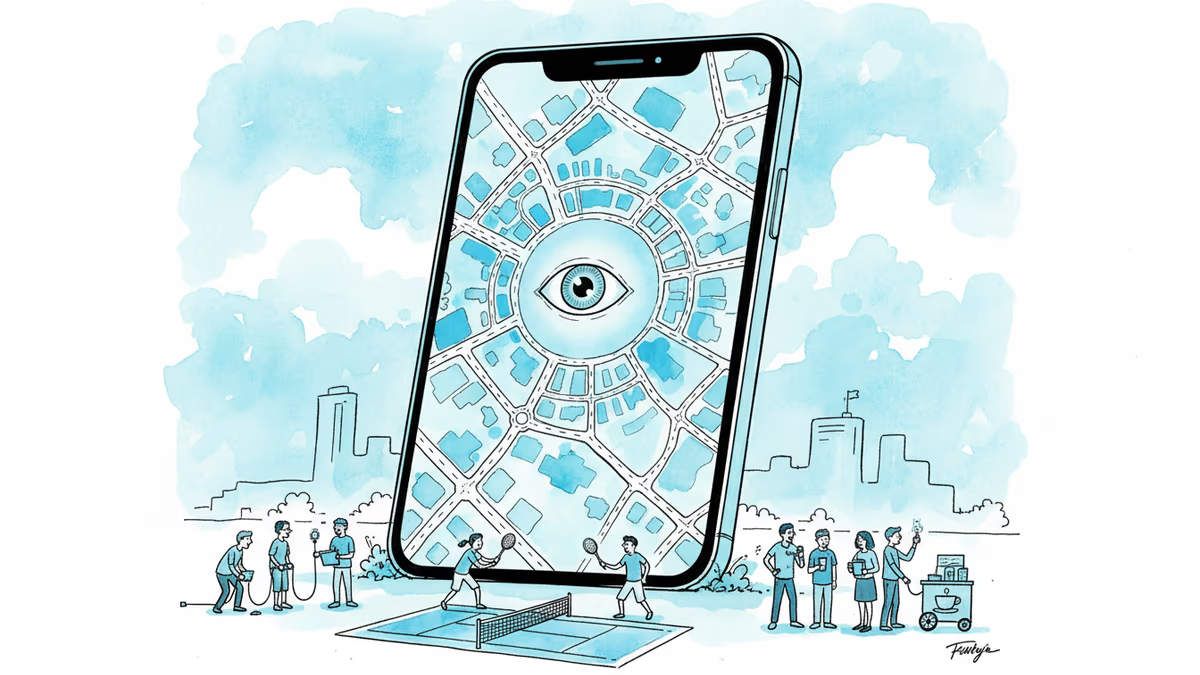
Google Maps' new Gemini-powered Ask Maps and Immersive Navigation features promise to turn the app into a conversational AI agent. But smarter maps mean deeper data collection.
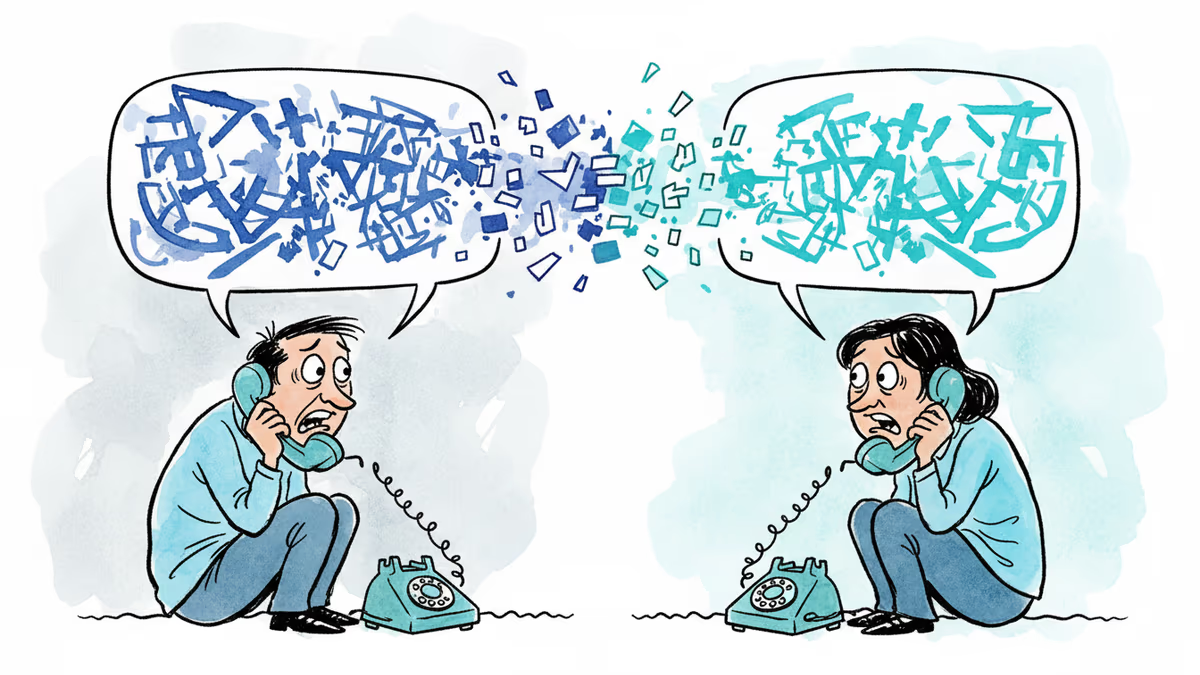
T-Mobile launches Live Translation beta for real-time phone call translation in 50+ languages, built directly into the network infrastructure.
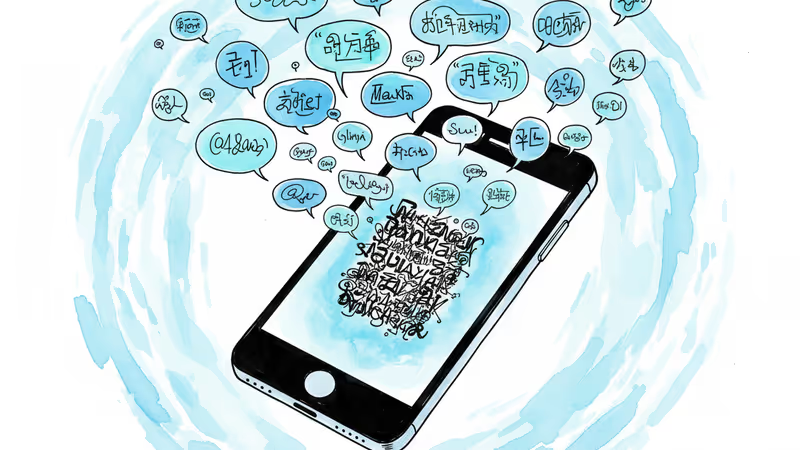
Mistral AI releases tiny speech-to-text models that run locally on phones, processing 13 languages in real-time without cloud dependency. A game-changer for privacy and accessibility?
Google's Live Translate now works on iOS and in 12 countries, turning any headphones into a real-time translation device powered by Gemini AI. Here's what it means beyond the convenience.
Google Maps' new Gemini-powered Ask Maps and Immersive Navigation features promise to turn the app into a conversational AI agent. But smarter maps mean deeper data collection.
T-Mobile launches Live Translation beta for real-time phone call translation in 50+ languages, built directly into the network infrastructure.
Mistral AI releases tiny speech-to-text models that run locally on phones, processing 13 languages in real-time without cloud dependency. A game-changer for privacy and accessibility?
Thoughts
Share your thoughts on this article
Sign in to join the conversation