

Google Gmail Address Change 2025: Say Goodbye to Your Cringe ID
Google is reportedly launching the 'Google Gmail address change 2025' feature, letting users swap their IDs while keeping all data. Learn about the 12-month rule and alias system.
Tired of that embarrassing email address you created a decade ago? You may soon be able to swap it for a professional one without losing a single message. Google is reportedly preparing a feature that allows a seamless Gmail address transition.
Google Gmail Address Change 2025: Breaking the Shackles
According to 9to5Google, a Hindi version of the Google support site has revealed that the company is gradually rolling out the ability to change the email address tied to an account. This marks a significant departure from the long-standing rule that @gmail.com addresses were permanent and unchangeable.

How the Transition Works
If you make the switch, your old address won't vanish. Instead, it becomes an alias, ensuring you still receive emails sent to your previous handle. You'll be able to sign into Google services using either the new or old address. However, there's a catch: once you change it, you're locked out of creating additional addresses for a 12-month period.
Authors
Related Articles
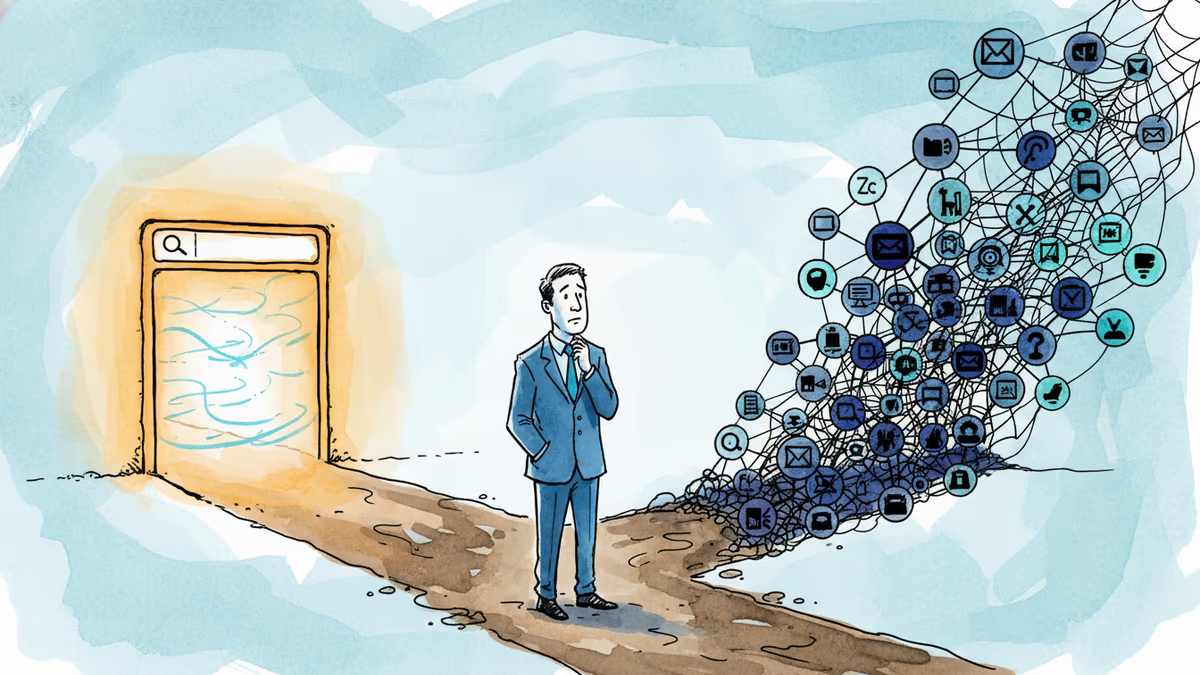
In a post-Google I/O interview, Sundar Pichai acknowledged flawed search results, real AI anxiety, and an AGI timeline that makes the label irrelevant. Here's what he said — and what it means.
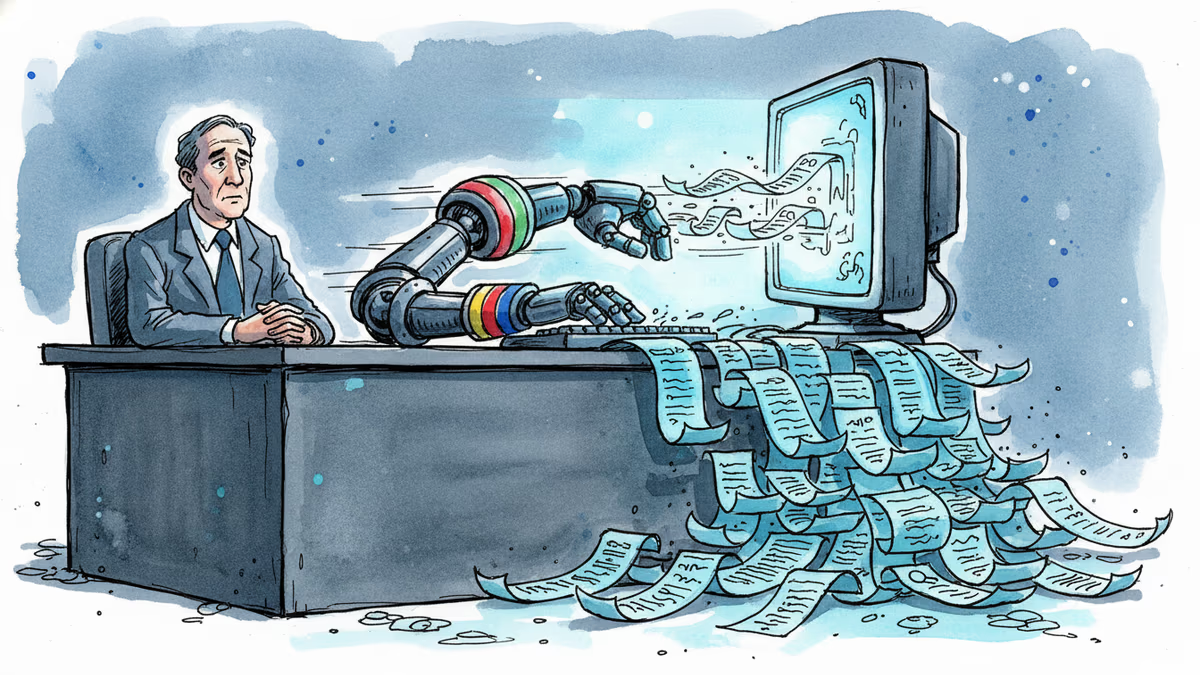
Google is building AI agents that search the web proactively, without user prompting. That's not just a product update — it's a fundamental shift in who controls the information you receive.

Google's Gmail Live lets you ask your inbox questions out loud. Announced at I/O 2026, it's AI's pitch to skeptics — and a reminder of how much Google already knows about you.
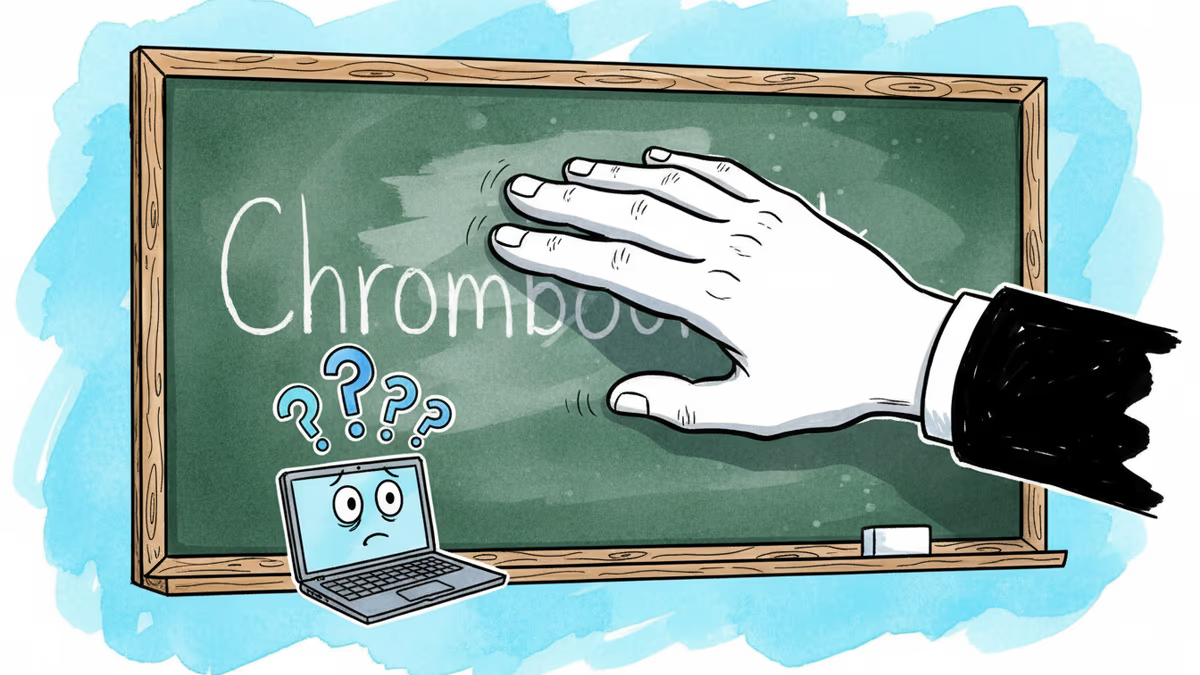
Google unveiled the 'Googlebook' platform to replace Chromebook and ChromeOS—but revealed zero hardware specs. What's the strategy, and what does it mean for users, manufacturers, and the education market?
In a post-Google I/O interview, Sundar Pichai acknowledged flawed search results, real AI anxiety, and an AGI timeline that makes the label irrelevant. Here's what he said — and what it means.
Google is building AI agents that search the web proactively, without user prompting. That's not just a product update — it's a fundamental shift in who controls the information you receive.
Google's Gmail Live lets you ask your inbox questions out loud. Announced at I/O 2026, it's AI's pitch to skeptics — and a reminder of how much Google already knows about you.
Google unveiled the 'Googlebook' platform to replace Chromebook and ChromeOS—but revealed zero hardware specs. What's the strategy, and what does it mean for users, manufacturers, and the education market?
Thoughts
Share your thoughts on this article
Sign in to join the conversation