
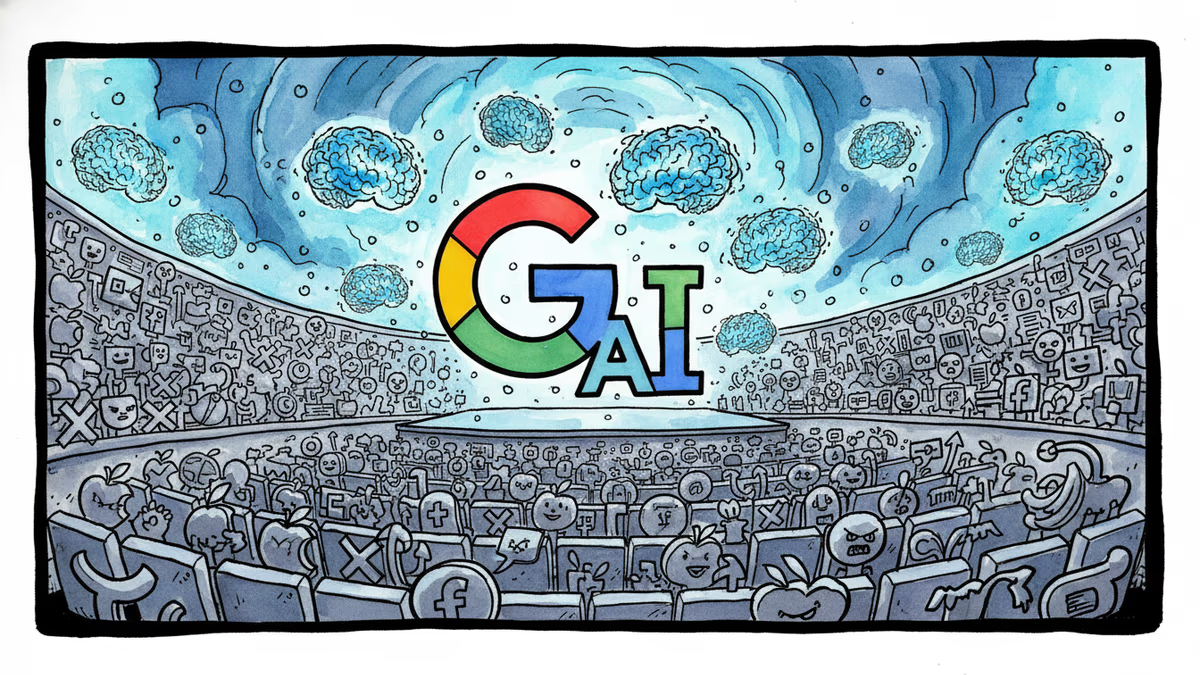
Google I/O 2026: The Battle for AI's Next Chapter
Google announces I/O 2026 for May 19-20, promising major AI breakthroughs across Gemini and Android. What this means for developers, competitors, and the future of AI integration.
240 Days Until Silicon Valley's Biggest AI Showdown
Google made it official Tuesday: I/O 2026 hits California's Shoreline Amphitheatre on May 19-20. The promise? "Latest AI breakthroughs and updates across the company, from Gemini to Android and more." Translation: Google's preparing to throw everything it's got at the AI wars.
This isn't just another developer conference announcement. With OpenAI breathing down their necks and Meta going full open-source, Google needs I/O 2026 to be more than impressive—it needs to be decisive.
What Developers Are Really Waiting For
The developer community's buzz isn't about keynote theatrics. It's about three things: Android AI integration, Gemini API pricing, and whether Google can finally deliver on its "AI-first" promises without breaking existing workflows.
Early rumors suggest Google might announce deeper Gemini integration into Android at the OS level. That's huge. We're talking about AI becoming as fundamental to your phone as the home button once was.
But here's the tension: developers want powerful AI tools, but they also want predictable costs and reliable performance. Google's track record on both fronts has been... mixed.

The Competitive Reality Check
Let's be honest about Google's position. Despite having some of the world's best AI researchers, ChatGPT still dominates mindshare. Claude is winning over developers with reliability. And Meta's open-source Llama models are eating into enterprise adoption.
Google's advantage? 2 billion Android devices. No other company can push AI features directly to that many pockets worldwide. The question is whether they'll use that power wisely or squander it with half-baked integrations.
Industry insiders expect I/O 2026 to showcase "AI-native Android"—not just AI apps, but AI as the foundation of how we interact with our devices. If Google pulls this off, it could reshape mobile computing entirely.
The Stakes Beyond Silicon Valley
This isn't just about tech giants trading blows. Small developers, startups, and enterprises worldwide are making billion-dollar bets on which AI platform will dominate. Choose wrong, and you're rebuilding your entire stack in two years.
Regulators are watching too. The deeper Google embeds AI into Android, the louder the antitrust concerns will get. Especially in Europe, where the Digital Markets Act is already reshaping how big tech operates.
The answer might determine not just Google's future, but the future of how billions of people interact with technology every day.
Authors
Related Articles
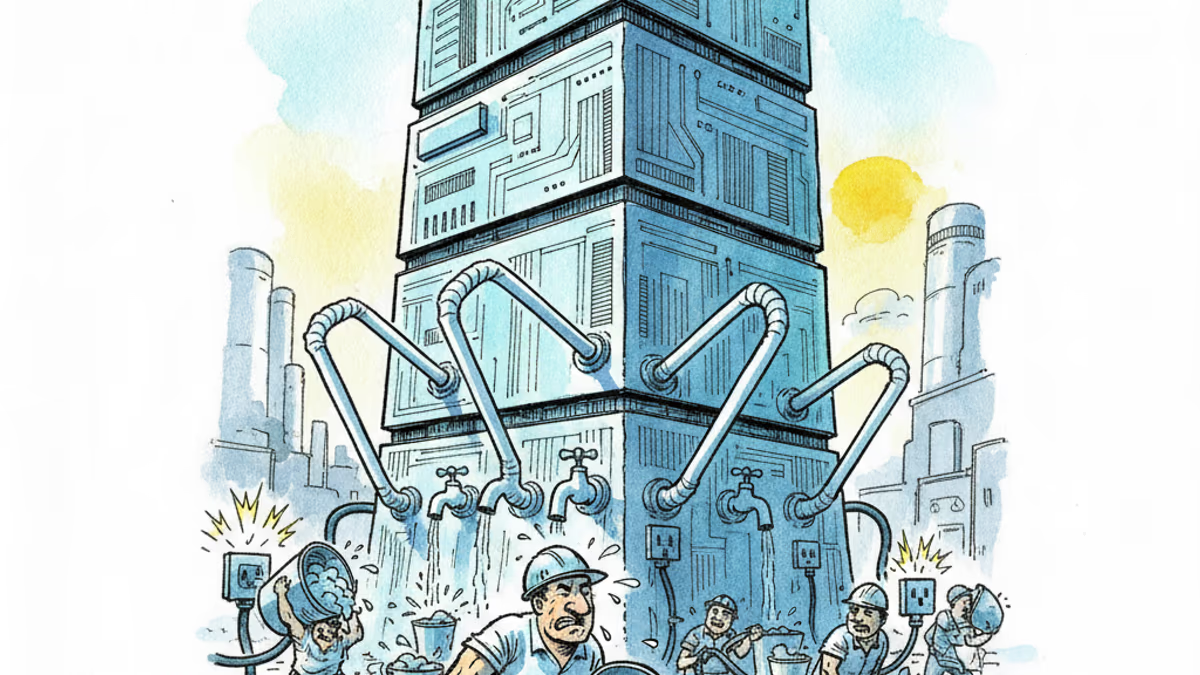
Samsung and SK unveiled a chip and AI investment package worth thousands of trillions of won on June 29. The headline number swings wildly by outlet, but the real contest isn't capital — it's water and power.
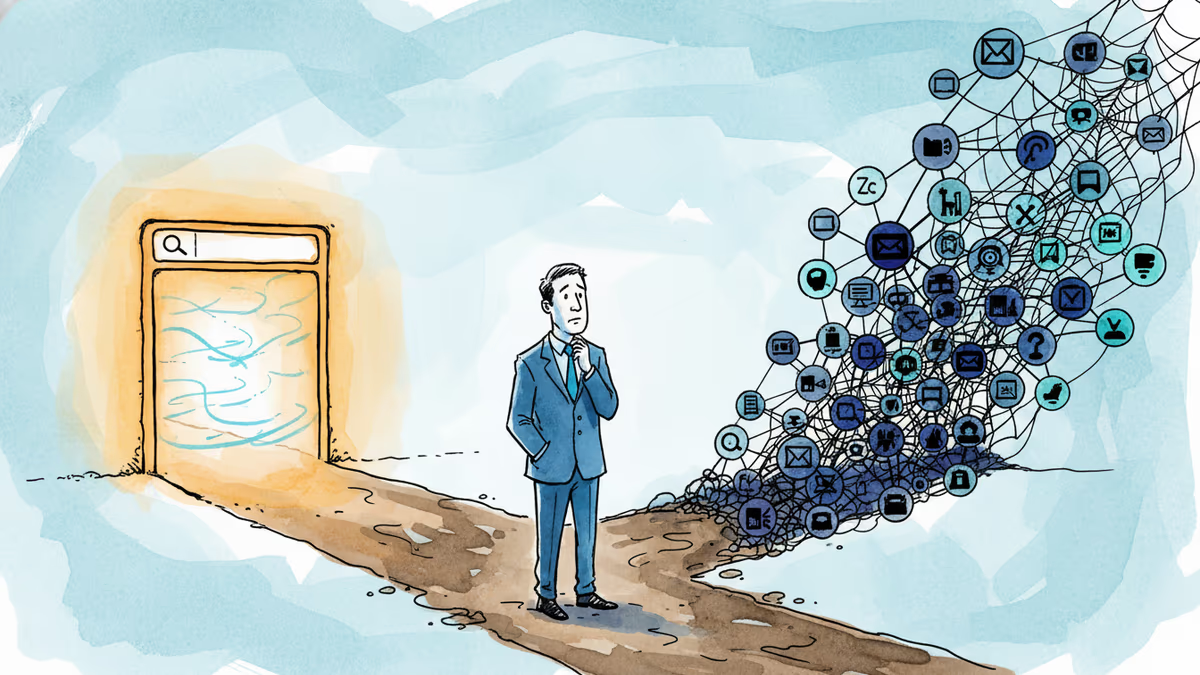
In a post-Google I/O interview, Sundar Pichai acknowledged flawed search results, real AI anxiety, and an AGI timeline that makes the label irrelevant. Here's what he said — and what it means.
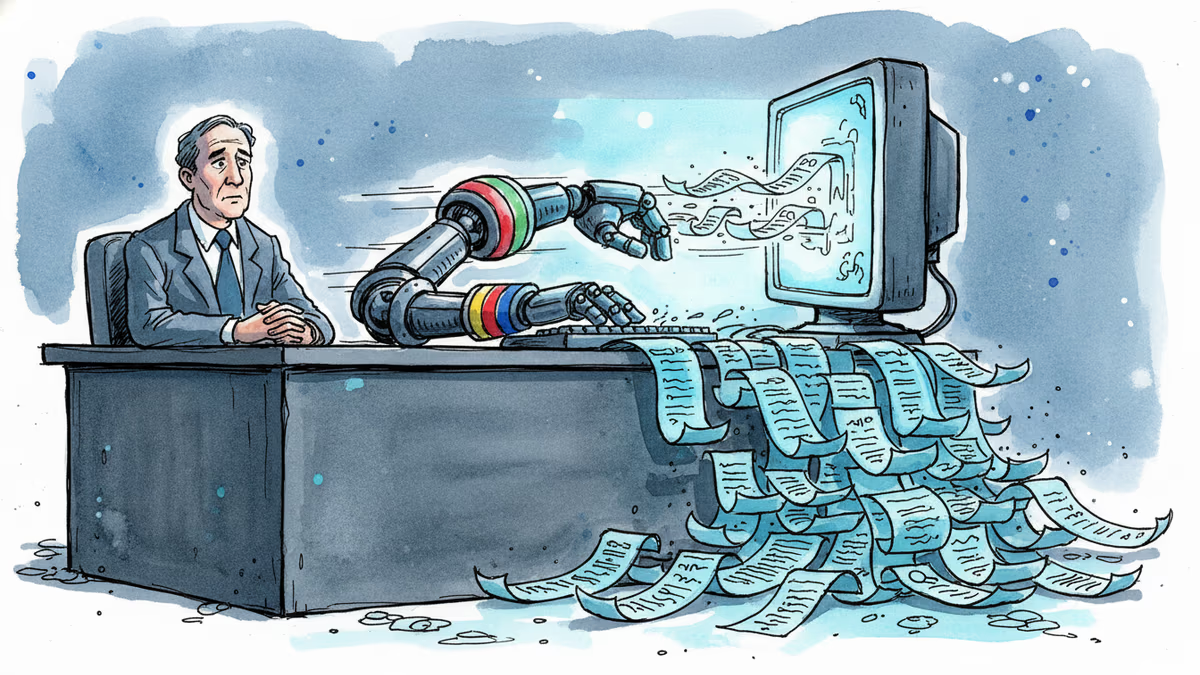
Google is building AI agents that search the web proactively, without user prompting. That's not just a product update — it's a fundamental shift in who controls the information you receive.

Viral videos show 2026 graduates jeering executives who praise AI at commencement ceremonies. It's not just rudeness — it's a signal about who pays for technological optimism.
Samsung and SK unveiled a chip and AI investment package worth thousands of trillions of won on June 29. The headline number swings wildly by outlet, but the real contest isn't capital — it's water and power.
In a post-Google I/O interview, Sundar Pichai acknowledged flawed search results, real AI anxiety, and an AGI timeline that makes the label irrelevant. Here's what he said — and what it means.
Google is building AI agents that search the web proactively, without user prompting. That's not just a product update — it's a fundamental shift in who controls the information you receive.
Viral videos show 2026 graduates jeering executives who praise AI at commencement ceremonies. It's not just rudeness — it's a signal about who pays for technological optimism.
Thoughts
Share your thoughts on this article
Sign in to join the conversation