
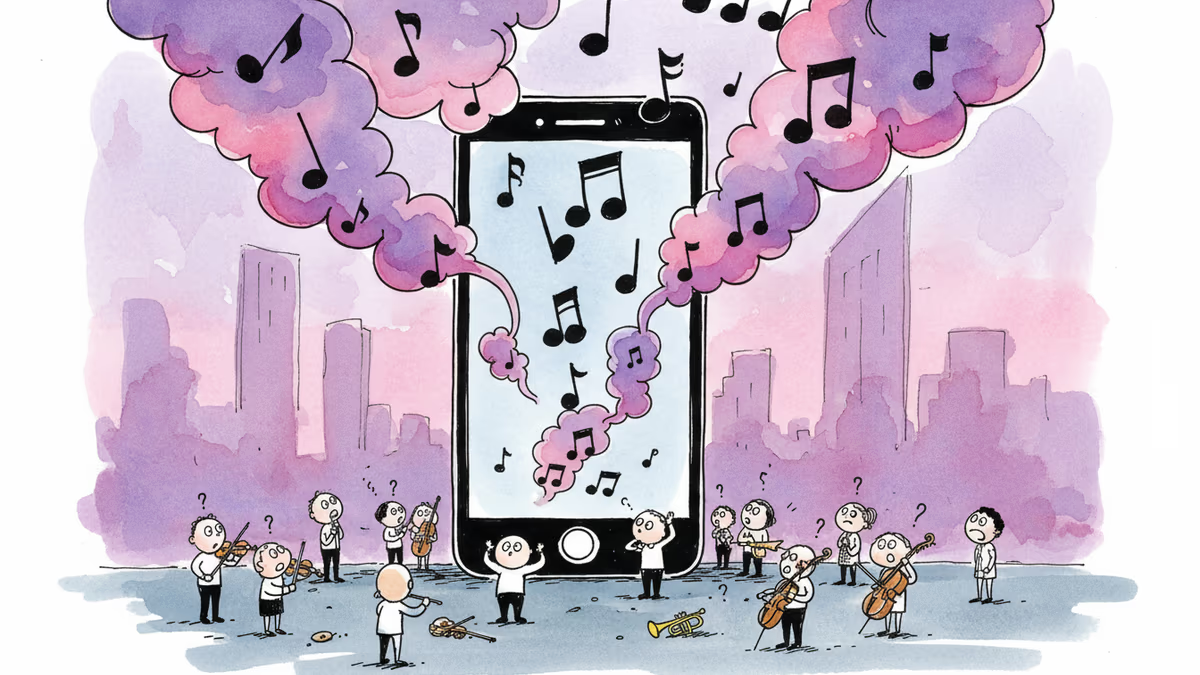
Google Adds Music Generation to Gemini—But Will Creators Sing Along?
Google introduces Lyria 3 music generation in Gemini app, letting users create 30-second tracks from text. But what does this mean for the music industry?
30 Seconds to Change Everything?
Google just handed every Gemini user a music studio. The tech giant rolled out Lyria 3, DeepMind's latest audio model, enabling users to generate 30-second music tracks from text, images, and videos—all without leaving the chatbot window.
Starting today, the beta feature is available globally to users 18 and older across 8 languages, including English, German, Spanish, French, Hindi, Japanese, Korean, and Portuguese. Just type "upbeat electronic" or "melancholy piano," and AI does the rest.
The Music Industry's New Wildcard
This isn't Google's first dance with AI music, but it's their boldest move yet. While competitors like Spotify and Apple Music have been cautiously filtering out AI-generated content, Google is embracing it head-on. The irony? YouTube, Google's own platform, has been grappling with AI music uploads for months.
The timing is telling. Just last year, streaming platforms were purging thousands of AI-generated tracks over quality and copyright concerns. Now Google, which owns the world's largest video platform, is democratizing music creation. It's either brilliant positioning or a calculated risk.
Creators Caught Between Hope and Fear
The reaction from music creators is predictably mixed. Independent artists see opportunity—quick demos, cost-free experimentation, and accessible tools for those without traditional music training. But established musicians and producers are asking harder questions.

"It's great for ideation, but music is more than just 30-second clips," says one Nashville producer who requested anonymity. "The real question is whether this enhances human creativity or replaces it."
Meanwhile, music educators are watching closely. If anyone can generate a decent melody in seconds, what happens to music theory classes? What's the value of learning an instrument when AI can simulate orchestras?
The Copyright Minefield
Here's where things get messy. Google hasn't disclosed Lyria 3's training data, leaving creators wondering if their work fed the AI that might now compete with them. It's the same dilemma facing writers with ChatGPT and artists with image generators.
The 30-second limit might be Google's legal safety net—short enough to avoid most copyright claims, but long enough to be useful. It's a clever compromise, but one that raises questions about artificial constraints on creativity.
Music rights organizations are scrambling to catch up. The fundamental question remains: who owns AI-generated music, and what happens when it sounds suspiciously like existing songs?
The Democratization Dilemma
Google frames this as democratizing music creation, making it accessible to anyone with an idea. There's truth to that—bedroom producers in developing countries now have the same tools as major label artists. But democratization often comes with unintended consequences.
When everyone can make music, does music lose its value? When AI can generate thousands of tracks per minute, how do human musicians compete? These aren't just philosophical questions—they're economic realities that millions of creators will face.
Authors
Related Articles

Samsung and SK unveiled a chip and AI investment package worth thousands of trillions of won on June 29. The headline number swings wildly by outlet, but the real contest isn't capital — it's water and power.
In a post-Google I/O interview, Sundar Pichai acknowledged flawed search results, real AI anxiety, and an AGI timeline that makes the label irrelevant. Here's what he said — and what it means.
Google is building AI agents that search the web proactively, without user prompting. That's not just a product update — it's a fundamental shift in who controls the information you receive.
Viral videos show 2026 graduates jeering executives who praise AI at commencement ceremonies. It's not just rudeness — it's a signal about who pays for technological optimism.
Samsung and SK unveiled a chip and AI investment package worth thousands of trillions of won on June 29. The headline number swings wildly by outlet, but the real contest isn't capital — it's water and power.
In a post-Google I/O interview, Sundar Pichai acknowledged flawed search results, real AI anxiety, and an AGI timeline that makes the label irrelevant. Here's what he said — and what it means.
Google is building AI agents that search the web proactively, without user prompting. That's not just a product update — it's a fundamental shift in who controls the information you receive.
Viral videos show 2026 graduates jeering executives who praise AI at commencement ceremonies. It's not just rudeness — it's a signal about who pays for technological optimism.
Thoughts
Share your thoughts on this article
Sign in to join the conversation