
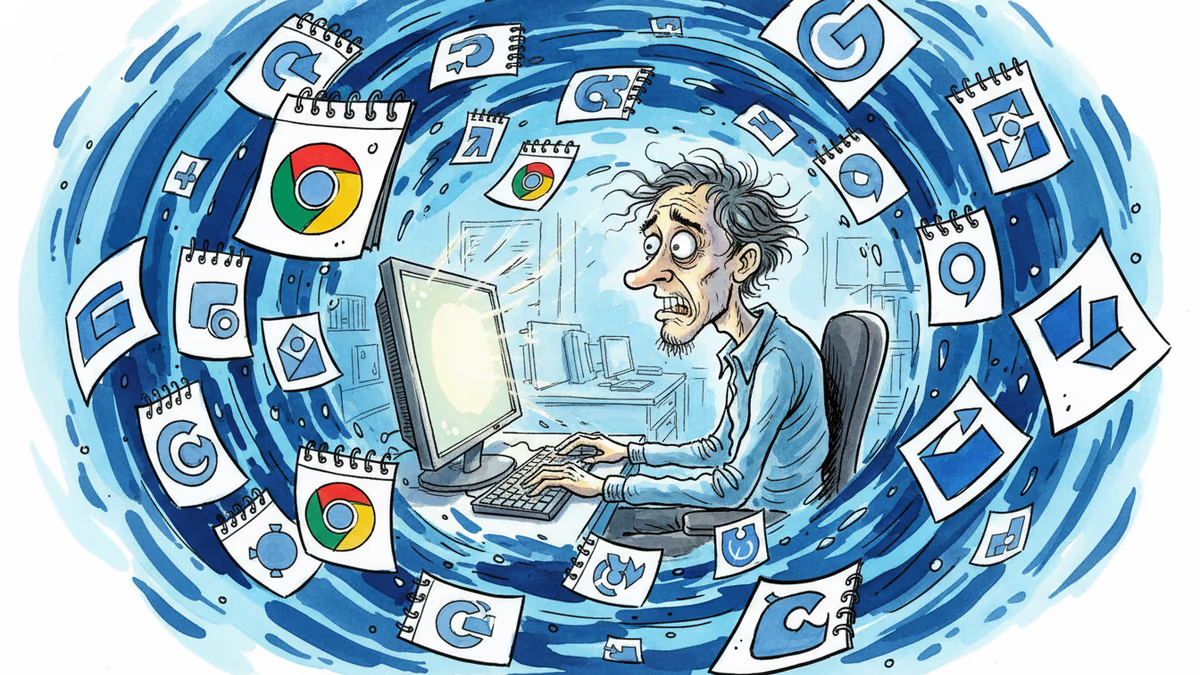
Chrome's Two-Week Update Cycle: Innovation or Chaos?
Google accelerates Chrome updates from 4 to 2 weeks starting September. Faster features and fixes promised, but developers worry about keeping up with the pace.
When Two Weeks Feels Like Forever
Google just dropped a bombshell that'll make web developers everywhere reach for their coffee: Chrome is moving to a two-week release cycle, cutting the current four-week schedule in half. Starting with Chrome 153 in September, users across desktop, Android, and iOS will see updates twice as often.
This isn't Google's first rodeo with release acceleration. The company shifted from a six-week to four-week cycle just a few years ago. Now they're doubling down, promising "faster access to performance improvements, fixes, and new capabilities" with smaller, more manageable releases.
The Developer Dilemma
Here's where it gets interesting. While users might celebrate getting security patches and new features faster, the developer community is split. Sarah Chen, a frontend engineer at a mid-sized startup, captures the sentiment: "Sure, I want the latest APIs, but testing compatibility every two weeks? That's going to strain our QA resources."
The math is simple but brutal. Development teams that previously had 28 days to adapt to Chrome changes now have 14. For large companies with automated testing suites, this might be manageable. For smaller teams juggling multiple browsers and legacy support? It's a different story.
Mozilla and Apple haven't announced similar accelerations for Firefox and Safari, potentially creating a testing burden disparity that could favor Chrome's competitors in enterprise environments.

The Speed vs. Stability Trade-off
Google's rationale makes sense on paper: smaller releases mean easier debugging and faster iteration. But history suggests caution. Remember when Chrome 79 broke some enterprise web apps in December 2019? Or when Chrome 88's cookie changes caught developers off-guard?
The faster the cycle, the less time for real-world testing. Microsoft learned this lesson with Windows updates, eventually introducing more controlled rollout mechanisms. Will Google need similar guardrails?
Enterprise Concerns Mount
Large organizations are already strategizing. IBM recently announced they're evaluating "extended support versions" for their internal applications. The challenge isn't just technical—it's operational. IT departments that plan browser updates months in advance now need to restructure their entire approval process.
One Fortune 500 CTO, speaking anonymously, shared: "We're looking at browser management solutions that can delay updates until we've completed our testing cycles. Google's pace is great for innovation, but not for enterprise stability."
The Competitive Angle
This move isn't happening in a vacuum. Microsoft Edge has been gaining ground with AI-powered features, while Apple continues pushing privacy-focused updates in Safari. Google's acceleration could be a defensive play—maintaining Chrome's 65% market share requires staying ahead of the innovation curve.
But there's a risk: if Chrome becomes too unpredictable for developers, they might optimize for more stable browsers first, potentially eroding Chrome's web compatibility advantage.
Authors
Related Articles
In a post-Google I/O interview, Sundar Pichai acknowledged flawed search results, real AI anxiety, and an AGI timeline that makes the label irrelevant. Here's what he said — and what it means.
Google is building AI agents that search the web proactively, without user prompting. That's not just a product update — it's a fundamental shift in who controls the information you receive.
Google unveiled the 'Googlebook' platform to replace Chromebook and ChromeOS—but revealed zero hardware specs. What's the strategy, and what does it mean for users, manufacturers, and the education market?
After 15 years of fragmented mobile messaging, Apple and Google are rolling out end-to-end encrypted RCS messaging between iPhones and Android devices. Here's what changed, why it took so long, and what it means for your privacy.
In a post-Google I/O interview, Sundar Pichai acknowledged flawed search results, real AI anxiety, and an AGI timeline that makes the label irrelevant. Here's what he said — and what it means.
Google is building AI agents that search the web proactively, without user prompting. That's not just a product update — it's a fundamental shift in who controls the information you receive.
Google unveiled the 'Googlebook' platform to replace Chromebook and ChromeOS—but revealed zero hardware specs. What's the strategy, and what does it mean for users, manufacturers, and the education market?
After 15 years of fragmented mobile messaging, Apple and Google are rolling out end-to-end encrypted RCS messaging between iPhones and Android devices. Here's what changed, why it took so long, and what it means for your privacy.
Thoughts
Share your thoughts on this article
Sign in to join the conversation