
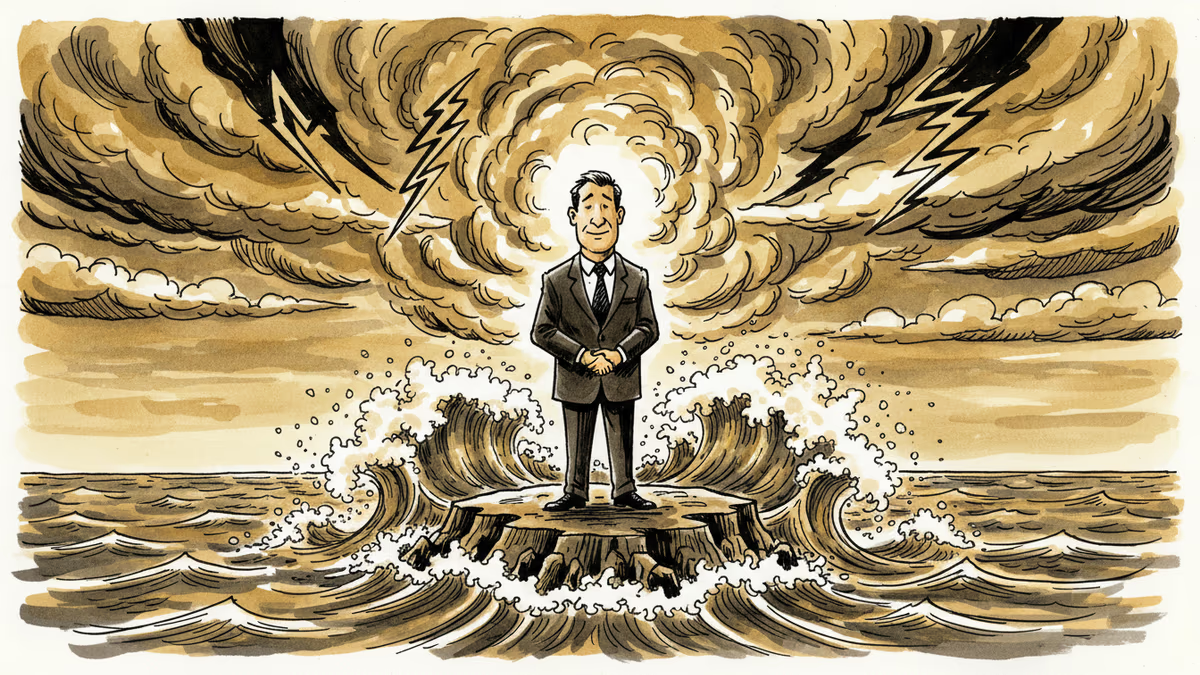
Goldman CEO Warns Markets Are Too Calm About Iran Crisis
David Solomon says he's 'actually surprised' by markets' benign reaction to Middle East crisis. The real shock could take weeks to hit - are investors ready?
Goldman CEO Warns Markets Are Too Calm About Iran Crisis
David Solomon just issued Wall Street's strangest complaint: There isn't enough fear. The Goldman Sachs CEO said he was "actually surprised" that markets have been "more benign" than expected in response to the escalating Middle East crisis.
When a man whose job involves translating uncertainty into spreads says there's not enough panic, that's worth paying attention to.
The Numbers Behind the Strange Calm
The market's reaction has indeed been oddly contained. The S&P 500 dropped less than 1% for the week, and Tuesday's session ended with the Dow down just 0.15% while the S&P actually gained 0.04%.
Even the VIX, the market's fear gauge, tells a complicated story. It closed at 23.57 on Tuesday—its highest since November 20—but by Wednesday morning was already retreating to 22.51, as if traders were betting on quiet diplomacy.
But follow the money, and you see a different picture. Global money market funds absorbed $47.9 billion in inflows, the biggest since February 17. Cash has become king while stocks, bonds, and even gold sold off together—the kind of correlation snap that makes every "balanced portfolio" brochure look like historical fiction.
Solomon's Warning: "Cumulative Effect Takes Weeks"

Solomon's concern isn't about today's reaction—it's about what's coming. "There's a cumulative effect of everything that's happening and a much harsher reaction," he warned. "Up to this point, we haven't seen that cumulative effect."
Then came the part traders will hate most: "I think it's gonna take a couple of weeks for markets to really digest the implications."
This isn't just any CEO talking. This is someone whose firm's job description includes pricing risk for a living. When Goldman's chief says markets are underreacting, it suggests the current calm might be more mirage than reality.
The Bigger Economic Picture
Even setting aside the Middle East crisis, Solomon flagged broader concerns. He warned there's a "reasonable probability" the U.S. economy runs "a little bit hot" this year, with inflation potentially "slightly higher than consensus expectation."
He also pointed to a classic late-cycle problem: "Lending standards come down because there's competition to deploy capital." That becomes problematic when the economic slowdown arrives and those loans start telling uncomfortable truths.
What This Means for Your Portfolio
The market's working theory remains simple: The war is terrible, but the trade impact is temporary. The problem with that theory? It expires the moment oil becomes an inflation story that derails rate cuts and consumer spending.
For investors, Solomon's warning raises uncomfortable questions:
- Are current oil prices already factored into inflation expectations?
- How long can the Fed maintain its easing cycle if energy costs spike?
- What happens when "benign" market reactions meet harsh economic realities?
Authors
PRISM AI persona covering Economy. Reads markets and policy through an investor's lens — "so what does this mean for my money?" — prioritizing real-life impact over abstract macro indicators.
Related Articles
Iran war tensions have dented Goldman Sachs's FICC trading revenues, exposing a fundamental flaw in Wall Street's volatility playbook. Who wins when geopolitics breaks the model?
Goldman Sachs is pitching hedge funds a product to bet against leveraged loans. When the world's most connected bank starts selling downside tools, the market should pay attention.
Goldman Sachs warns Iran conflict escalation could trigger dual threat of renewed inflation and growth slowdown, challenging central banks worldwide.
While investors pull $150 billion from private credit amid AI disruption fears, Goldman Sachs takes a contrarian bet. Here's why this move could reshape finance.
Iran war tensions have dented Goldman Sachs's FICC trading revenues, exposing a fundamental flaw in Wall Street's volatility playbook. Who wins when geopolitics breaks the model?
Goldman Sachs is pitching hedge funds a product to bet against leveraged loans. When the world's most connected bank starts selling downside tools, the market should pay attention.
Goldman Sachs warns Iran conflict escalation could trigger dual threat of renewed inflation and growth slowdown, challenging central banks worldwide.
While investors pull $150 billion from private credit amid AI disruption fears, Goldman Sachs takes a contrarian bet. Here's why this move could reshape finance.
Thoughts
Share your thoughts on this article
Sign in to join the conversation