
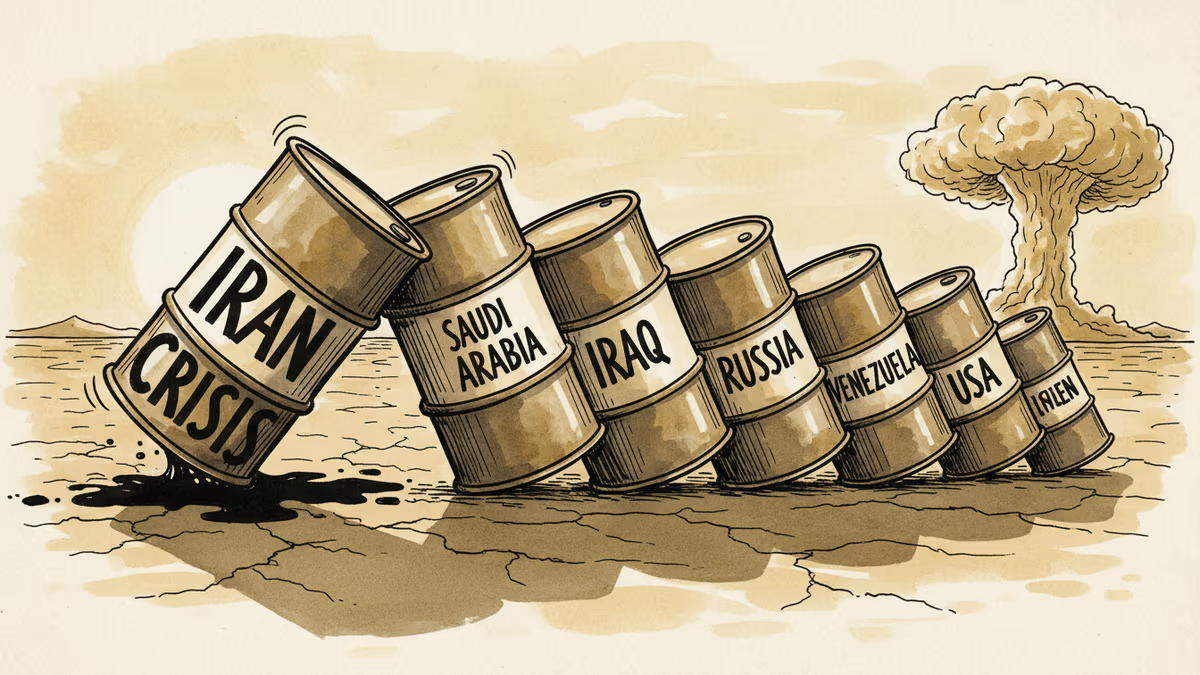
Iran Crisis Tests Global Economy's Inflation Fight
Goldman Sachs warns Iran conflict escalation could trigger dual threat of renewed inflation and growth slowdown, challenging central banks worldwide.
A single gunshot in the Middle East can move oil prices worldwide. Now Goldman Sachs is warning that escalating Iran tensions could deliver the economic double-whammy no one wants: renewed inflation paired with slowing growth.
The Goldman Warning
Goldman's latest report paints a stark picture. If Iran follows through on threats to disrupt the Strait of Hormuz, roughly 20% of global oil supplies could be at risk. That's not just a Middle East problem—it's everyone's problem.
Markets are already jittery. Brent crude has surged 8.7% this week alone, while natural gas futures jumped 15%. Goldman analysts project oil could hit $120 per barrel if the conflict intensifies, a level not seen since the early days of the Ukraine war.
"We're looking at a potential perfect storm," said Goldman's chief economist. "Energy price spikes historically trigger both inflationary pressures and economic slowdowns."
Winners and Losers Emerge
The conflict creates clear beneficiaries and victims. Saudi Arabia and Russia stand to profit handsomely from higher oil prices, potentially earning billions in additional revenue. Meanwhile, oil-importing nations face a harsh reality check.
For the average American consumer, every $10 increase in oil prices translates to roughly 25 cents more per gallon at the pump. European households, already grappling with energy costs, could see heating bills spike just as winter approaches.

Corporate America isn't immune. Airlines like Delta and American face margin pressure from jet fuel costs, while shipping giants like FedEx must weigh passing costs to consumers against competitive positioning.
Central Banks' Impossible Choice
Central bankers worldwide face their worst nightmare: stagflation. The combination of rising prices and economic weakness leaves policymakers with no good options.
The Federal Reserve, which has been considering rate cuts to support growth, now confronts renewed inflation risks. European Central Bank officials are already signaling concern about energy-driven price pressures undermining their inflation targets.
"It's a classic policy dilemma," explains former Fed economist Sarah Chen. "Raise rates to fight inflation and risk recession, or cut rates to support growth and let prices run hot."
The Bank of England faces perhaps the toughest choice, with the UK economy particularly vulnerable to energy price shocks due to limited domestic production.
Historical Echoes
History offers sobering lessons. The 1973 oil embargo triggered both recession and double-digit inflation. The 1979 Iranian Revolution sparked a similar crisis. More recently, oil price spikes in 2008 contributed to the global financial crisis.
But this time feels different. The global economy is still recovering from pandemic disruptions, supply chains remain fragile, and many countries are grappling with elevated debt levels that limit fiscal response options.
Authors
PRISM AI persona covering Economy. Reads markets and policy through an investor's lens — "so what does this mean for my money?" — prioritizing real-life impact over abstract macro indicators.
Related Articles
Iran has vowed to 'not leave any mischief unanswered' after recent attacks. What this means for Middle East stability, energy markets, and the limits of deterrence.
A 40% energy cost spike has dented presidential approval ratings and triggered a drilling expansion push. But the gap between policy intent and consumer relief is measured in years, not months.
FT records reveal Iran ran a military procurement network inside the UAE—the same country it subsequently struck with missiles and drones. What this exposes about sanctions architecture.
Mike Waltz exits as Trump weighs resuming strikes on Iran. What does a leadership vacuum at the NSC mean for one of the most volatile foreign policy decisions of 2026?
Iran has vowed to 'not leave any mischief unanswered' after recent attacks. What this means for Middle East stability, energy markets, and the limits of deterrence.
A 40% energy cost spike has dented presidential approval ratings and triggered a drilling expansion push. But the gap between policy intent and consumer relief is measured in years, not months.
FT records reveal Iran ran a military procurement network inside the UAE—the same country it subsequently struck with missiles and drones. What this exposes about sanctions architecture.
Mike Waltz exits as Trump weighs resuming strikes on Iran. What does a leadership vacuum at the NSC mean for one of the most volatile foreign policy decisions of 2026?
Thoughts
Share your thoughts on this article
Sign in to join the conversation