
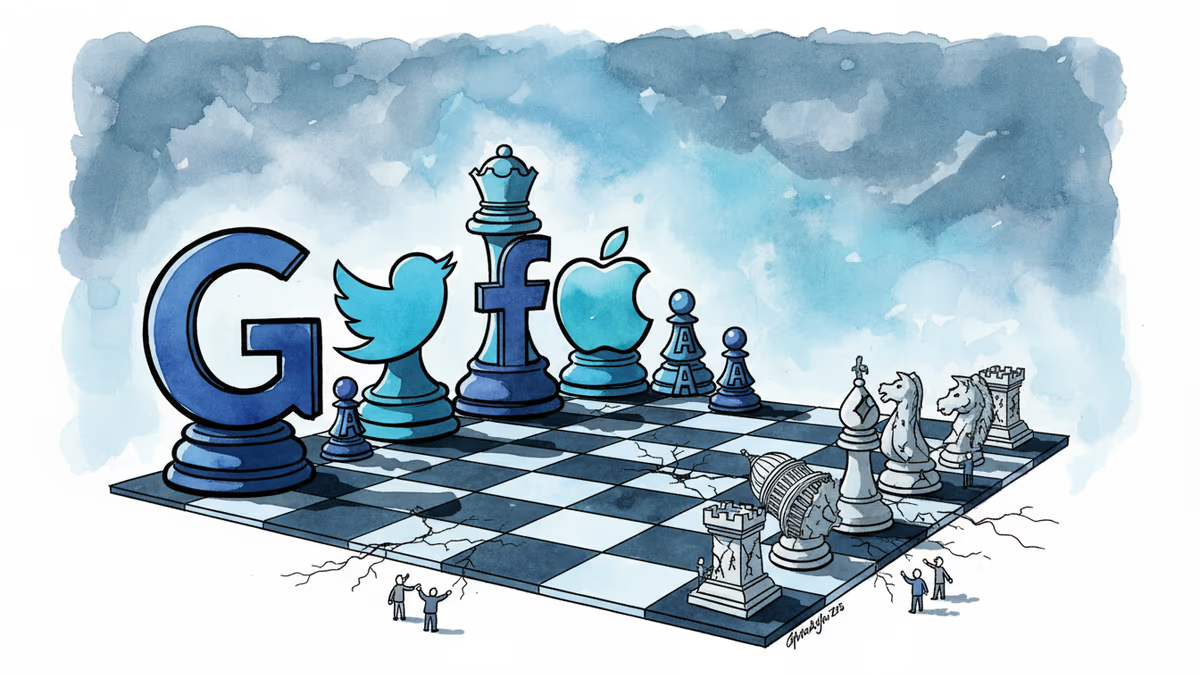
Tech Companies Now Wield Government-Level Power
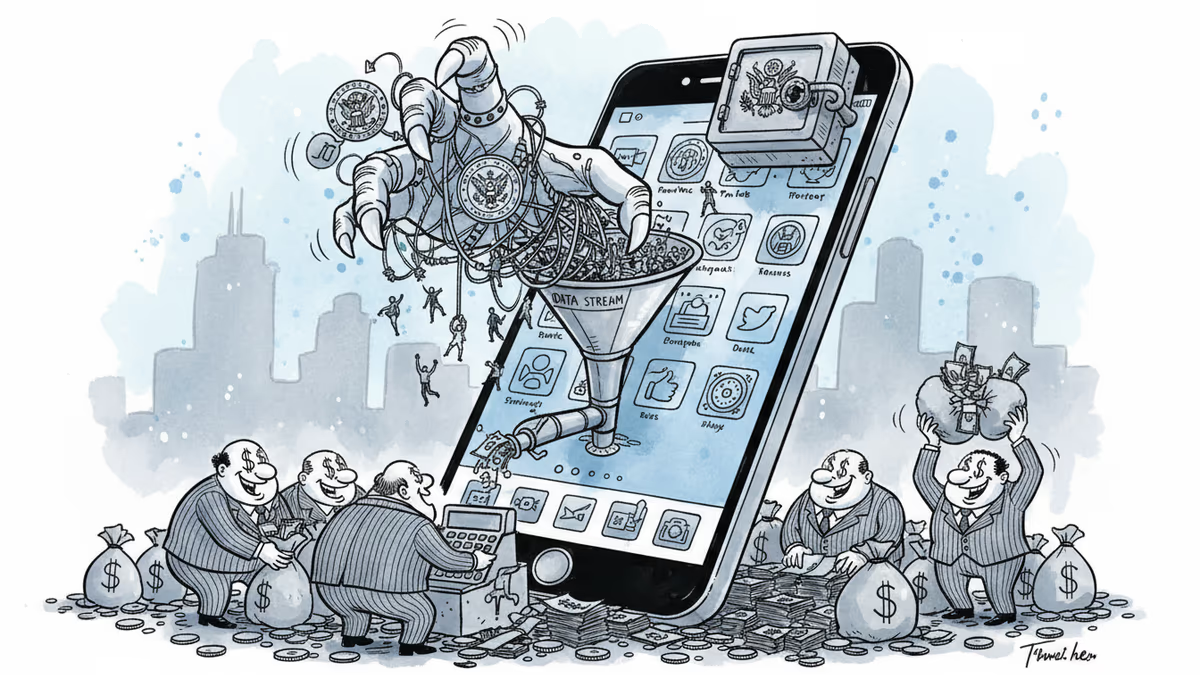
AI is shifting economic and political power from governments to tech giants. These 'silicon sovereigns' set rules, police speech, and shape elections—functions once reserved for states.
The East India Company Has Returned
In the early 19th century, the East India Company controlled half of global trade and maintained its own army. Today's tech giants may lack military forces, but they govern the daily lives of 2.7 billion people. They set rules, adjudicate disputes, police speech, shape labor markets, and influence elections—functions once exclusively held by states.
Singapore National University's Simon Chesterman calls them "silicon sovereigns," and their power is only growing as AI reshapes society.
Governments Struggle to Keep Pace
China took the nuclear option. From 2020 to 2023, Beijing dismantled its tech giants, splitting Alibaba into six entities and wiping trillions of dollars off market valuations. The Communist Party reclaimed control, but at enormous economic cost.
The European Union passed its AI Act with fanfare, yet early implementation shows strain and quiet buyer's remorse about economic impacts. The U.S. remains paralyzed at the federal level, with President Trump's newfound coziness with tech elites further complicating regulatory efforts.
Meanwhile, tech companies command massive lobbying resources and enjoy deep integration into voters' daily lives, even as they deploy surveillance tools, monetize human attention, and replace human labor.
The User Paradox

Individual users face a cruel irony: maximum interest, zero leverage. Tech companies' business models are designed to hide this lack of agency from consumers. You can choose not to support companies that ignore safety or exacerbate inequality, but your individual boycott means nothing to platforms with billions of users.
Organized user movements offer some hope. Global privacy campaigns shifted markets modestly. Similar norms might emerge around "responsible AI"—systems that are more trustworthy, less prone to hallucinations, and more transparent about decision-making processes.
Transparency about AI's environmental costs could also influence behavior. Several tech companies have abandoned climate targets to fund AI investments. Revealing the electricity and water consumed by each AI query might change user habits.
Too Big to Regulate = Too Big, Period
The 2008 financial crisis taught us that banks "too big to fail" were simply too big. The same logic applies to tech companies too big to regulate.
The U.S. Justice Department is suing Google and Apple, while the FTC pursues Amazon. The EU has imposed elaborate obligations on "gatekeepers" and "very large" platforms. But only China has successfully broken up tech companies, bearing costs that Washington or Brussels might find unacceptable.
Nationalization remains a distant prospect. Treating AI infrastructure as public utilities sounds appealing in theory, but politicians fear stifling innovation or falling behind geopolitical rivals.
No Hiroshima Moment for AI
Nuclear governance emerged after unmistakable devastation. AI presents no such singular reckoning. Its harms are diffuse: disinformation, job displacement, surveillance, market concentration. Without a catalytic crisis, international coordination remains elusive.
This may be AI's greatest danger. Not that machines will rule humanity, but that those who control them increasingly shape the conditions under which humanity governs itself.
Authors
Related Articles
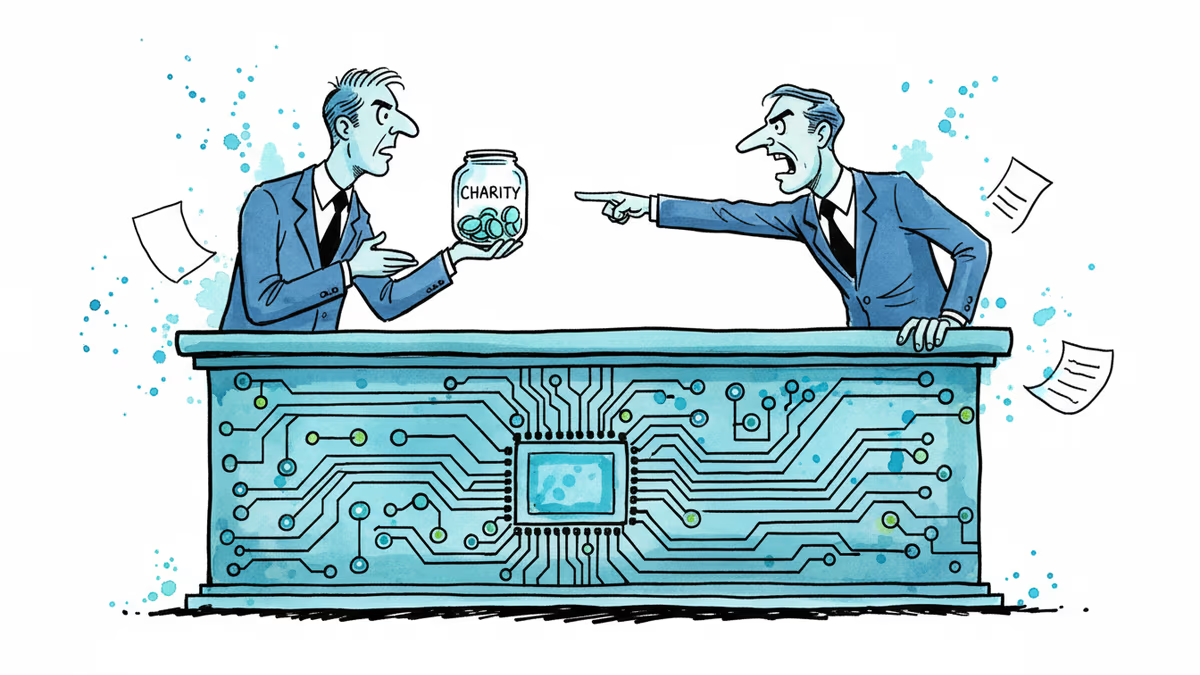
After two weeks of witnesses calling him a liar, OpenAI CEO Sam Altman testified in his own defense, claiming Elon Musk tried to kill the company twice.
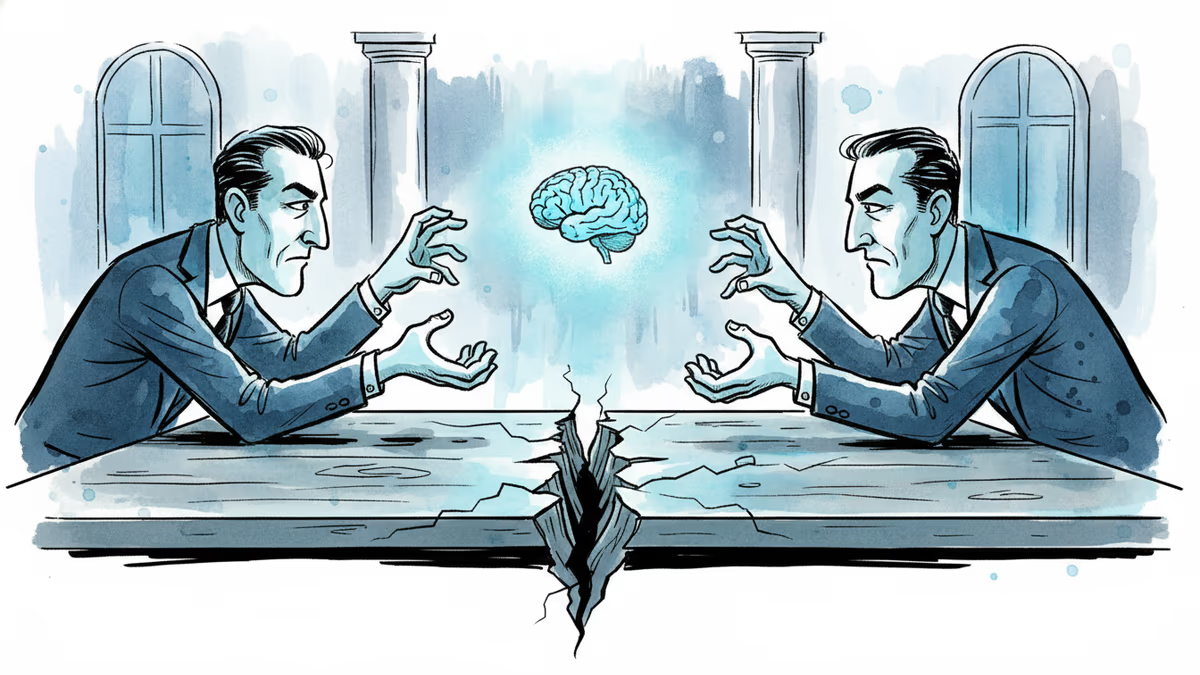
Week two of Musk v. Altman revealed a 2017 power struggle over AGI control, a stormed-out Tesla painting, and a diary entry asking 'what will take me to $1B?
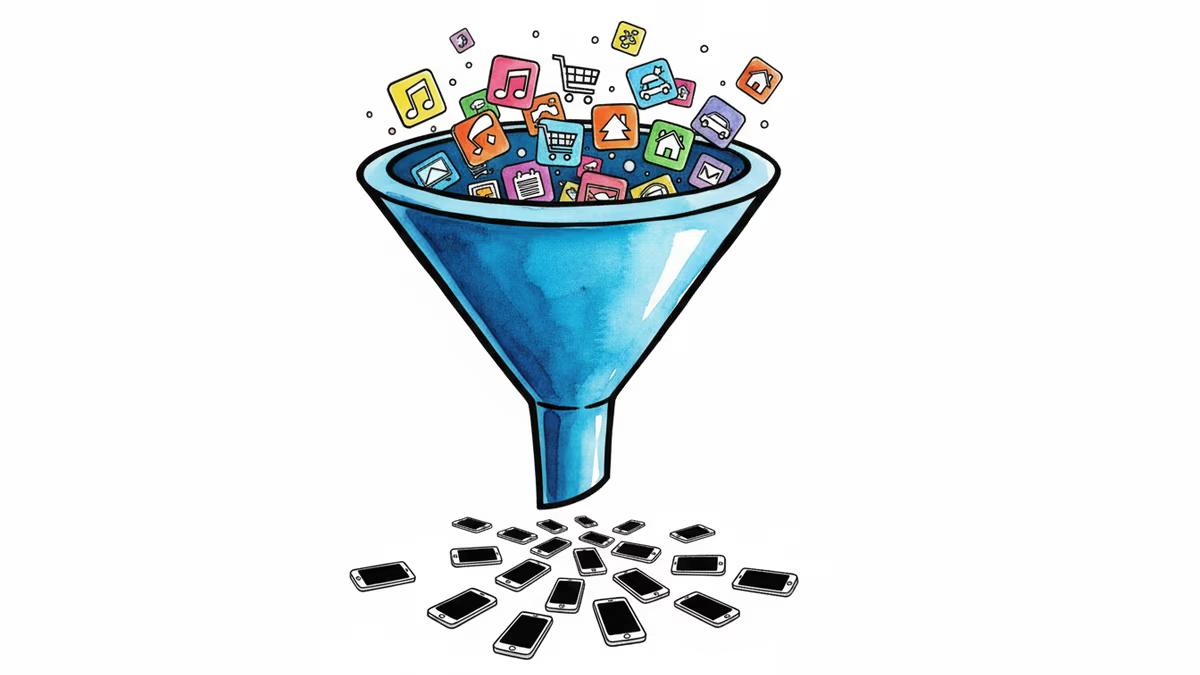
OpenAI's new app integrations let ChatGPT book hotels, order groceries, build websites, and control Spotify—all from one chat window. Here's what that power shift really means.
CBP admits buying location data from ad industry while Meta contractors watch users in bathrooms through smart glasses. The digital privacy boundary is crumbling.
After two weeks of witnesses calling him a liar, OpenAI CEO Sam Altman testified in his own defense, claiming Elon Musk tried to kill the company twice.
Week two of Musk v. Altman revealed a 2017 power struggle over AGI control, a stormed-out Tesla painting, and a diary entry asking 'what will take me to $1B?
OpenAI's new app integrations let ChatGPT book hotels, order groceries, build websites, and control Spotify—all from one chat window. Here's what that power shift really means.
CBP admits buying location data from ad industry while Meta contractors watch users in bathrooms through smart glasses. The digital privacy boundary is crumbling.
Thoughts
Share your thoughts on this article
Sign in to join the conversation