
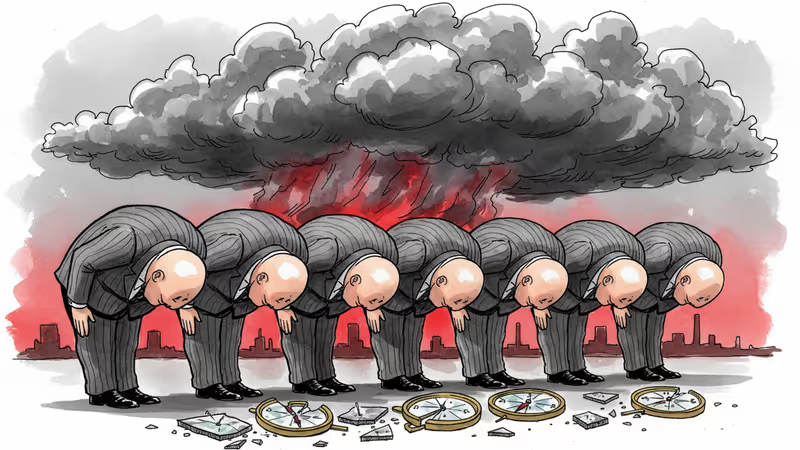
When Big Tech CEOs Bent the Knee
How Silicon Valley's most powerful leaders abandoned their principles for political protection, and what Minnesota's tragedy revealed about corporate courage
November 12, 2016. Four days after Trump's first election victory, two stunned men stood on a Palo Alto street corner sharing an unspoken truth: This wasn't good. Tech journalist Steven Levy and Apple CEO Tim Cook had just witnessed something that shook Silicon Valley to its core.
Fast-forward eight years, and that same Tim Cook is gifting Trump a 24-karat gold Apple sculpture and attending Melania Trump's vanity documentary screening in a tuxedo. The timing? Hours after 37-year-old ICU nurse Alex Pretti was shot 10 times by federal agents in Minneapolis.
The transformation is complete. Silicon Valley's moral compass has shattered.
The Great Capitulation
Cook isn't alone in this dramatic reversal. Microsoft CEO Satya Nadella, who once called Trump's immigration policies "cruel and abusive," now offers hosannas to the president. Google cofounder Sergey Brin, who joined employee protests against Trump's first-term policies, has become a Trump supporter. Meta CEO Mark Zuckerberg, who cofounded an immigration reform group, formally cut ties with it last year while positioning himself as a Trump toady.
The justification seems straightforward: shareholder duty. When Trump perceives slights, he weaponizes government power. Threaten higher tariffs on Apple when Cook declines a Middle East trip. Use regulatory pressure against perceived enemies. The message is clear—bend the knee or face the consequences.
So they bent. Tech giants funneled millions toward Trump's inauguration and his future presidential library. CEOs competed at White House dinners to see who could pander most insincerely. Google contributed $22 million to Trump's ballroom project. The strategy: lavish flattery in exchange for regulatory mercy.
When the Tightrope Snapped
But Minnesota changed everything. As Governor Tim Walz put it succinctly: "We're no longer having a political debate; we're having a moral debate."

Suddenly, the careful calculus of corporate appeasement looked different. Reading the room, some executives strained to distance themselves from the violence while maintaining their delicate political positioning.
OpenAI CEO Sam Altman cracked first, posting an internal Slack message that "what's happening with ICE is going too far." But even he couldn't resist adding that "President Trump is a very strong leader" who might "unite the country." If OpenAI's GPT-5 generated such a hallucination, Altman would probably issue a red alert about model realignment.
The strongest statement came from rival Anthropic. President Daniela Amodei wrote on LinkedIn that she was "horrified and sad" by Minnesota's events, adding that "freedom of speech, civil liberties, the rule of law, and human decency are cornerstones of American democracy."
Considering Anthropic has government contracts to lose, it was a rare display of backbone.
The Collective Action Problem
Perhaps most telling was the response from 60 Minnesota companies, including giants like 3M and Target, who released a joint letter calling for de-escalation. Their language was timid, but they acted together.
This raises a crucial question: Why aren't big tech corporations acting collectively instead of capitulating individually? There's strength in numbers, yet each CEO seems to be making separate peace with Trump's administration.
The answer reveals something deeper about Silicon Valley's transformation. These companies, once united by shared values of innovation and openness, now compete primarily on political access and regulatory favor. The collective Silicon Valley identity has fractured into individual corporate interests.
The Long Game
Cook, who built his reputation on dignity and restraint, faces a legacy question. Rumors suggest he'll step down soon, and he deserves an honorable retirement. But in his post-Apple years, he'll encounter people at social events who might wonder: "Why did you attend that Melania screening the day Pretti was killed?"
The weather would have been a perfect excuse to stay home.
This moment exposes the limits of corporate leadership in America. When faced with authoritarian pressure, even the most powerful CEOs default to self-preservation over principle. The question isn't whether they had business justifications—they did. The question is whether business justifications should trump moral obligations.
Authors
Related Articles

OpenAI's new app integrations let ChatGPT book hotels, order groceries, build websites, and control Spotify—all from one chat window. Here's what that power shift really means.
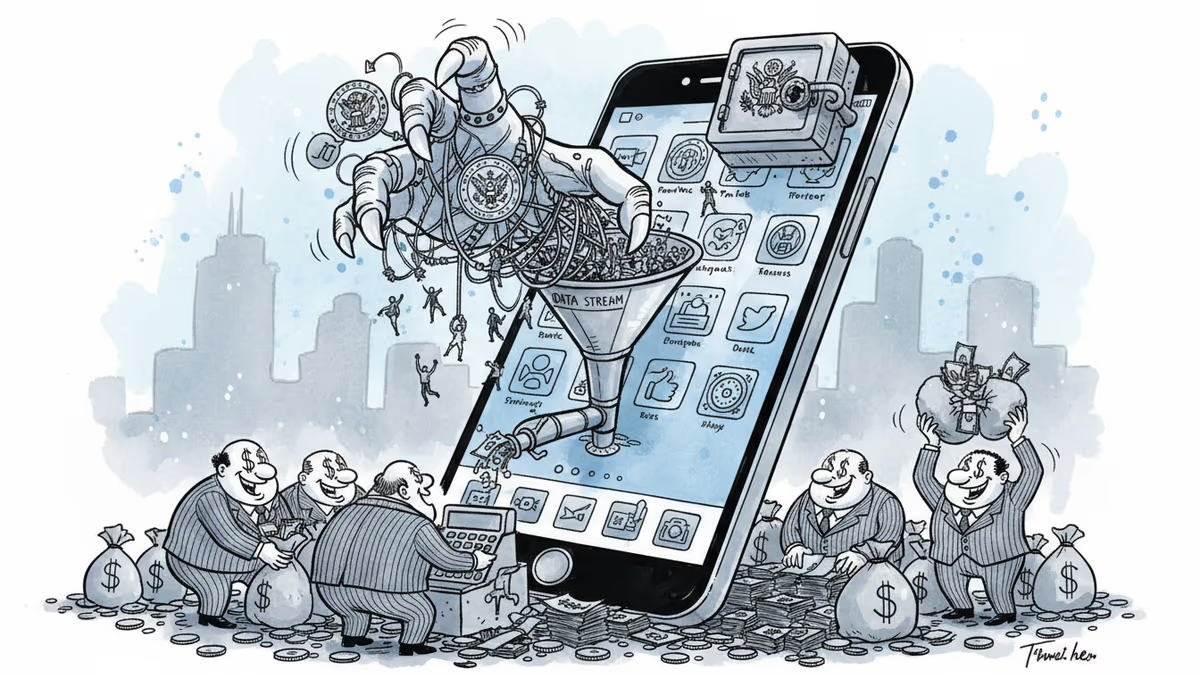
CBP admits buying location data from ad industry while Meta contractors watch users in bathrooms through smart glasses. The digital privacy boundary is crumbling.
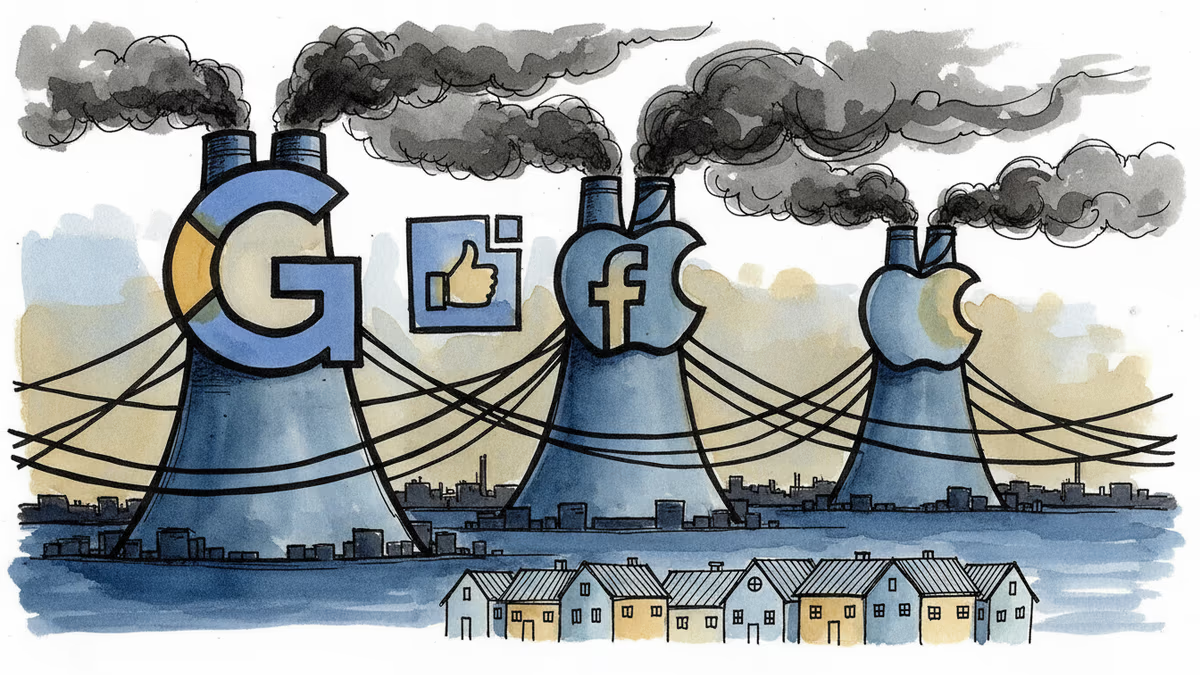
Amazon, Google, Meta and others pledge to pay for their data centers' power infrastructure, but the agreement lacks enforcement and ignores basic economics
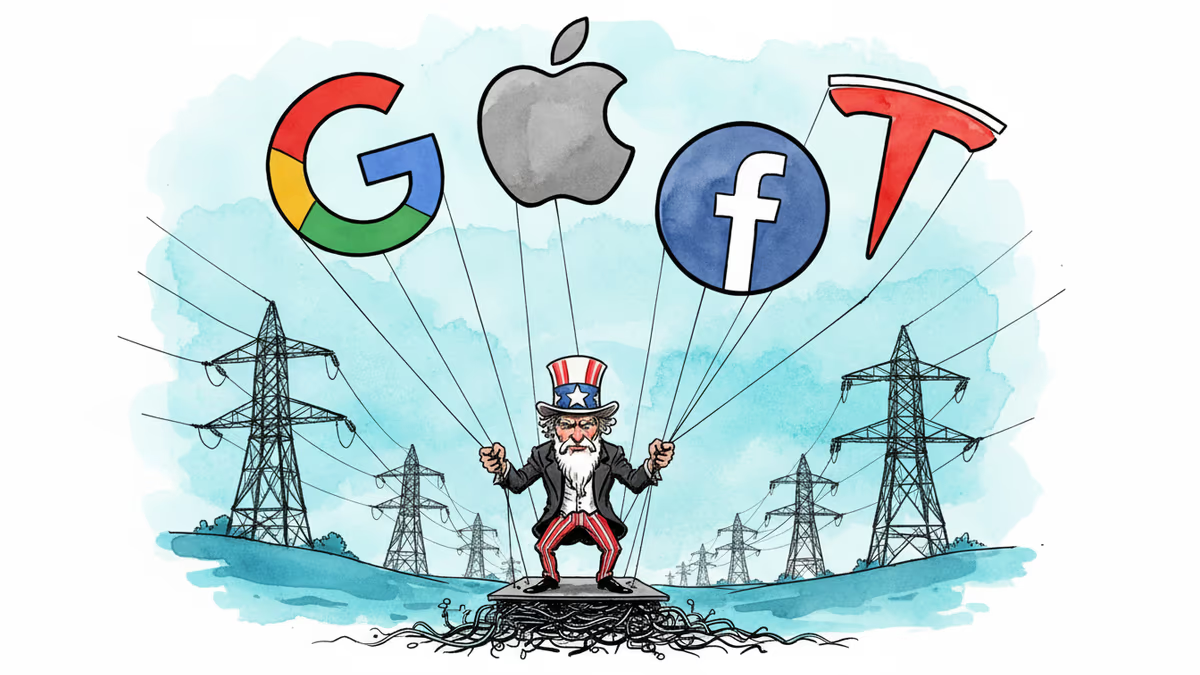
Trump administration secures nonbinding pledge from tech giants to protect consumers from data center electricity costs, but experts doubt meaningful impact
OpenAI's new app integrations let ChatGPT book hotels, order groceries, build websites, and control Spotify—all from one chat window. Here's what that power shift really means.
CBP admits buying location data from ad industry while Meta contractors watch users in bathrooms through smart glasses. The digital privacy boundary is crumbling.
Amazon, Google, Meta and others pledge to pay for their data centers' power infrastructure, but the agreement lacks enforcement and ignores basic economics
Trump administration secures nonbinding pledge from tech giants to protect consumers from data center electricity costs, but experts doubt meaningful impact
Thoughts
Share your thoughts on this article
Sign in to join the conversation