
GitHub Lets Developers Pick Their AI Coding Assistant
GitHub integrates Claude and Codex alongside Copilot, giving developers choice in AI coding agents. A shift from one-size-fits-all to specialized AI tools.
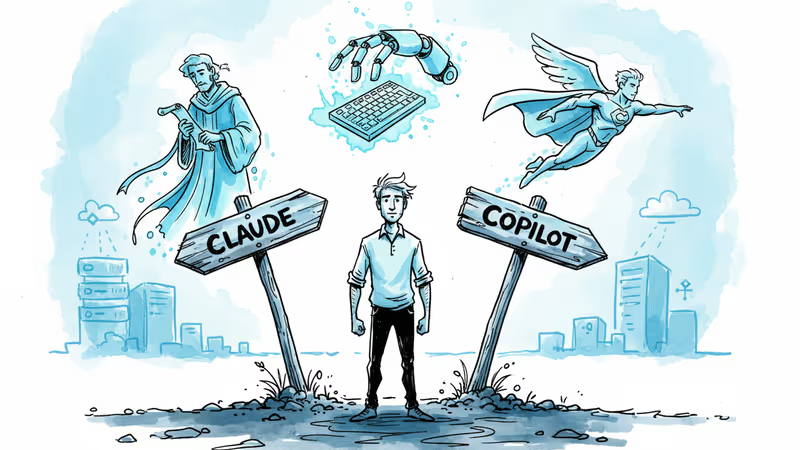
Developers can now shop for AI coding assistants like they're choosing tools from a hardware store. GitHub today announced that Anthropic's Claude and OpenAI's Codex are joining the platform alongside Copilot, giving developers their first real choice in AI coding agents.
The End of AI Monopoly in Coding
The integration spans GitHub, GitHub Mobile, and Visual Studio Code, available to anyone with a Copilot Pro Plus or Copilot Enterprise subscription. Each AI agent consumes one premium request, and developers can assign different agents to specific issues and pull requests.
This marks a significant shift from GitHub's previous approach. Instead of pushing everyone toward Copilot, the platform is embracing what they call "Agent HQ" – making AI agents native to how developers actually work. The move acknowledges that different coding tasks might benefit from different AI approaches.
Developers will also gain the ability to rate and compare how each agent performs, turning AI selection into a data-driven decision rather than a default choice.
Why Competition Matters for Developers

The timing couldn't be more strategic. As AI coding tools mature, developers are discovering that no single AI excels at everything. Claude might handle complex reasoning better, while Codex could shine at specific programming languages. Copilot has the advantage of being trained specifically on GitHub repositories.
For enterprise teams, this creates new possibilities for optimization. A fintech startup might use Claude for regulatory compliance code reviews while deploying Codex for rapid prototyping. The choice isn't just about preference – it's about matching the right AI to the right task.
But choice brings complexity. Development teams now need to develop expertise not just in coding, but in AI agent selection. The question shifts from "How do I code this?" to "Which AI should code this?"
The Broader Platform Strategy
GitHub's move reflects a broader trend in AI tooling: the shift from monolithic solutions to specialized agents. Rather than trying to build the perfect all-purpose AI, platforms are embracing ecosystem approaches where different AIs compete and complement each other.
This strategy could pressure other AI providers to specialize rather than generalize. We might see AI models optimized specifically for debugging, others for documentation, and still others for security reviews. The developer experience becomes less about adapting to AI limitations and more about leveraging AI strengths.
However, this fragmentation raises questions about consistency and learning curves. Will developers need to master multiple AI "languages" to be effective? And how will teams coordinate when different members prefer different AI agents?
Authors
Related Articles

GitHub confirmed hackers stole data from 3,800 internal repositories via a poisoned VS Code extension. Here's why developer tools are now the most dangerous attack surface in tech.

OpenAI launched a new $100/month plan directly targeting Anthropic's Claude Code. What does this pricing war mean for developers, enterprises, and the future of AI coding tools?

Elon Musk has ousted more xAI cofounders over weak coding AI performance, deploying SpaceX and Tesla "fixers" ahead of a June IPO. What does this mean for the AI coding race?
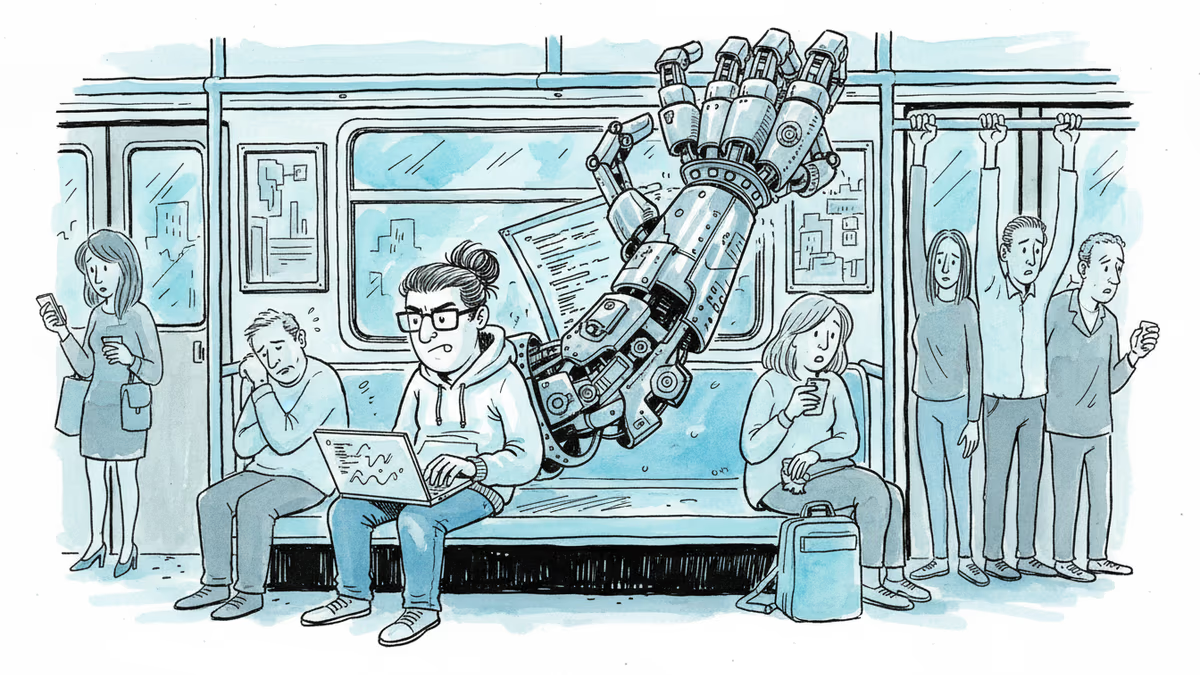
Spotify's best engineers ship 50+ features using only AI coding tools. They fix bugs from their phones during morning commutes.
GitHub confirmed hackers stole data from 3,800 internal repositories via a poisoned VS Code extension. Here's why developer tools are now the most dangerous attack surface in tech.
OpenAI launched a new $100/month plan directly targeting Anthropic's Claude Code. What does this pricing war mean for developers, enterprises, and the future of AI coding tools?
Elon Musk has ousted more xAI cofounders over weak coding AI performance, deploying SpaceX and Tesla "fixers" ahead of a June IPO. What does this mean for the AI coding race?
Spotify's best engineers ship 50+ features using only AI coding tools. They fix bugs from their phones during morning commutes.
Thoughts
Share your thoughts on this article
Sign in to join the conversation