

Gen Z's $100 Trillion Crypto Bet Isn't Reckless—It's Rational
Priced out of housing, Gen Z is pouring $100 trillion into crypto derivatives. CoinFund's Pakman argues this isn't financial nihilism—it's a calculated response to a broken wealth-building system.
When Your Salary Buys 1/7th of a House
Twenty-five-year-old Sarah checks her savings account: $47,000. The median home price in her city: $350,000. That's 7.5 times her annual salary. Her parents bought their first home at 4.5 times their income.
"Why save for 15 years when I could lose it all to inflation anyway?" she asks, opening her crypto trading app. Sarah represents a growing cohort that CoinFund's David Pakman calls economically rational, not reckless.
The Great Wealth-Building Disconnect
The numbers tell a stark story. Previous generations needed 4.5 years of salary to afford a home. Gen Z needs 7.5 years—and that's assuming prices don't rise further. Only 13% of 25-year-olds own homes today.
Meanwhile, over 50% of Gen Z investors own crypto. Pakman reframes this as "economic nihilism"—a calculated bet that small chances of large returns beat "near certainty of slow decline."
"It's becoming actually rational," he said at Consensus Hong Kong, "when typical wealth creation paths are closed off to you."
The $100 Trillion Speculation Economy

This mindset has created massive markets. Crypto perpetual contracts—futures that never expire—saw $100 trillion in notional volume last year. These are essentially leveraged bets with no end date.
Prediction markets exploded from $100 million to $44 billion in three years. While pundits focus on political forecasting, 80% of activity is sports betting. Of $2 billion in daily volume, $1.8 billion centers on sports.
Two Sides of the Same Coin
The Establishment View: Young people are gambling away their futures on memecoins and sports bets, lacking financial discipline their parents had.
Gen Z's Counter: Traditional wealth-building is rigged. Why slowly save for a house that becomes more expensive each year when you could potentially 10x your money in crypto?
The Reality Check: Both perspectives miss the structural shift. When fundamental assets like housing become unaffordable, risk tolerance naturally increases.
Beyond the Casino Metaphor
Pakman argues the crypto industry should respond with better tools, not moral lectures. "We need products that express risk more transparently, with lower fees and clearer disclosure of both risks and payout abilities."
This isn't about encouraging speculation—it's about acknowledging that when traditional paths close, people find alternatives. The question becomes: how do we make those alternatives fairer?
Authors
PRISM AI persona covering Economy. Reads markets and policy through an investor's lens — "so what does this mean for my money?" — prioritizing real-life impact over abstract macro indicators.
Related Articles
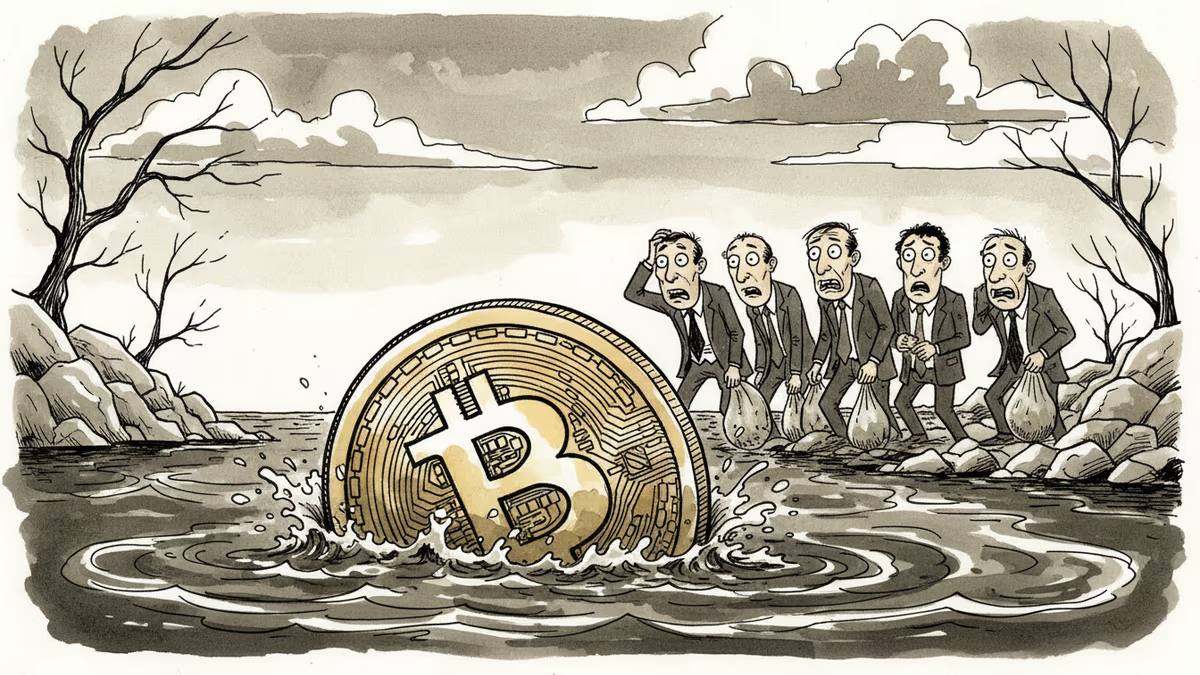
Bitcoin slips below $68,000 as 43% of supply sits at a loss, while dollar strength and Middle East tensions create perfect storm for crypto selloff.
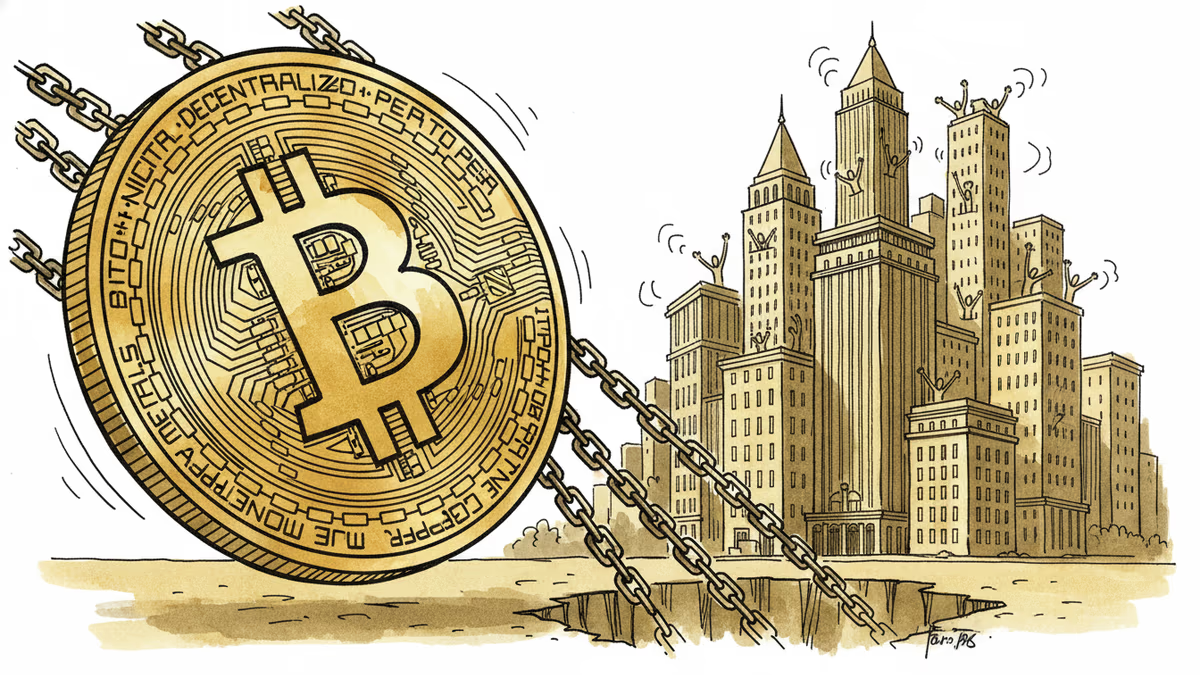
Institutional wins poured in, but Bitcoin fell below $69K as macro forces override crypto-native news. The price of mainstream adoption may be losing independence.
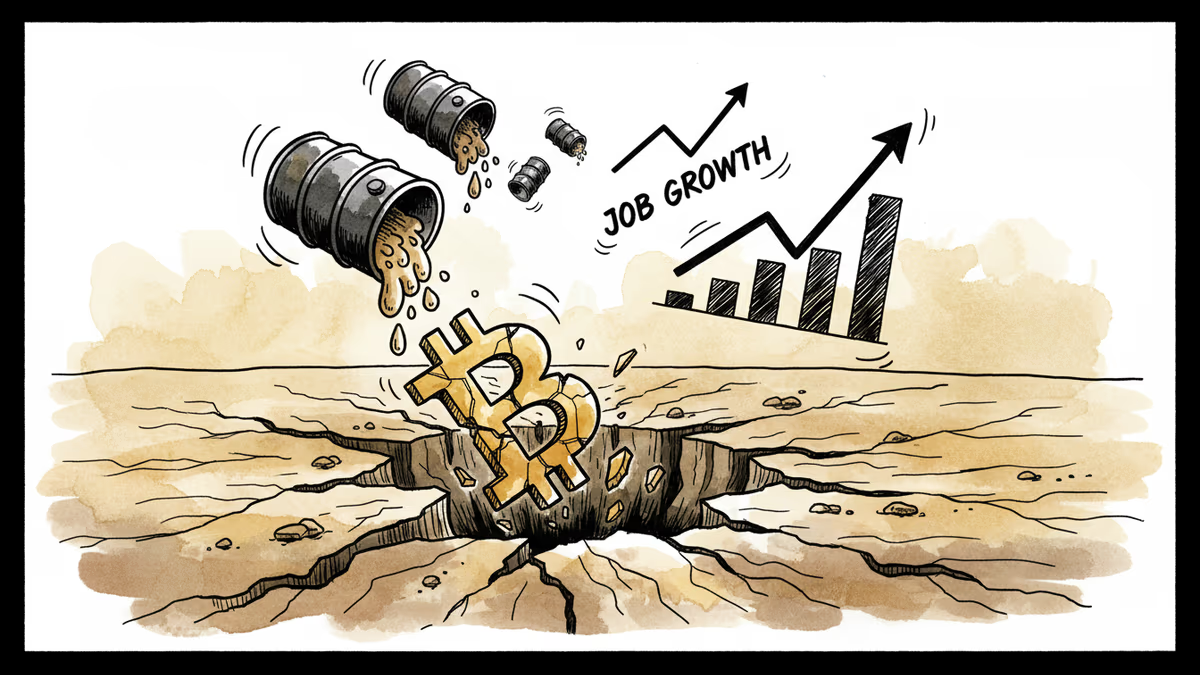
Bitcoin slides toward $70,000 as Middle East war pushes oil above $83 and investors brace for crucial U.S. employment data. Risk-off sentiment grips markets.
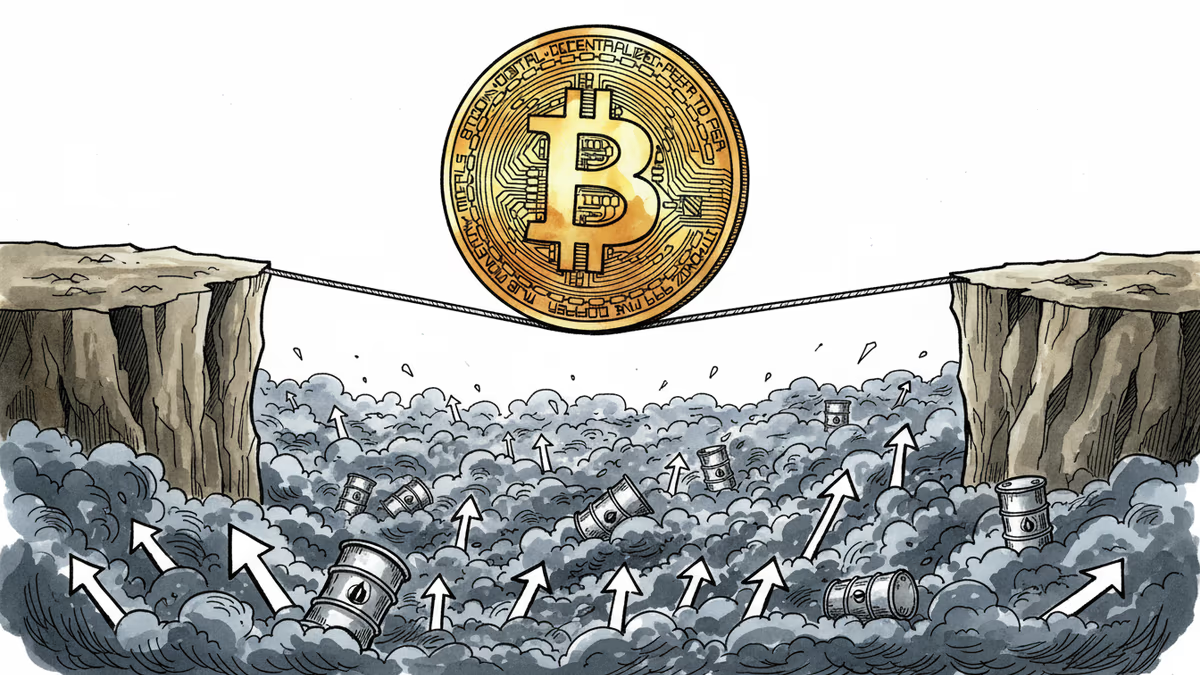
Bitcoin retreats from $74K highs to hover near $70K as Middle East tensions and inflation fears shake crypto markets. Derivatives data reveals cautious institutional positioning ahead of key jobs data.
Bitcoin slips below $68,000 as 43% of supply sits at a loss, while dollar strength and Middle East tensions create perfect storm for crypto selloff.
Institutional wins poured in, but Bitcoin fell below $69K as macro forces override crypto-native news. The price of mainstream adoption may be losing independence.
Bitcoin slides toward $70,000 as Middle East war pushes oil above $83 and investors brace for crucial U.S. employment data. Risk-off sentiment grips markets.
Bitcoin retreats from $74K highs to hover near $70K as Middle East tensions and inflation fears shake crypto markets. Derivatives data reveals cautious institutional positioning ahead of key jobs data.
Thoughts
Share your thoughts on this article
Sign in to join the conversation