

Gaming Gets Flexible: Lenovo's Folding Handheld Challenges the Rules
Lenovo's Legion Go Fold Concept isn't just a tech demo. It's rethinking what portable gaming could become when you don't have to choose between screen size and portability.
Every handheld gamer knows the compromise. Want a bigger screen? Sacrifice portability. Want true portability? Squint at tiny text. It's been the fundamental trade-off since the Game Boy. Now Lenovo's saying: what if you didn't have to choose?
More Than Just a Concept
The Legion Go Fold Concept sounds experimental, but it's surprisingly practical. This Windows-based handheld packs a foldable POLED display that transforms from 7.7 inches in handheld mode to a larger screen when unfolded. The detachable Joy-Con-style controllers can attach to any of the four sides, supporting both vertical and horizontal orientations.
There's even a folio case that turns the whole thing into a mini laptop. It's not just about gaming anymore—it's about versatility.
The engineering is impressive. Unlike early foldable phones that felt fragile, Lenovo's approach suggests they've learned from those early missteps. The controllers snap on magnetically, and the hinge mechanism looks robust enough for daily use.
Gamers Want Options, Not Compromises

The handheld gaming market has exploded since the Steam Deck proved there was appetite for PC gaming on the go. But user forums are full of complaints: screens too small for strategy games, devices too bulky for commuting, battery life that doesn't match play sessions.
The Nintendo Switch succeeded partly because it offered choice—dock it for TV play or take it portable. Lenovo's taking that philosophy further. One device, multiple configurations, adapting to how and where you actually play.
But there's a catch. Foldable displays still carry a premium price tag and durability questions. Early adopters might embrace it, but mainstream gamers will wait for proof it can survive a year of daily use.
The Industry's Next Move
This isn't happening in isolation. ASUS, MSI, and others are all pushing handheld gaming boundaries. Meanwhile, cloud gaming services are making high-end gaming possible on any screen. The Legion Go Fold sits at the intersection of these trends.
For game developers, foldable handhelds present new opportunities and challenges. Imagine strategy games that use the fold as a natural divide between map and controls, or RPGs where inventory management happens on one screen while gameplay continues on the other.
But will developers invest in foldable-specific features for what's likely to be a niche market initially? The chicken-and-egg problem of new hardware platforms remains.
Authors
Related Articles

Sony and Microsoft are pulling back from multi-platform strategies, signaling a return to console exclusives. What this means for gamers and the industry.

EA introduces creator marketplace in The Sims 4 with new in-game currency 'Moola.' A bold experiment in virtual economies that could reshape gaming monetization.
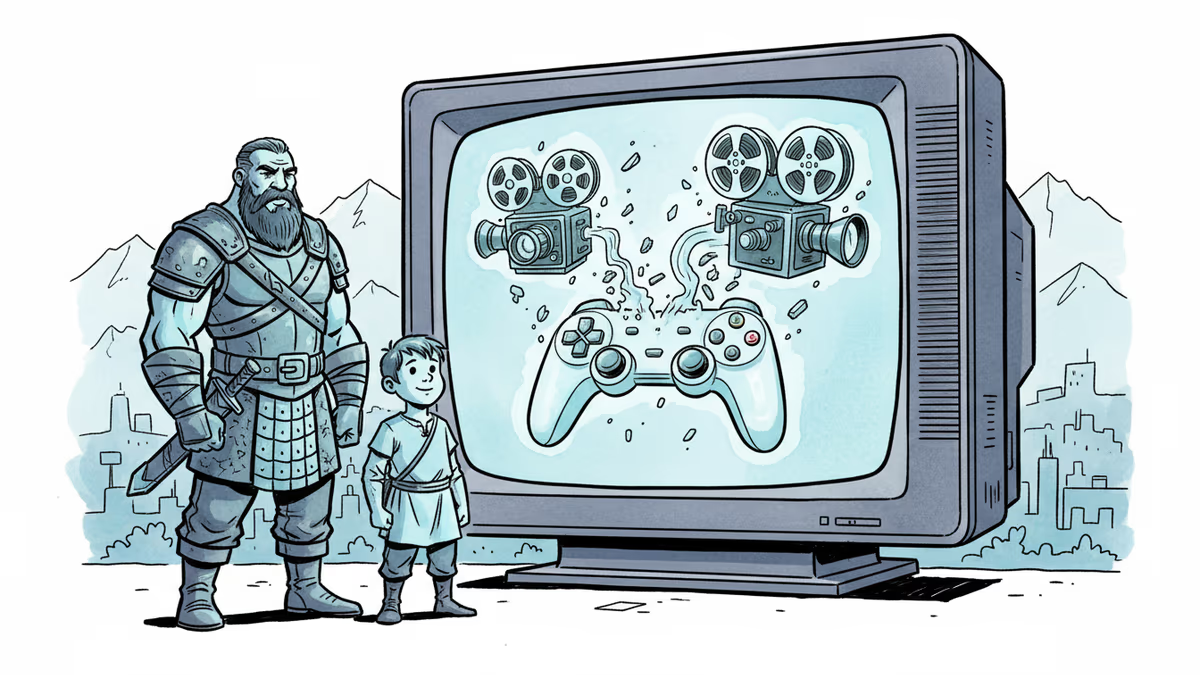
Amazon reveals first look at God of War series. Exploring whether game-to-screen adaptations can overcome their troubled history.
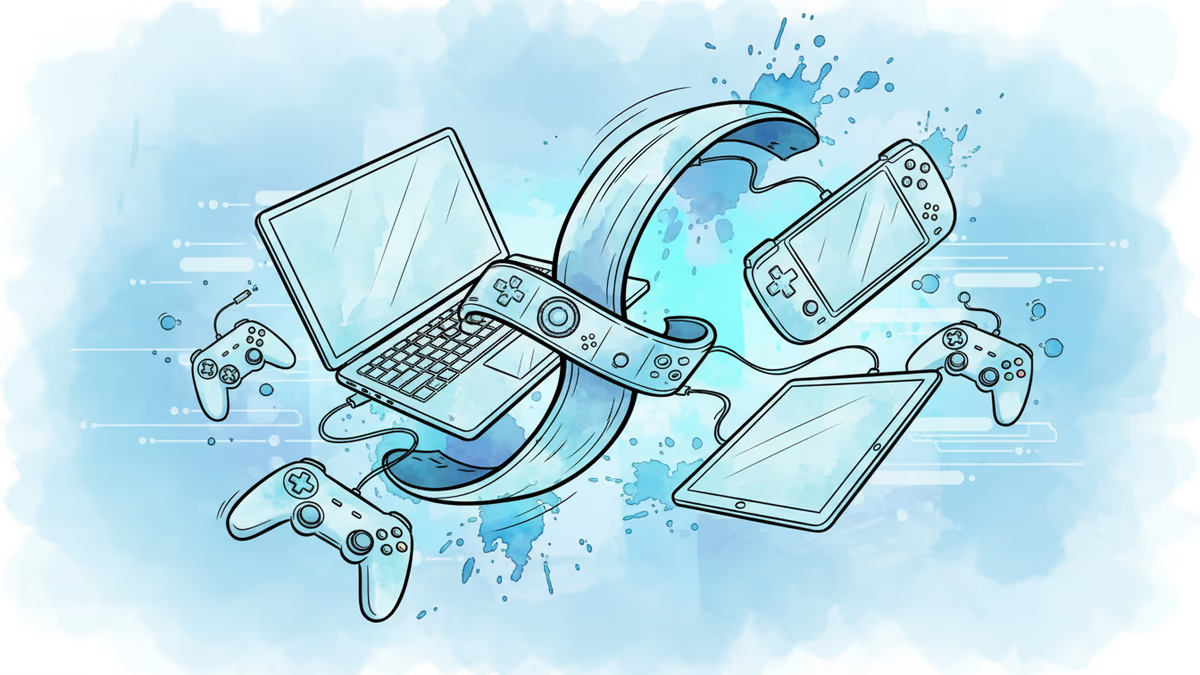
Lenovo's Legion Go Fold represents more than a foldable gaming device – it's a glimpse into a future where the lines between handheld, laptop, and console gaming blur completely.
Sony and Microsoft are pulling back from multi-platform strategies, signaling a return to console exclusives. What this means for gamers and the industry.
EA introduces creator marketplace in The Sims 4 with new in-game currency 'Moola.' A bold experiment in virtual economies that could reshape gaming monetization.
Amazon reveals first look at God of War series. Exploring whether game-to-screen adaptations can overcome their troubled history.
Lenovo's Legion Go Fold represents more than a foldable gaming device – it's a glimpse into a future where the lines between handheld, laptop, and console gaming blur completely.
Thoughts
Share your thoughts on this article
Sign in to join the conversation