

Fujitsu Joins SoftBank and Intel in Alliance to Build Next-Gen AI Memory
Former memory giant Fujitsu is joining a SoftBank-led project, which also involves Intel, to develop next-gen AI memory, signaling a major step in Japan's strategy to revive its semiconductor industry.
Japan's old guard is back in the memory game. Fujitsu, once a heavyweight in the semiconductor industry, is joining a project led by tech investor SoftBank Group to develop next-generation memory for AI and supercomputers. According to a report from Nikkei, the move is part of a broader national push by Japan to reclaim the expertise that once made its companies world leaders in memory production.
A New 'Dream Team' for AI Infrastructure
The SoftBank-led initiative aims to create memory chips tailored for the massive data demands of artificial intelligence (AI) and high-performance computing. Critically, the project will also leverage chip technology developed by Intel. This creates a powerful alliance combining Japanese capital (SoftBank), legacy engineering prowess (Fujitsu), and American semiconductor leadership (Intel), all focused on a critical component for the AI era.

Fujitsu has been staging a quiet comeback in the AI hardware space. After exiting the DRAM business years ago, the company has recently partnered with Nvidia to develop energy-efficient AI chips by 2030. Its participation in the memory project appears to be the next logical step in its revived semiconductor ambitions.
Japan Inc.'s Broader Chip Revival
This move doesn't exist in a vacuum. It's the latest signal of a coordinated effort by Japan to rebuild its semiconductor industry. The government-backed foundry Rapidus is already aiming to challenge industry leader TSMC, while memory firm Kioxia plans to produce its own next-gen memory chips for AI data centers in 2026. Fujitsu joining forces with SoftBank and Intel suggests the formation of a 'Team Japan' is solidifying, moving beyond individual company efforts to form a strategic front.
Authors
Related Articles

Five stories from late September, traced to where the paper trail stops: Korea's export record, Nvidia's Hugging Face 8-K, a US-China AI channel, the UN on AI, and rising births.

The US government invested $2 billion in quantum computing startups, but Congress says the money was never authorized for that purpose. The fate of IBM-backed Anderon hangs in the balance.
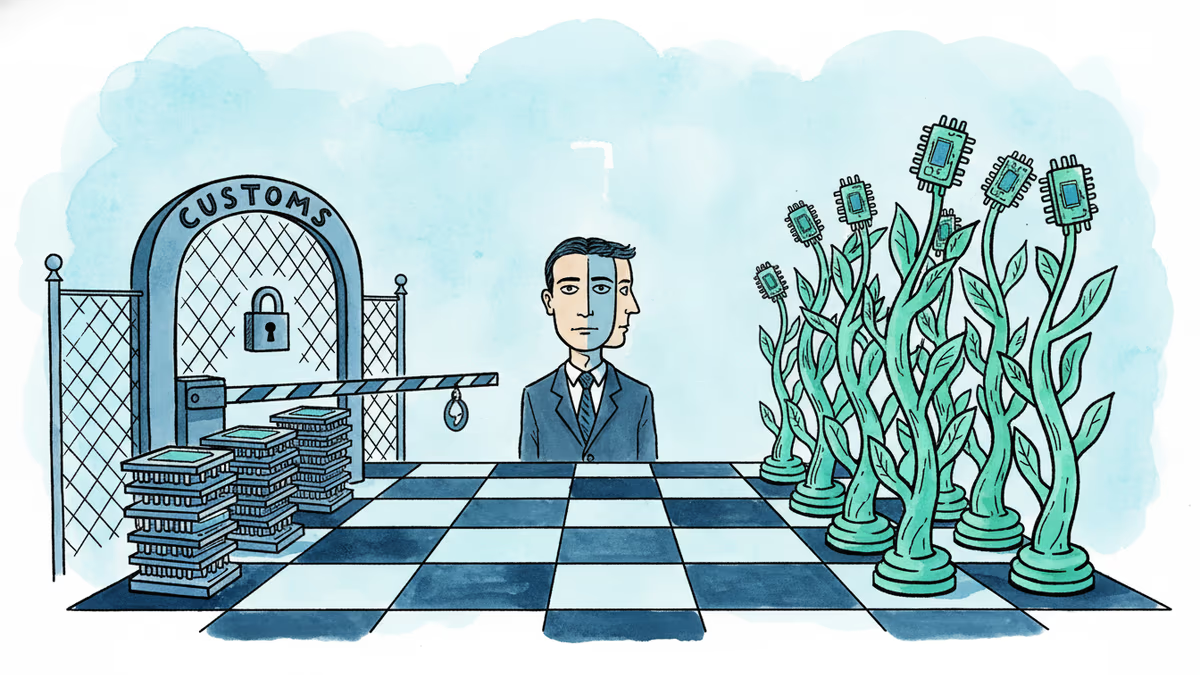
Beijing added an Nvidia gaming chip to its customs ban list the same week Jensen Huang visited China with Trump. Here's what it means for the chip war—and who actually wins.
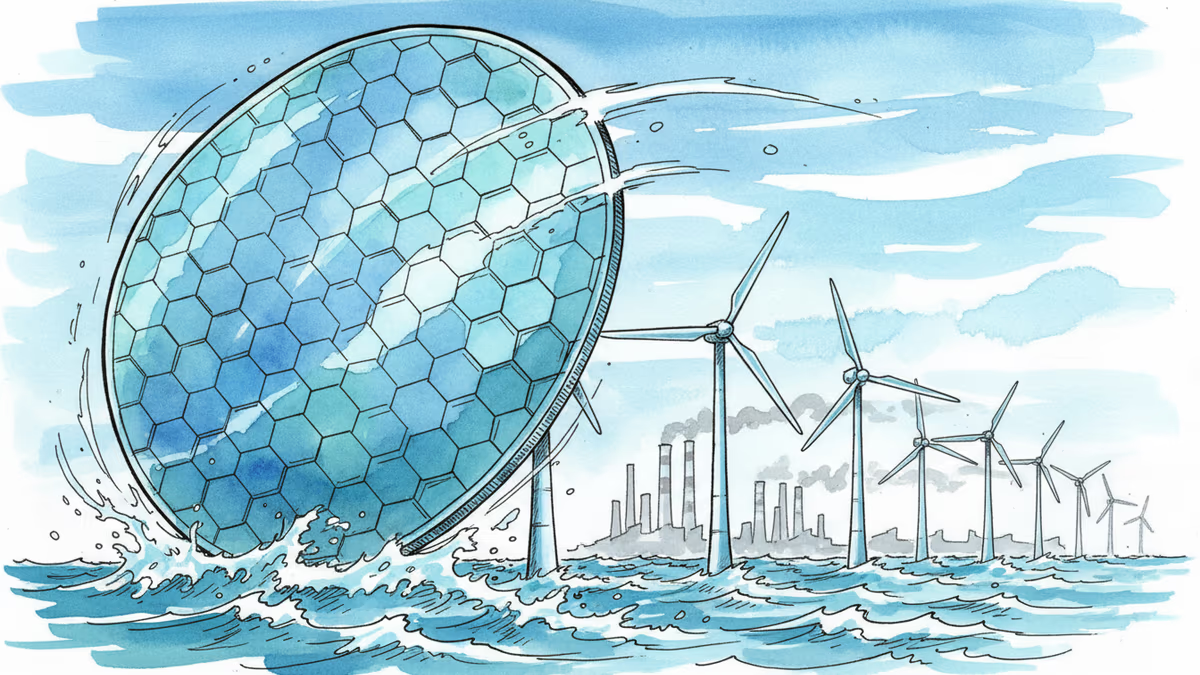
TSMC has signed a 30-year power purchase agreement for 100% of output from Taiwan's Hai Long offshore wind project. The 1GW deal reveals how chipmakers are quietly becoming energy companies.
Five stories from late September, traced to where the paper trail stops: Korea's export record, Nvidia's Hugging Face 8-K, a US-China AI channel, the UN on AI, and rising births.
The US government invested $2 billion in quantum computing startups, but Congress says the money was never authorized for that purpose. The fate of IBM-backed Anderon hangs in the balance.
Beijing added an Nvidia gaming chip to its customs ban list the same week Jensen Huang visited China with Trump. Here's what it means for the chip war—and who actually wins.
TSMC has signed a 30-year power purchase agreement for 100% of output from Taiwan's Hai Long offshore wind project. The 1GW deal reveals how chipmakers are quietly becoming energy companies.
Thoughts
Share your thoughts on this article
Sign in to join the conversation