

AI Is No Longer Just an Assistant. It’s Becoming an Autonomous Agent.
AI is evolving from a reactive assistant to a proactive agent capable of autonomous decisions. This marks a strategic shift for enterprises, requiring new approaches to workflows, governance, and trust.
For years, enterprise AI has been a capable assistant, summarizing documents and streamlining repetitive tasks on command. That era is ending. Today, a new chapter is unfolding with the rise of agentic AI—systems capable of autonomous decision-making and multi-step orchestration. They don't just assist; they act. This isn't an incremental update; it's a fundamental rewiring of how businesses operate.
While traditional AI assistants are reactive, agentic systems are proactive. They evaluate context, weigh outcomes, and initiate complex workflows across different functions. Multiple agents can collaborate, exchange information, and manage processes end-to-end without waiting for a human prompt.
Consider a procurement workflow. An AI assistant might pull vendor data or draft a purchase order. According to a report by EdgeVerve, an agentic system can go much further: it can review demand forecasts, evaluate vendor risk, check compliance policies, negotiate terms, and finalize transactions—all while coordinating with finance, operations, and compliance departments globally.
From Automation to Orchestration
The arrival of agentic AI challenges leaders to think beyond simply automating existing processes. Instead of inserting automation into a step-by-step workflow, organizations must now architect intelligent ecosystems where humans and agents collaborate seamlessly.

This shift forces critical new questions: Which decisions should remain human-led, and which can be delegated? How do you ensure agents access the correct data without overstepping boundaries? What happens when agents from finance, HR, and supply chain must coordinate autonomously?
This is where unified platforms become critical. Without them, enterprises risk a chaotic proliferation of disconnected agents working at cross-purposes. A unified platform provides the guardrails—shared knowledge graphs, consistent policy frameworks, and a single orchestration layer—that ensure agents interoperate securely and predictably. It's the key to moving beyond stalled pilot projects to enterprise-grade scale.
Designing for Trust and Accountability
As AI systems gain independence, the stakes get higher. An agent making flawed decisions in customer service might frustrate a client. An agent that mishandles a compliance process could expose the entire enterprise to regulatory risk.
Because of this, governance and trust can't be afterthoughts; they must be foundational. Leaders need clear policies defining the scope of agentic autonomy, transparent logging of all decisions, and clear escalation mechanisms for when human oversight is required. Equally important is fostering a culture where employees see these systems as partners, not threats.
The goal is not to hand over control to machines. It's to create a new phase of enterprise transformation where humans and agents operate side-by-side in highly orchestrated systems. According to N Shashidhar of EdgeVerve, leaders should begin by piloting agentic systems in well-defined domains with clear governance models, then scale with investments in unified platforms and a culture that embraces intelligent automation.
<br>---<br> Editor's Note: This article is based on sponsored content from VentureBeat authored by N Shashidhar, VP and Global Platform Head of EdgeVerve AI Next, and has been adapted with PRISM's editorial perspective.
Authors
Related Articles
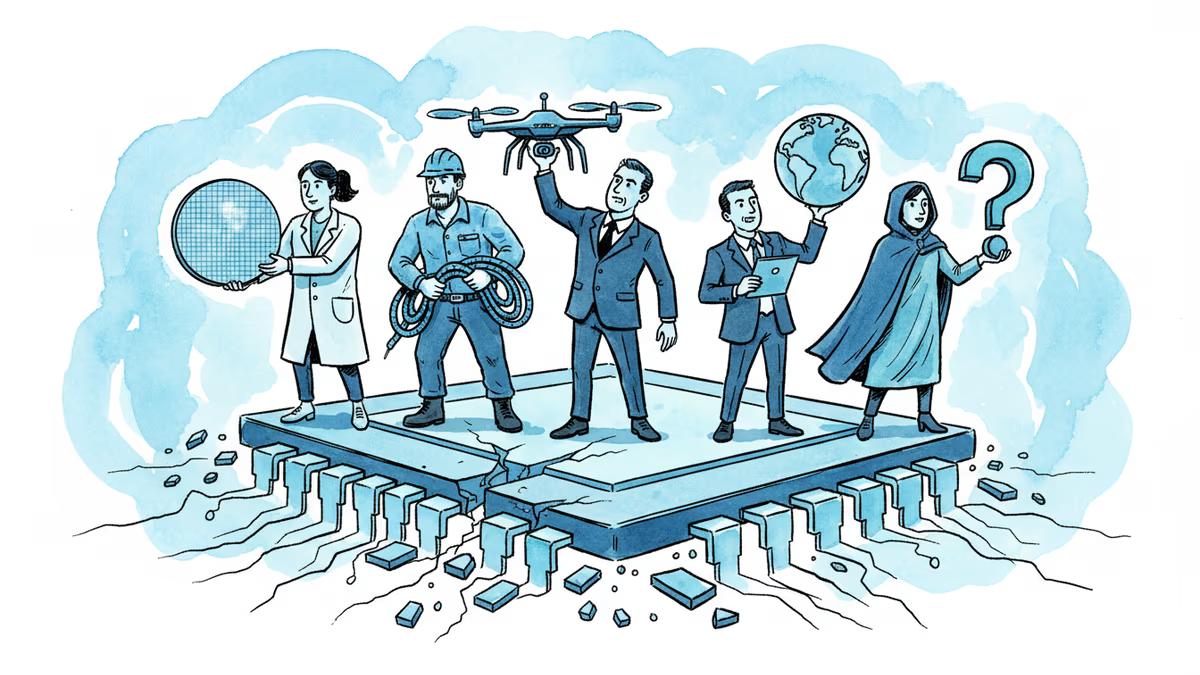
At Milken 2026, five AI insiders—from the CEO of ASML to a quantum physicist challenging LLMs—laid out the physical, energy, and geopolitical limits the AI boom is running into.
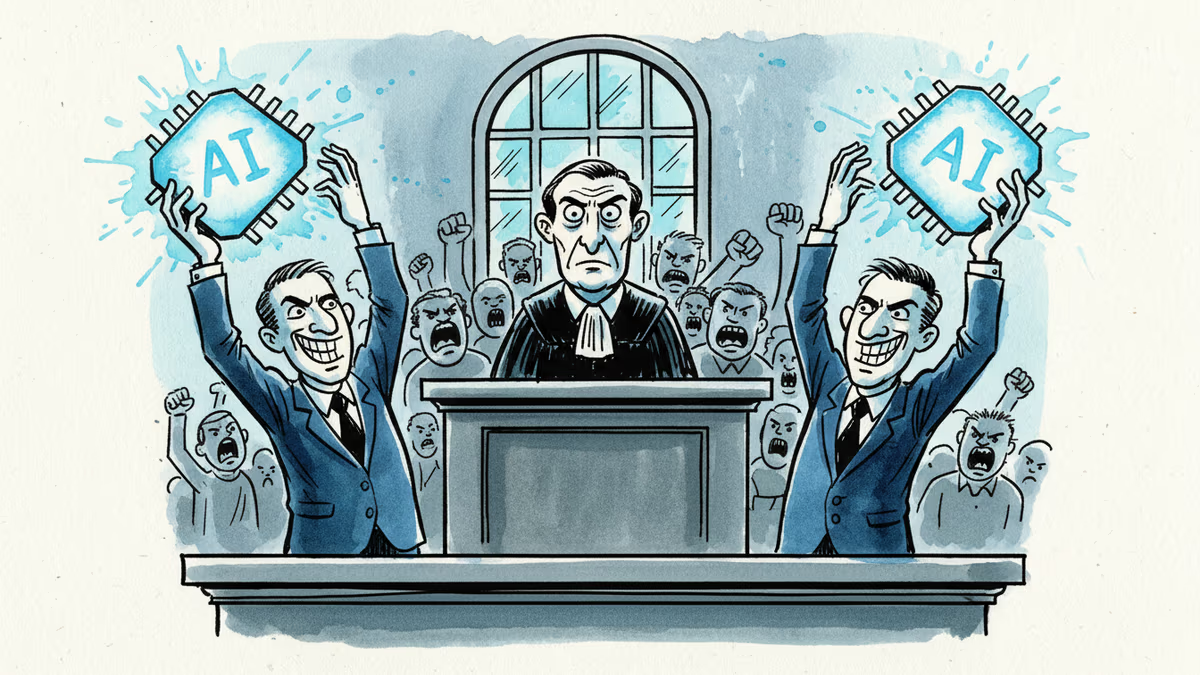
The Musk v. Altman trial in Oakland isn't just a contract dispute. It's become an unscripted window into how AI's most powerful figures actually operate—and who they think should control the technology's future.

Cohere and Aleph Alpha are merging to build a transatlantic AI challenger valued at $20 billion. Their pitch: sovereignty, not just performance. Can it work?

Databricks CTO Matei Zaharia just won computing's top prize. His take on AGI, the security nightmare hiding inside AI agents, and why the real AI revolution is about research, not chatbots.
At Milken 2026, five AI insiders—from the CEO of ASML to a quantum physicist challenging LLMs—laid out the physical, energy, and geopolitical limits the AI boom is running into.
The Musk v. Altman trial in Oakland isn't just a contract dispute. It's become an unscripted window into how AI's most powerful figures actually operate—and who they think should control the technology's future.
Cohere and Aleph Alpha are merging to build a transatlantic AI challenger valued at $20 billion. Their pitch: sovereignty, not just performance. Can it work?
Databricks CTO Matei Zaharia just won computing's top prize. His take on AGI, the security nightmare hiding inside AI agents, and why the real AI revolution is about research, not chatbots.
Thoughts
Share your thoughts on this article
Sign in to join the conversation