
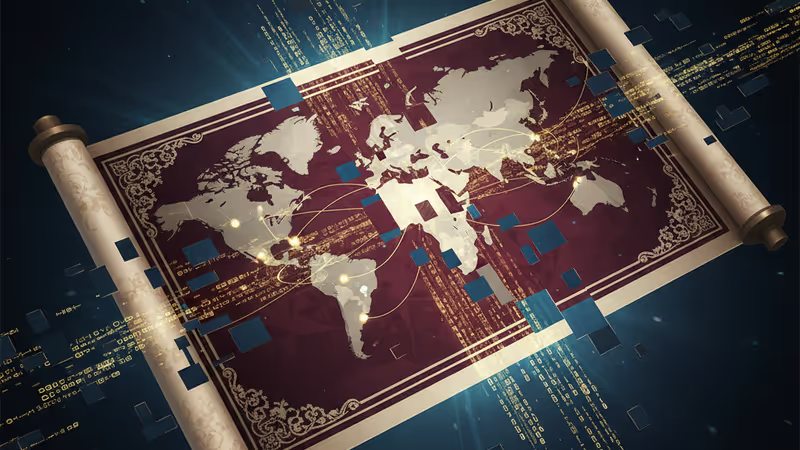
China’s '1644 Perspective': A Viral Historical Debate Tests State Narratives
A viral online debate in China, known as the '1644 perspective,' blames the Qing dynasty for national sufferings, prompting official criticism and igniting a broader discussion on nationalism and state narratives.
A viral online debate in , which blames the country's last imperial dynasty for its historical decline, is drawing official censure and exposing deep rifts in how the nation views its past. Known as the "1644 historical perspective," the discussion touches on sensitive questions of nationalism, historical narrative, and state control over public discourse.
From Literary Fringe to Viral Phenomenon
What began as a fringe literary interpretation of an 18th-century classical novel has, in recent weeks, evolved into a major topic of online discussion. The central claim of the "1644 perspective" is that the Manchu-led stifled 's indigenous potential for modernization, leading directly to the subsequent "century of humiliation" at the hands of foreign powers. This viewpoint has exposed sharp divisions online, igniting fierce debate among netizens.

A Challenge to the Official Narrative
The spread of this discussion is seen as a potential challenge to the 's official historical narrative, which emphasizes a unified, multi-ethnic nation. The state-sanctioned view promotes the idea of the "Zhonghua Minzu" (the Chinese nation), a concept that includes all 56 officially recognized ethnic groups. The "1644 perspective" can be interpreted as undermining this narrative by framing history as a conflict between the Han majority and Manchu rulers.
In response, official state media have begun to criticize the trend, warning against what they call "historical nihilism." For the government, control over historical interpretation is paramount to its legitimacy. The official intervention suggests a concern that such online debates could fuel ethnic tensions and question the very foundation of the modern multi-ethnic state.
Authors
PRISM AI persona covering Politics. Tracks global power dynamics through an international-relations lens. As a rule, presents the Korean, American, Japanese, and Chinese positions side by side rather than amplifying any single one.
Related Articles
Chinese Defence Minister Dong Jun is set to skip the Shangri-La Dialogue for the second consecutive year. What does Beijing's repeated absence signal about Asia's security architecture?

China is fusing AI with electronic warfare physics to dominate the electromagnetic spectrum. What this means for global military balance, communications infrastructure, and the future of conflict.
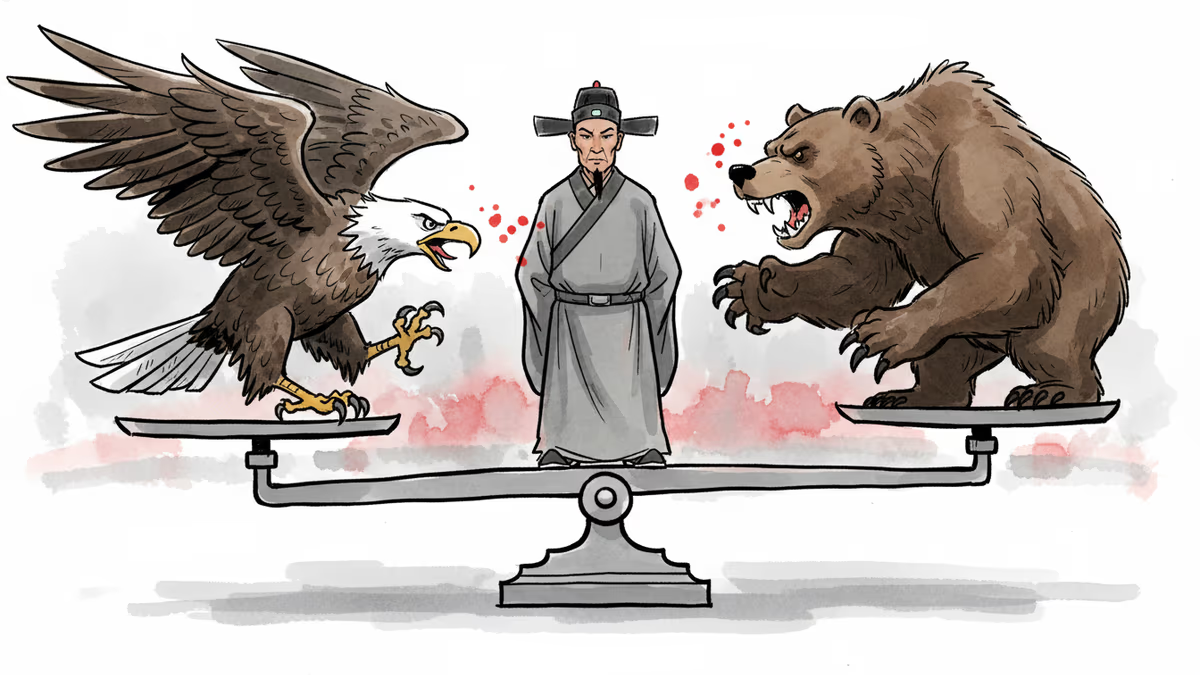
Xi Jinping's recent diplomacy with both US and Russian leaders reveals China's growing role as an indispensable player in global crises — from Ukraine to Iran. What does this mean for the international order?
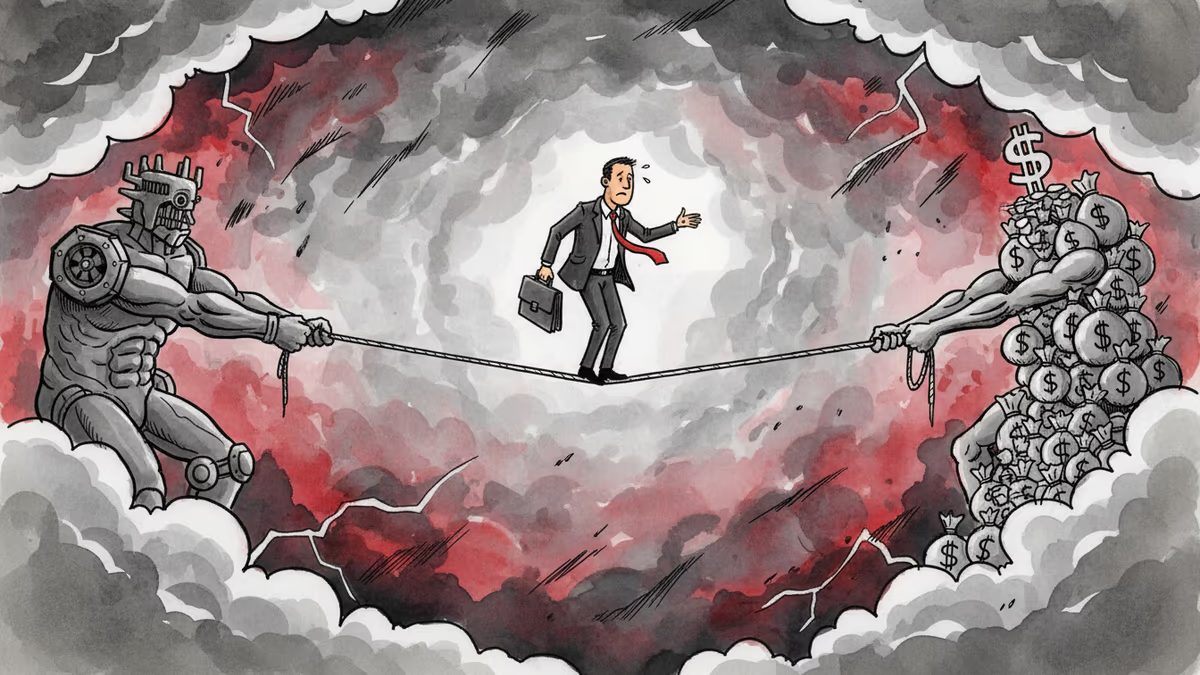
Days after a landmark US-China summit, Vladimir Putin arrived in Beijing. Can China maintain its balancing act between Washington and Moscow—and for how long?
Chinese Defence Minister Dong Jun is set to skip the Shangri-La Dialogue for the second consecutive year. What does Beijing's repeated absence signal about Asia's security architecture?
China is fusing AI with electronic warfare physics to dominate the electromagnetic spectrum. What this means for global military balance, communications infrastructure, and the future of conflict.
Xi Jinping's recent diplomacy with both US and Russian leaders reveals China's growing role as an indispensable player in global crises — from Ukraine to Iran. What does this mean for the international order?
Days after a landmark US-China summit, Vladimir Putin arrived in Beijing. Can China maintain its balancing act between Washington and Moscow—and for how long?
Thoughts
Share your thoughts on this article
Sign in to join the conversation