

3 Glimmers of Climate Hope in 2025: China's Emissions Turn, Grid Batteries, and the AI Effect
Despite a grim year for climate news in 2025, there are bright spots. China has flattened emissions while growing its economy, grid battery deployment is surging, and the AI boom is driving clean energy investment.
In a year of record emissions and climate disasters, 2025 has delivered a steady stream of grim news. Global greenhouse-gas emissions hit another all-time high, and this year is set to be one of the warmest on record. But beneath the worrying headlines, a few crucial bright spots have emerged, signaling that progress is still possible.
China Rewrites the Growth Playbook
One of the most encouraging signs this year came from China, the world's biggest polluter. According to an analysis in Carbon Brief, the nation has kept its carbon dioxide emissions flat for the last year and a half. What's remarkable is that this happened while its economy is on track to grow by about 5%. Unlike previous plateaus during economic downturns, China is now showing it can decouple economic growth from emissions.
The engine behind this shift is a massive build-out of renewables. The Carbon Brief analysis noted that China added an astounding 240 gigawatts of solar power and 61 gigawatts of wind in just the first nine months of the year. That's nearly as much solar power as the US has installed in its entire history.

Batteries to the Grid's Rescue
In the US, the deployment of grid storage batteries is happening at a blistering pace. Back in 2015, the industry set a goal of adding 35 gigawatts by 2035. It passed that goal a decade early this year, hitting 40 gigawatts a few months later. According to data from BloombergNEF, prices for grid storage battery packs fell 45% compared to last year, fueling the boom. In states like California and Texas, these batteries are already helping meet evening demand and reducing the need for natural-gas plants.
AI's Unexpected Clean Energy Push
The AI boom presents a paradox. It's driving up electricity demand—power supplied to US data centers jumped 22% this year. But this voracious appetite for energy is also spurring new investment in next-generation clean technologies. Tech giants like Google, Microsoft, and Meta have emissions goals and are searching for alternatives. In June, Meta signed a deal for geothermal power, and in October, Google signed an agreement to help reopen a shuttered nuclear power plant.
Authors
Related Articles

China is restricting AI researchers and startup founders from traveling abroad as the U.S.-China AI performance gap narrows to just 2.7%. What Beijing's talent lockdown means for the global AI race.
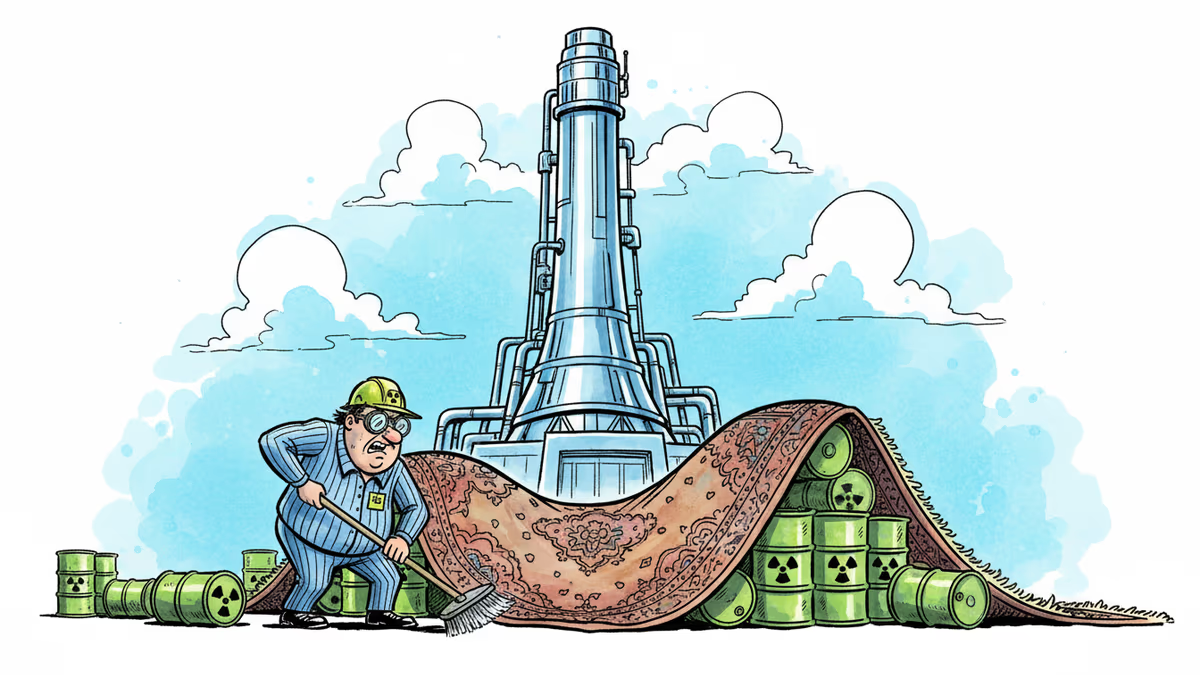
Nuclear energy is booming again, fueled by Big Tech's data center appetite. But 70 years of spent fuel still has nowhere permanent to go. Finland solved it. The US hasn't tried hard enough.
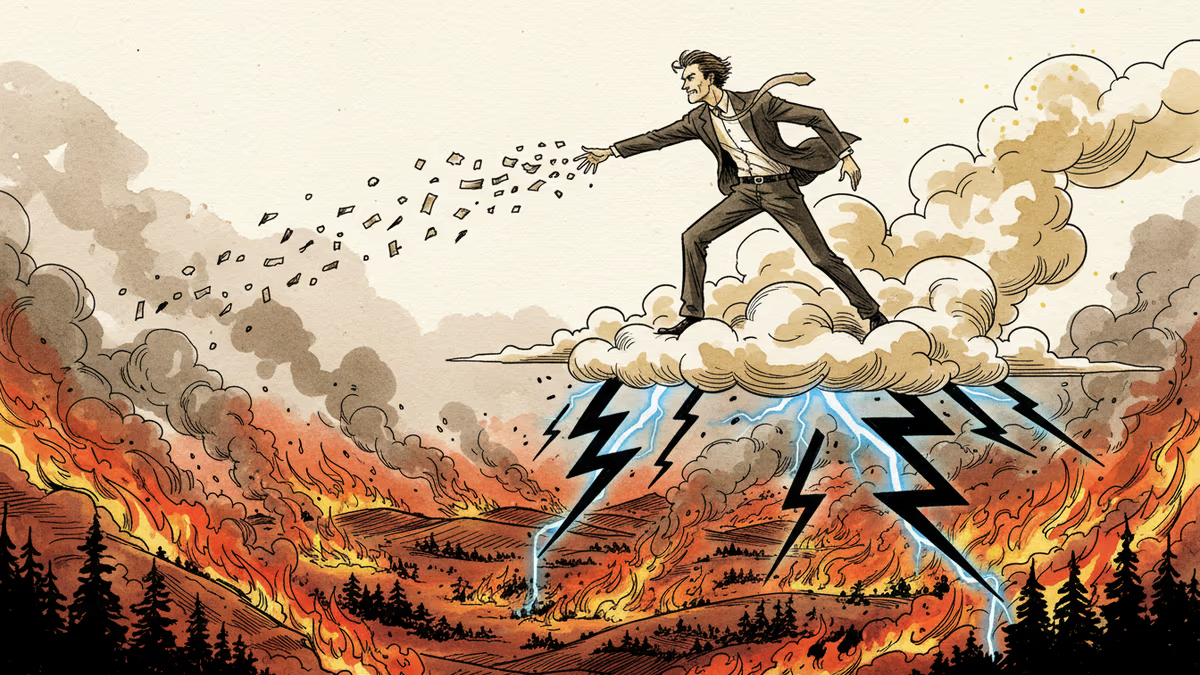
Skyward Wildfire raised millions claiming it can prevent wildfires by stopping lightning strikes. But is it just repackaging 60-year-old cloud seeding technology?
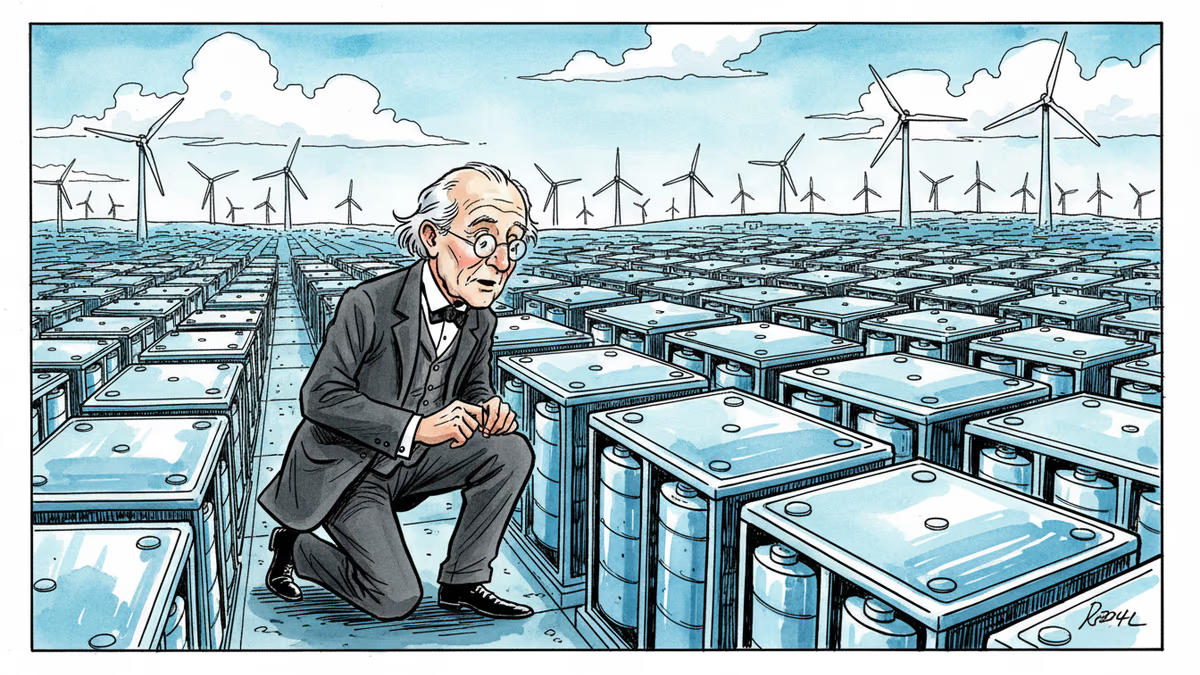
UCLA researchers revive Thomas Edison's nickel-iron battery concept with modern nanotechnology, potentially solving renewable energy storage challenges that stumped the grid for decades.
China is restricting AI researchers and startup founders from traveling abroad as the U.S.-China AI performance gap narrows to just 2.7%. What Beijing's talent lockdown means for the global AI race.
Nuclear energy is booming again, fueled by Big Tech's data center appetite. But 70 years of spent fuel still has nowhere permanent to go. Finland solved it. The US hasn't tried hard enough.
Skyward Wildfire raised millions claiming it can prevent wildfires by stopping lightning strikes. But is it just repackaging 60-year-old cloud seeding technology?
UCLA researchers revive Thomas Edison's nickel-iron battery concept with modern nanotechnology, potentially solving renewable energy storage challenges that stumped the grid for decades.
Thoughts
Share your thoughts on this article
Sign in to join the conversation