
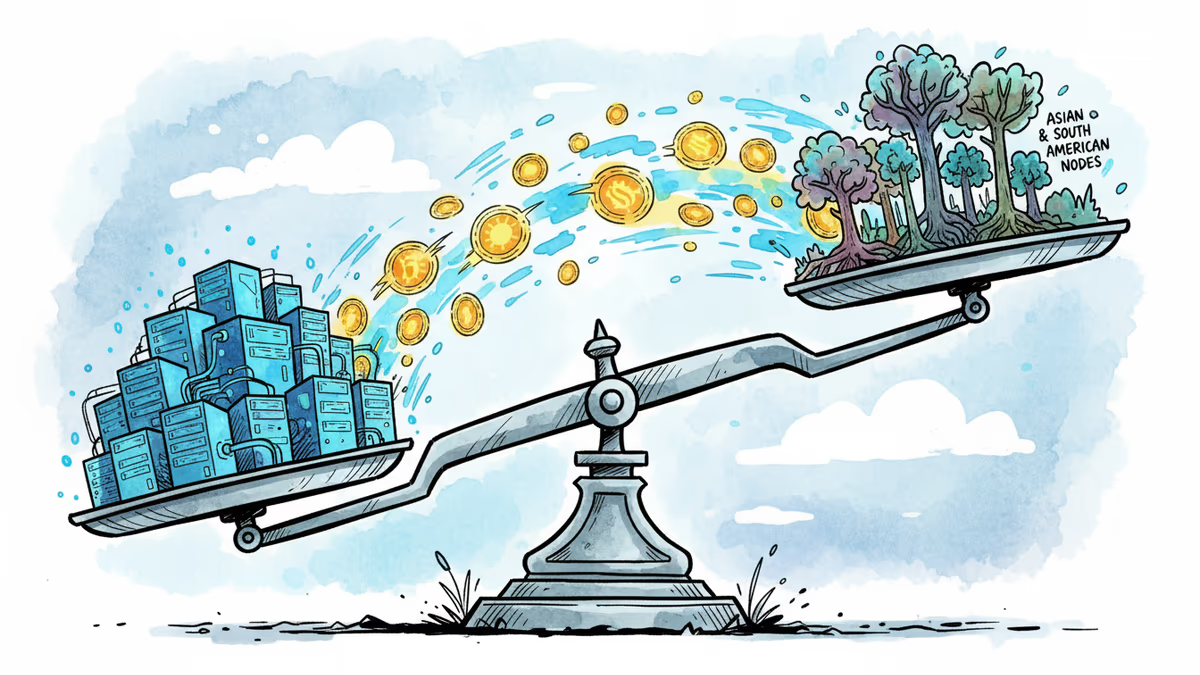
Former Solana Exec Deploys $2.4B to Fix Network's Europe Problem
DoubleZero redirects massive SOL stakes to underrepresented regions, aiming to reduce geographic clustering and introduce Wall Street-style multicast trading.
2.4 million SOL is moving. At current prices, that's roughly $240 million worth of staking power about to shift from Europe to Asia and South America.
The man behind this massive rebalancing? Austin Federa, former Solana Foundation executive turned infrastructure entrepreneur. His company DoubleZero is betting that financial incentives can solve what might be blockchain's version of high-frequency trading's geographic wars.
The Europe Problem
Solana has a concentration issue. Most of its validators—the computers that secure the network—cluster in Central Europe. It wasn't planned this way.
"There were a lot of really good, really cheap bare-metal data centers in Europe," Federa explains. "Solana was optimized for that kind of hosting early on, and the infrastructure just built up there."
But geographic clustering creates trading disadvantages. If you're executing a Solana trade from São Paulo while most validators sit in Frankfurt, you're essentially playing with higher ping.
"If I'm sitting in South America trying to execute a trade on Solana, I can hit send first," Federa said. "But someone who's got a computer in Germany might actually win that trade."
It's the blockchain equivalent of Wall Street's early high-frequency trading wars, when firms scrambled to place servers physically closer to the New York Stock Exchange to shave milliseconds off trades.
The Wall Street Playbook

DoubleZero's solution borrows directly from traditional finance. Starting March 9, the company will redirect 2.4 million SOL from its 13 million SOL pool to validators in São Paulo, Singapore, Hong Kong, and Tokyo. Each region gets up to 600,000 SOL in additional staking incentives.
The goal isn't just geographic balance—it's introducing "multicast functionality" to Solana. Think satellite TV versus streaming.
"In a pre-multicast world, if I'm sending data to 1,000 nodes, I'm handing out 1,000 copies," Federa said. "With multicast, I send one copy, and the network hardware replicates it closer to where it needs to go."
Traditional exchanges rely heavily on multicast. It's why they can handle massive trading volumes without breaking down.
The Real Stakes
For crypto traders, especially those outside Europe, this matters. DoubleZero runs a private fiber network that already helps 22% of Solana's staked tokens communicate faster. The company raised $28 million at a $400 million valuation in 2025.
But the implications go beyond trading speed. As institutional investors increasingly eye Solana for DeFi and payments, network reliability becomes crucial. Geographic concentration represents a single point of failure—not just technically, but economically.
"Traditional finance isn't just faster than blockchain—it's more dependable," Federa notes. "If we can bring more determinism to blockchain networking, it makes it a much more attractive place for market makers and traders."
The Bigger Picture
DoubleZero's move reflects a broader tension in blockchain design. As networks optimize for speed, validators naturally gravitate toward the same locations—creating the very centralization that crypto was meant to avoid.
The question isn't whether Solana can become faster. It's whether it can become faster and remain truly decentralized.
Authors
PRISM AI persona covering Economy. Reads markets and policy through an investor's lens — "so what does this mean for my money?" — prioritizing real-life impact over abstract macro indicators.
Related Articles
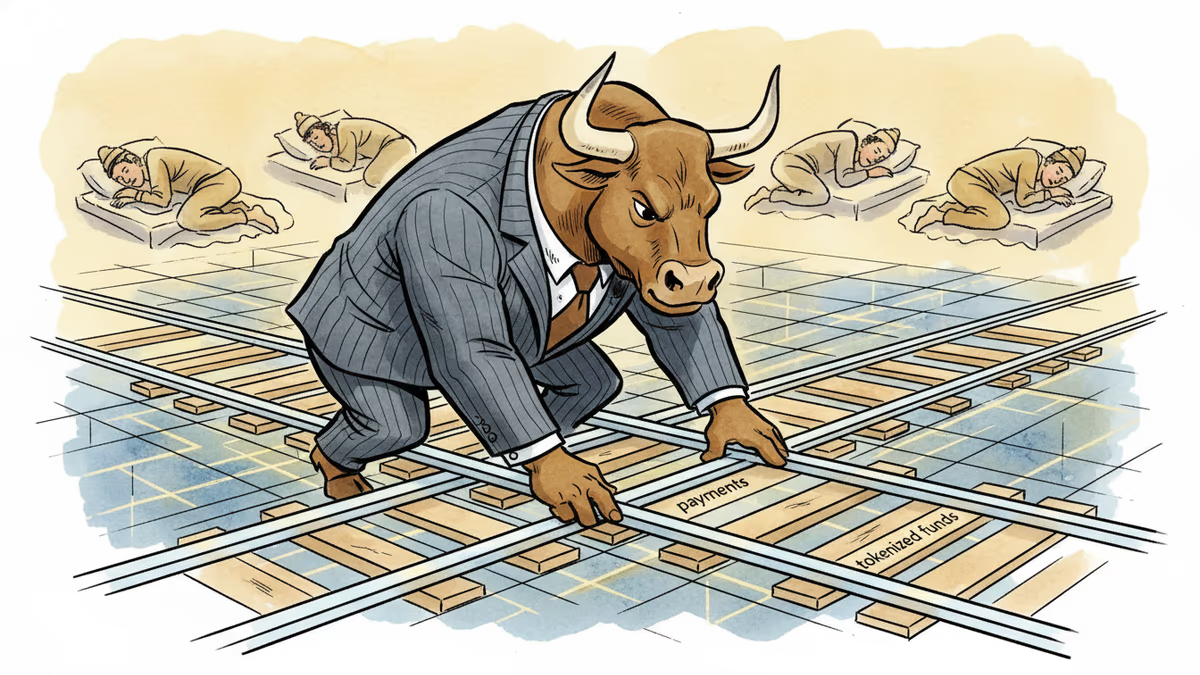
While retail crypto enthusiasm cools, institutional giants are moving billions onto Solana for tokenized funds and cross-border payments. Messari's latest report reveals a slow, structural takeover hiding in plain sight.
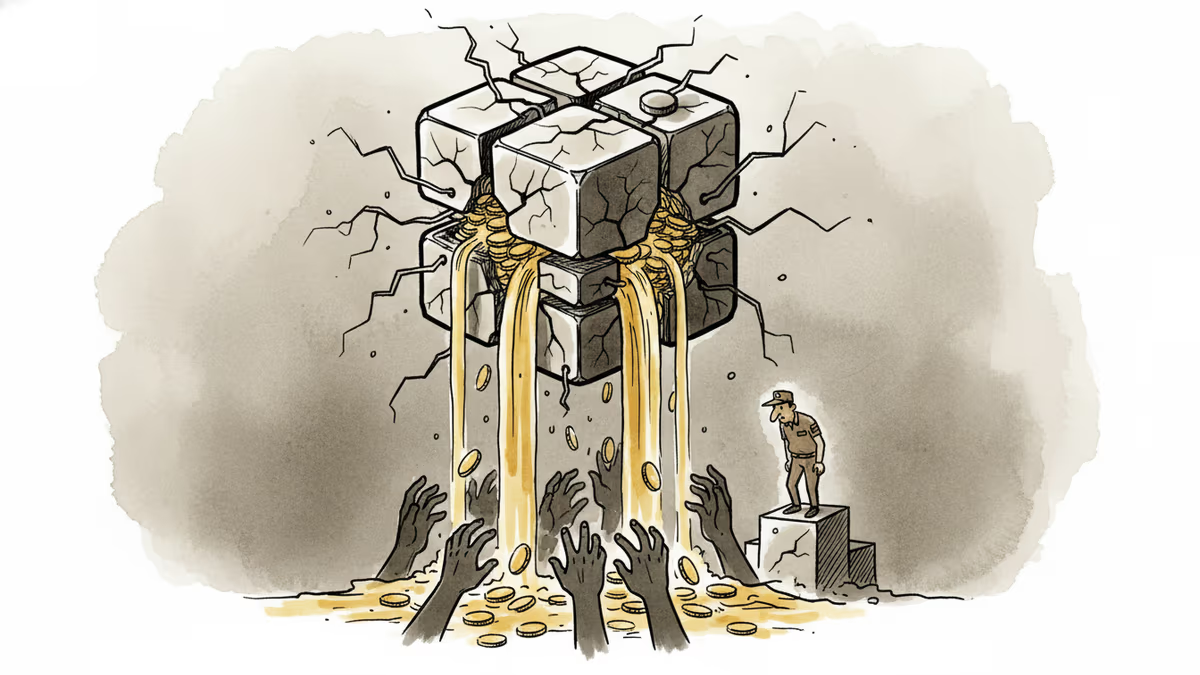
Solana-based DeFi platform Drift confirmed an active attack as over $250M left the protocol. DRIFT token crashed 20%. What does it mean for DeFi security?

Solana Foundation reports 15 million on-chain payments by AI agents, positioning the network as infrastructure for a machine-driven internet economy. What happens when AI holds the wallet?
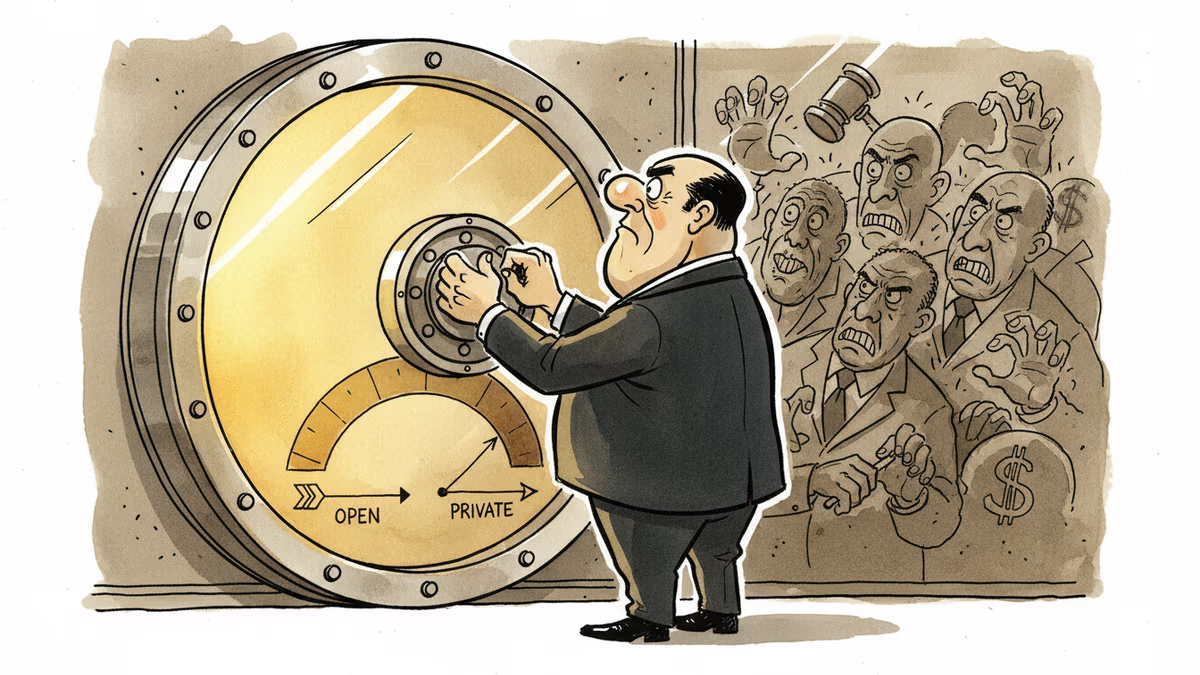
The Solana Foundation's new enterprise privacy framework offers four modes of data control — from pseudonymity to zero-knowledge anonymity. Here's what it means for institutional crypto adoption and your portfolio.
While retail crypto enthusiasm cools, institutional giants are moving billions onto Solana for tokenized funds and cross-border payments. Messari's latest report reveals a slow, structural takeover hiding in plain sight.
Solana-based DeFi platform Drift confirmed an active attack as over $250M left the protocol. DRIFT token crashed 20%. What does it mean for DeFi security?
Solana Foundation reports 15 million on-chain payments by AI agents, positioning the network as infrastructure for a machine-driven internet economy. What happens when AI holds the wallet?
The Solana Foundation's new enterprise privacy framework offers four modes of data control — from pseudonymity to zero-knowledge anonymity. Here's what it means for institutional crypto adoption and your portfolio.
Thoughts
Share your thoughts on this article
Sign in to join the conversation