

Jen Easterly RSAC CEO Appointment 2026: A New Era for Global Cybersecurity
Jen Easterly, former CISA Director, appointed as RSAC CEO. Explore the 2026 strategic vision for AI security and global cybersecurity leadership.
A heavyweight of American national security is taking the private sector's stage. Jen Easterly, who steered the CISA for more than 3 years, has been named CEO of the RSA Conference (RSAC). It's a move that signals a massive shift in how the industry's premier gathering intends to operate in an AI-driven landscape.
The Strategic Shift in Jen Easterly RSAC CEO Appointment 2026
According to WIRED, RSAC isn't just a yearly event anymore; it's evolving into a year-round global membership entity. Since its inception in 1991, the organization has grown from a niche cryptography meeting into a tens of thousands strong gathering. Easterly's goal is to deepen internationalization and bolster the startup ecosystem, specifically focusing on AI-driven cyber companies and 'secure by design' innovations.

Cybersecurity is not a political endeavor, RSAC is certainly not a political organization, and I am not a political person. I am a lifelong independent.
Navigating Political Tides and Technological Inflections
Easterly's transition comes amid a complex political climate. While she led CISA starting in 2021, the Trump administration opted not to retain her during the 2024 transition. Despite past controversies regarding CISA's election integrity work, Easterly maintains that the security of infrastructure and software remains a universal mission that transcends borders and administrations.
Authors
Related Articles
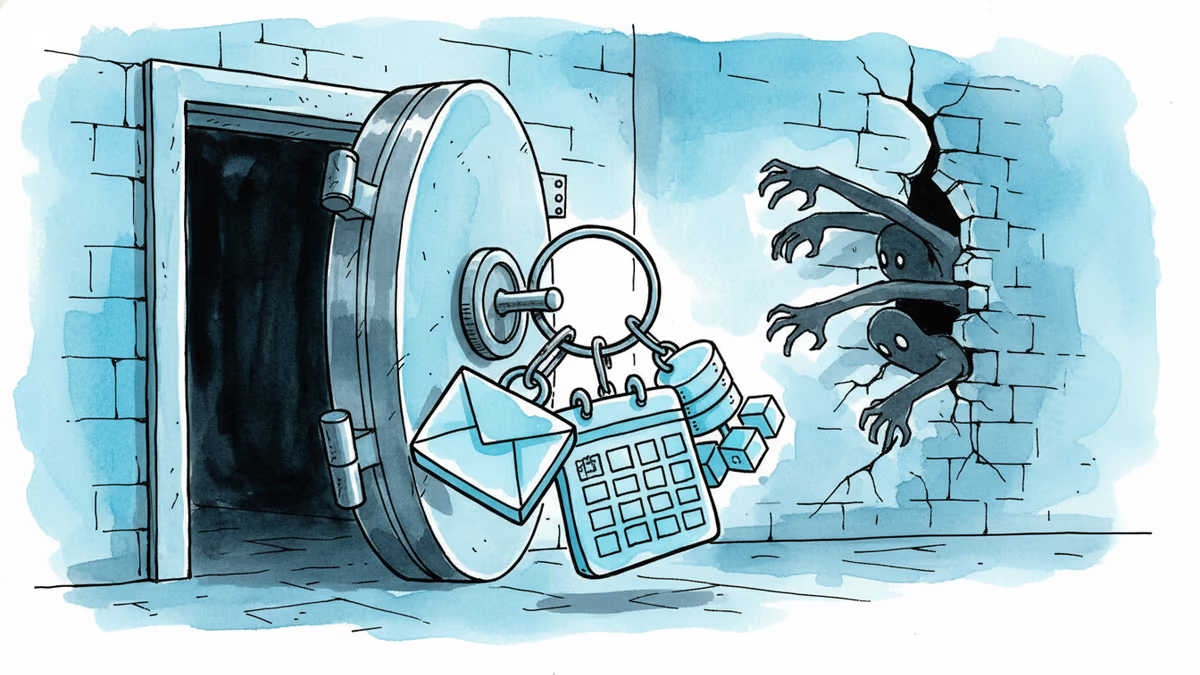
A critical vulnerability in Starlette—downloaded 325 million times per week—puts millions of AI agent servers at risk, exposing stored credentials for email, databases, and third-party services.

GitHub confirmed hackers stole data from 3,800 internal repositories via a poisoned VS Code extension. Here's why developer tools are now the most dangerous attack surface in tech.

A Utah woman was sentenced to life in prison partly because of her Google searches and deleted texts. The Kouri Richins case reveals how digital footprints have become the courtroom's most reliable witness.
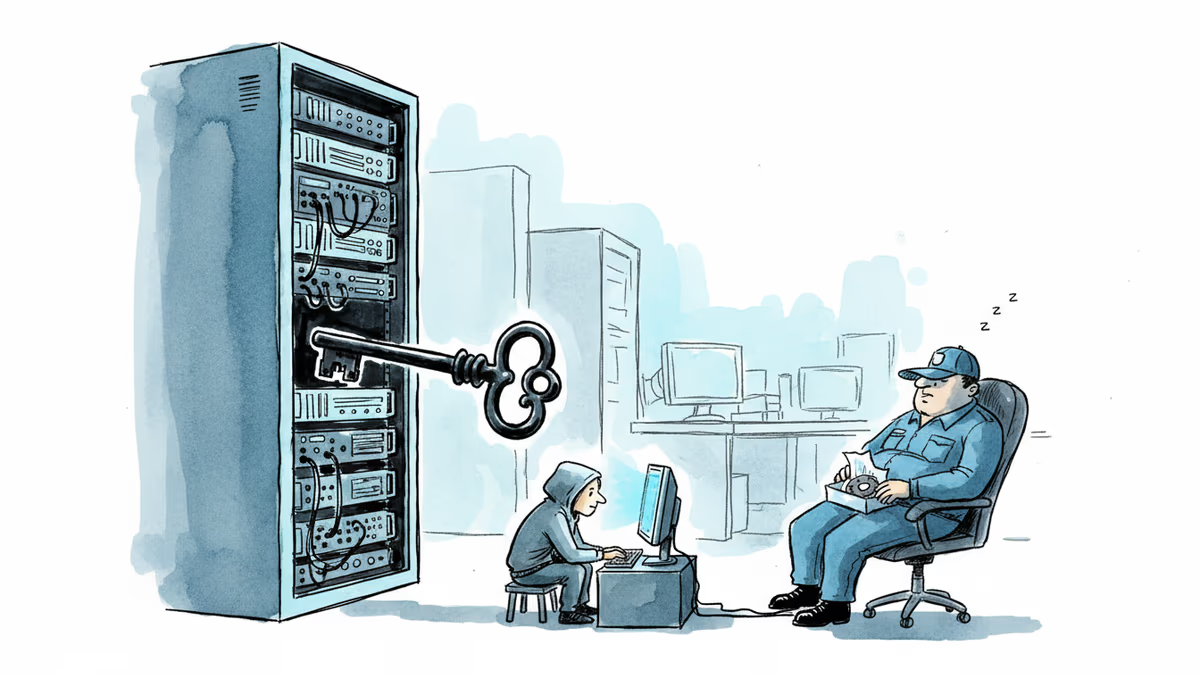
Dirty Frag gives low-privilege users root access on virtually every Linux distro. The exploit code leaked three days ago. Microsoft says attackers are already experimenting with it.
A critical vulnerability in Starlette—downloaded 325 million times per week—puts millions of AI agent servers at risk, exposing stored credentials for email, databases, and third-party services.
GitHub confirmed hackers stole data from 3,800 internal repositories via a poisoned VS Code extension. Here's why developer tools are now the most dangerous attack surface in tech.
A Utah woman was sentenced to life in prison partly because of her Google searches and deleted texts. The Kouri Richins case reveals how digital footprints have become the courtroom's most reliable witness.
Dirty Frag gives low-privilege users root access on virtually every Linux distro. The exploit code leaked three days ago. Microsoft says attackers are already experimenting with it.
Thoughts
Share your thoughts on this article
Sign in to join the conversation