
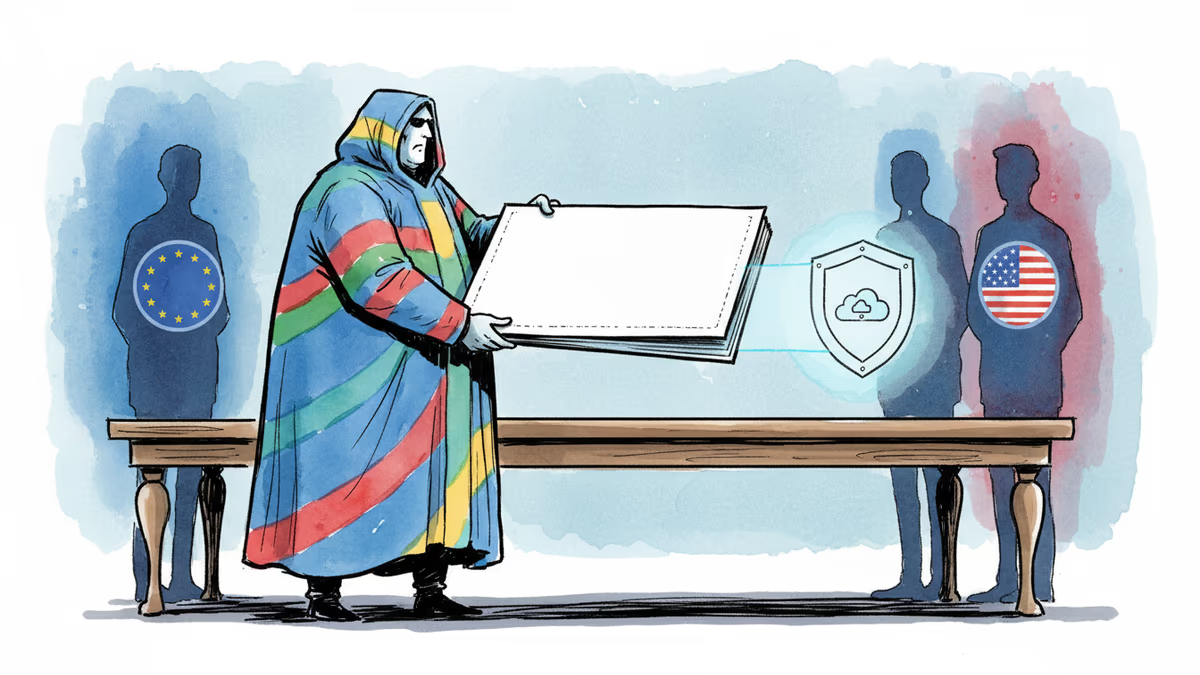
Why Google Paid $32B for Wiz — Twice
Google's $32 billion acquisition of Wiz is the largest venture-backed deal in history. But the real story isn't the price tag — it's what the deal reveals about where the cloud war is actually being fought.
Wiz said no. So Google came back with $9 billion more.
In 2024, Google approached cloud security startup Wiz with a $23 billion offer. Wiz turned it down, betting on independence and a potential IPO. Less than a year later, the deal closed anyway — at $32 billion, making it the largest venture-backed acquisition ever recorded. The extra $9 billion wasn't rounding error. It was a signal.
What Wiz Actually Built
Founded in 2020 by Israeli entrepreneurs, Wiz reached $500 million in annual recurring revenue in just four years. More than 40% of Fortune 500 companies are customers. But raw growth doesn't explain the price.
Index Ventures partner Shardul Shah put it plainly: Wiz sits "at the center of three tailwinds — AI, cloud, and security spend." As enterprises migrate workloads to multi-cloud environments, their attack surface expands in ways that traditional security tools weren't built to map. Wiz built a platform that gives security teams a unified, real-time view across AWS, Azure, and Google Cloud simultaneously. That's not a feature. That's infrastructure.
The deal didn't close quickly. Antitrust regulators on both sides of the Atlantic — the US and the EU — reviewed the acquisition before it was cleared. The scrutiny itself tells you something about how consequential this space has become.
Google's Calculus
On the surface, $32 billion for a four-year-old company looks aggressive. Look closer, and it starts to look defensive.

Google Cloud is third in the cloud market, trailing AWS and Microsoft Azure by a significant margin. Enterprise customers — especially in finance, healthcare, and government — don't just buy compute and storage. They buy trust. Security posture is increasingly a procurement requirement, not an afterthought. By owning Wiz, Google can walk into enterprise deals and say: security is native, not bolted on.
There's a competitive dimension too. Microsoft has spent years bundling Defender into its cloud stack, turning security into a moat. Google needed an answer. Wiz is it.
The Stakeholders Who Are Watching Closely
For antitrust regulators, this deal raises a familiar question: does integrating a best-of-breed security tool into a cloud platform benefit customers through convenience, or harm them by locking out independent security vendors? The EU and FTC cleared it — but the precedent matters for future deals.
For independent cybersecurity vendors — CrowdStrike, Palo Alto Networks, Zscaler — the message is uncomfortable. If cloud providers start bundling security at the infrastructure layer, the addressable market for standalone security tools could compress. Shares in the sector moved on the news.
For enterprise CISOs, the calculus is more nuanced. A Google-owned Wiz might mean tighter integration and lower friction. It might also mean less leverage in negotiations, and a harder conversation about vendor lock-in when your security tool and your cloud provider are the same company.
For venture investors and founders, Wiz's choice to sell rather than IPO is its own story. With public markets volatile and the IPO window narrow, a $32 billion exit in cash is a rational outcome — even if it means giving up the upside of going public. Expect more founders to run that same calculation.
The Anthropic Subplot Worth Watching
The same week this deal closed, tech workers at OpenAI, Google, and Microsoft signed a legal brief supporting Anthropic in its dispute with the Department of Defense. The convergence isn't coincidental. AI, cloud, security, and government contracts are increasingly the same conversation. Wiz gives Google a seat at the table where that conversation gets expensive.
Authors
Related Articles
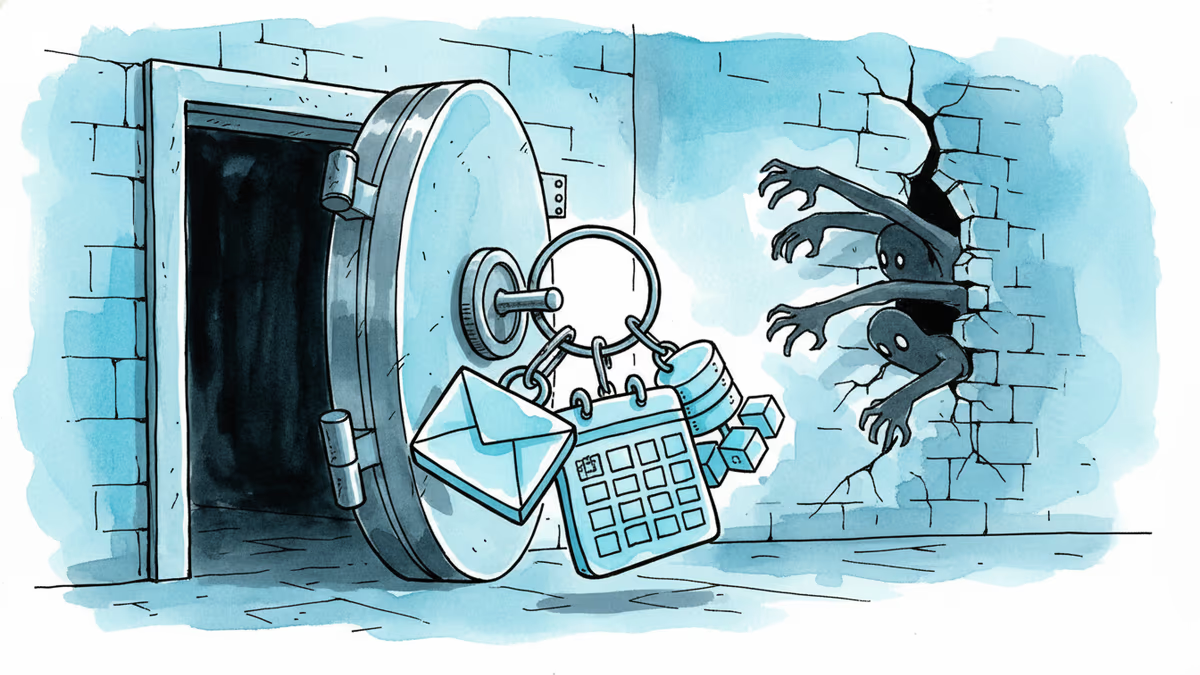
A critical vulnerability in Starlette—downloaded 325 million times per week—puts millions of AI agent servers at risk, exposing stored credentials for email, databases, and third-party services.
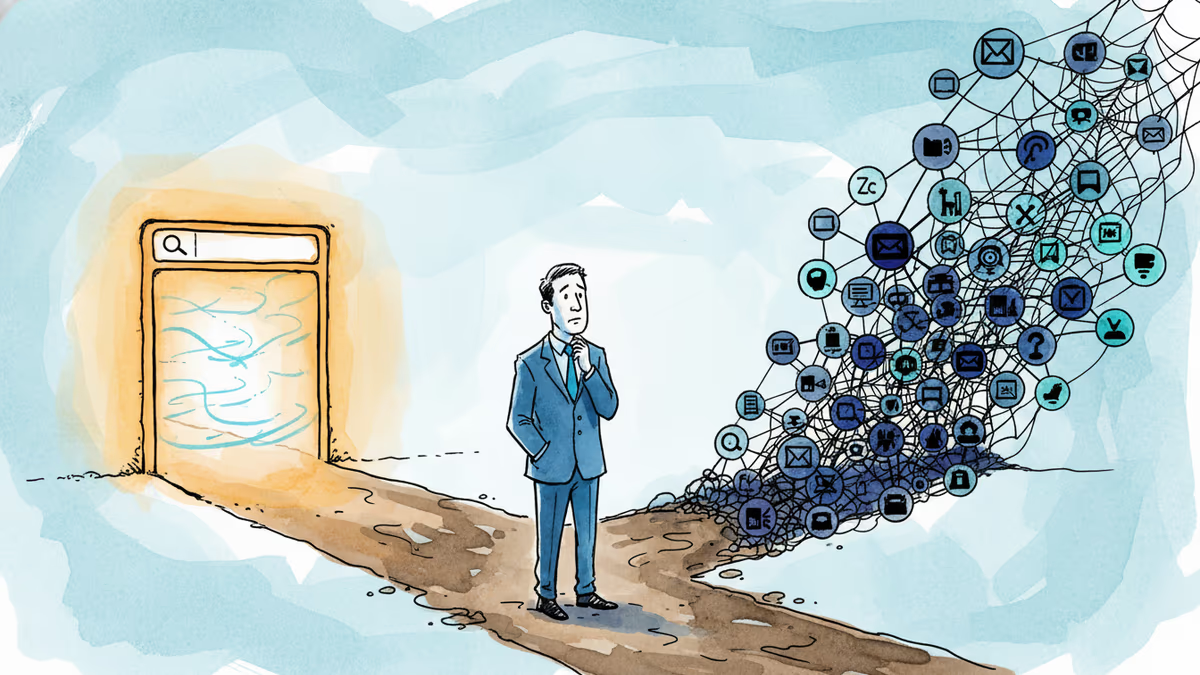
In a post-Google I/O interview, Sundar Pichai acknowledged flawed search results, real AI anxiety, and an AGI timeline that makes the label irrelevant. Here's what he said — and what it means.
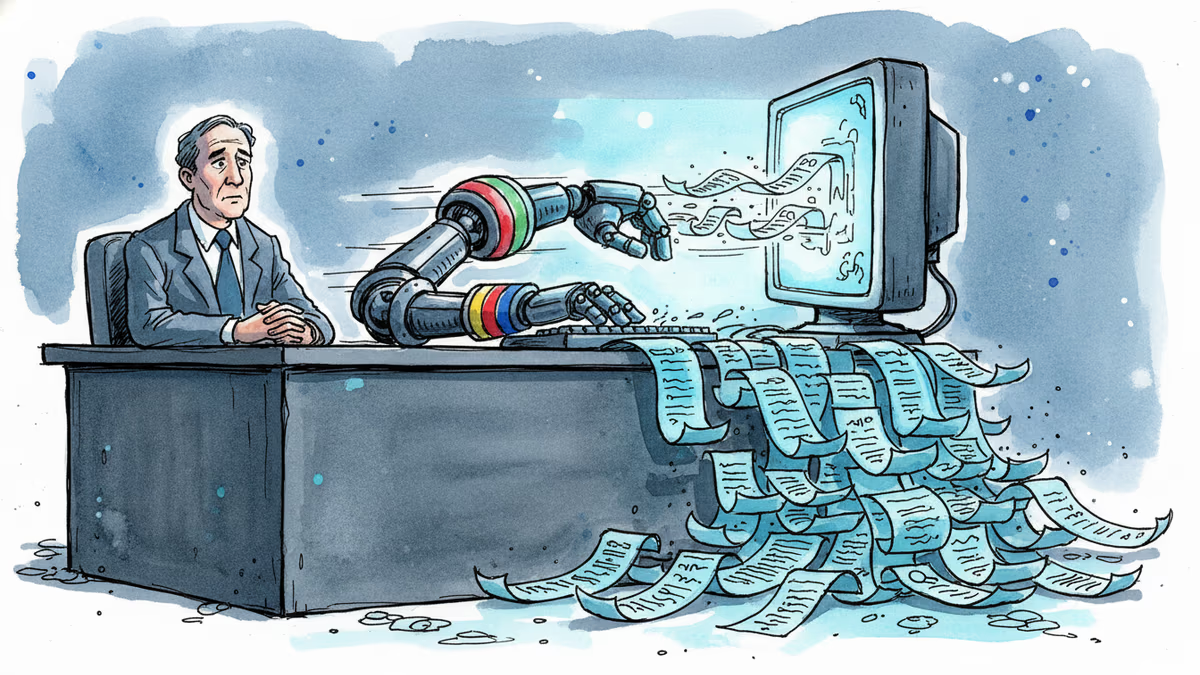
Google is building AI agents that search the web proactively, without user prompting. That's not just a product update — it's a fundamental shift in who controls the information you receive.

GitHub confirmed hackers stole data from 3,800 internal repositories via a poisoned VS Code extension. Here's why developer tools are now the most dangerous attack surface in tech.
A critical vulnerability in Starlette—downloaded 325 million times per week—puts millions of AI agent servers at risk, exposing stored credentials for email, databases, and third-party services.
In a post-Google I/O interview, Sundar Pichai acknowledged flawed search results, real AI anxiety, and an AGI timeline that makes the label irrelevant. Here's what he said — and what it means.
Google is building AI agents that search the web proactively, without user prompting. That's not just a product update — it's a fundamental shift in who controls the information you receive.
GitHub confirmed hackers stole data from 3,800 internal repositories via a poisoned VS Code extension. Here's why developer tools are now the most dangerous attack surface in tech.
Thoughts
Share your thoughts on this article
Sign in to join the conversation