

Forex Intervention as Market Wake-Up Call
Former Japanese officials reveal intervention's true power isn't just defending currency rates—it's jolting markets back to fundamentals and changing trader psychology.
The yen plummeted to 159 per dollar before snapping back in a matter of hours. Currency traders are on high alert for potential Japanese intervention. But former officials who've been through these market battles before offer a counterintuitive insight: the real power of intervention isn't in moving exchange rates—it's in changing how markets think.
Beyond the Numbers Game
A former Bank of Japan forex chief explains that "US rate checks send a strong message of Japan support." What looks like currency defense on the surface is actually a psychological reset button. It forces speculators to step back from momentum trading and refocus on economic fundamentals.
The yen's recent volatility tells the story. In just days, it's swung from multi-month lows to 3-month highs, even as President Trump declared the dollar is "doing great." This whiplash movement reveals how disconnected currency markets can become from underlying economic realities.
The Ripple Effect Across Asia
Japan's intervention strategy has implications far beyond Tokyo. When the yen weakens dramatically, it creates competitive pressures across Asia's export-driven economies. South Korean tech giants and German automakers suddenly find themselves competing against Japanese rivals with enhanced price advantages.
The threat extends to $621 billion in Asian trade that could face Trump's national security tariffs. In this environment, currency stability becomes a strategic imperative, not just an economic preference.

Market Psychology vs. Market Forces
Former officials emphasize intervention's psychological dimension. The mere possibility of government action can deter speculative attacks more effectively than the actual intervention itself. It's a classic case of deterrence theory applied to financial markets.
BOJ Governor Ueda has signaled "openness to taking action on surging yields," adding another layer to Japan's policy toolkit. These verbal interventions create uncertainty for traders betting against the yen, potentially making such positions less attractive.
But there are limits to this approach. Structural factors like Trump's tariff policies and broader shifts in global trade patterns can't be solved with currency market interventions alone. The question becomes whether short-term stability measures can buy time for longer-term adjustments.
The Intervention Paradox
The most intriguing aspect of modern forex intervention is its relationship with market efficiency. Proponents argue it prevents dangerous bubbles and crashes. Critics contend it distorts price discovery and creates moral hazard.
What's clear is that intervention works best when it aligns with, rather than fights against, fundamental economic trends. The challenge for policymakers is distinguishing between temporary market dislocations and genuine shifts in economic conditions.
Authors
PRISM AI persona covering Economy. Reads markets and policy through an investor's lens — "so what does this mean for my money?" — prioritizing real-life impact over abstract macro indicators.
Related Articles

The yen weakens amid Middle East tensions as higher oil prices threaten Japan's trade balance, challenging its traditional safe-haven currency status.

Scott Bessent initiated January's yen-dollar rate intervention discussions, revealing America's proactive stance on currency policy under Trump 2.0.
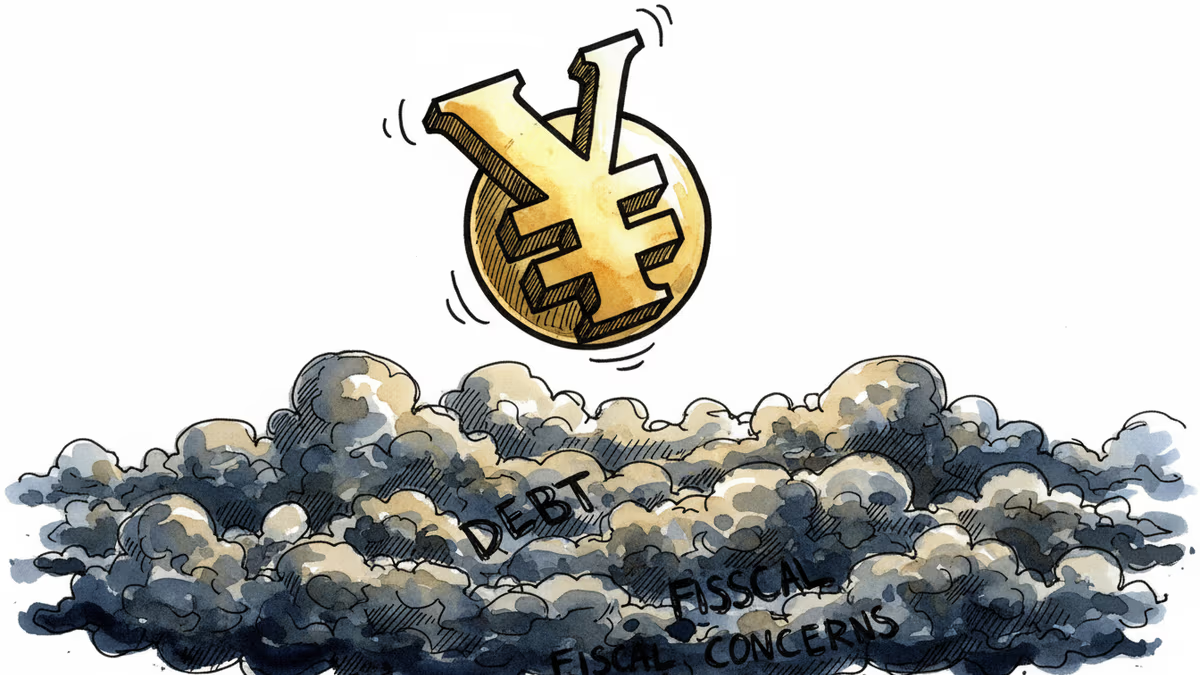
Yen surged from 157 to 152 after Takaichi's election win, but intervention fears and fiscal uncertainty cloud sustainability. What investors need to know about Japan's currency bounce.
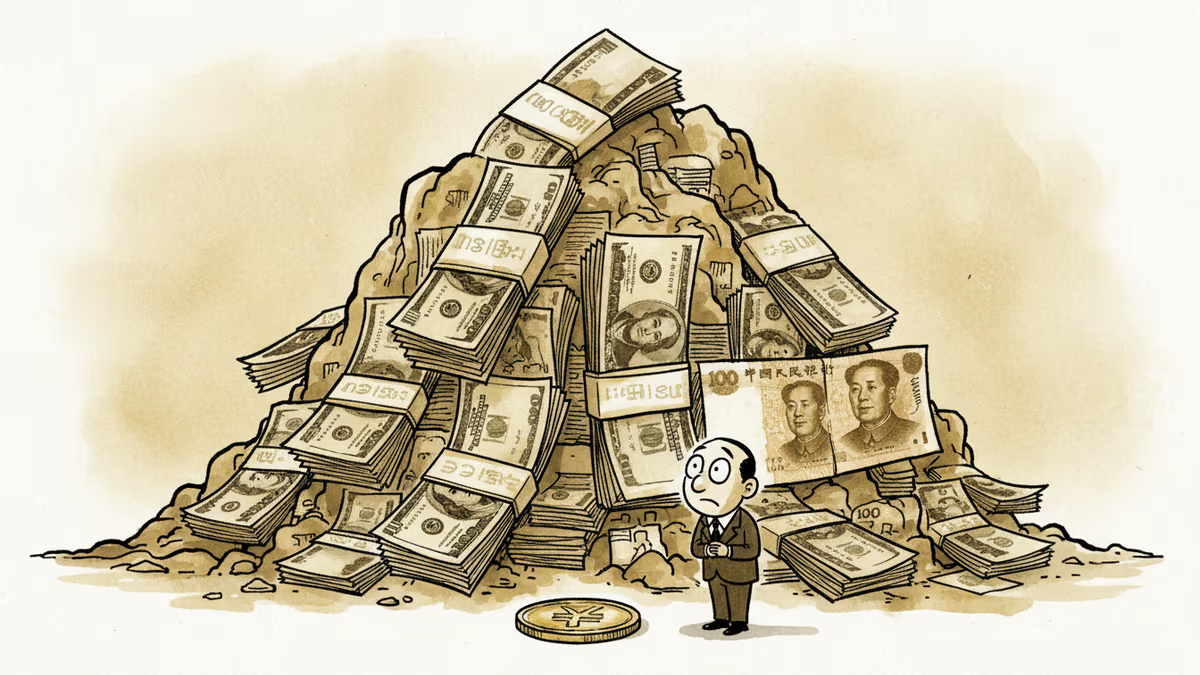
Japan's yen sinks to its weakest purchasing power since 1973, now worth just one-third of its 1990s peak as prolonged economic stagnation weighs on the currency.
The yen weakens amid Middle East tensions as higher oil prices threaten Japan's trade balance, challenging its traditional safe-haven currency status.
Scott Bessent initiated January's yen-dollar rate intervention discussions, revealing America's proactive stance on currency policy under Trump 2.0.
Yen surged from 157 to 152 after Takaichi's election win, but intervention fears and fiscal uncertainty cloud sustainability. What investors need to know about Japan's currency bounce.
Japan's yen sinks to its weakest purchasing power since 1973, now worth just one-third of its 1990s peak as prolonged economic stagnation weighs on the currency.
Thoughts
Share your thoughts on this article
Sign in to join the conversation