
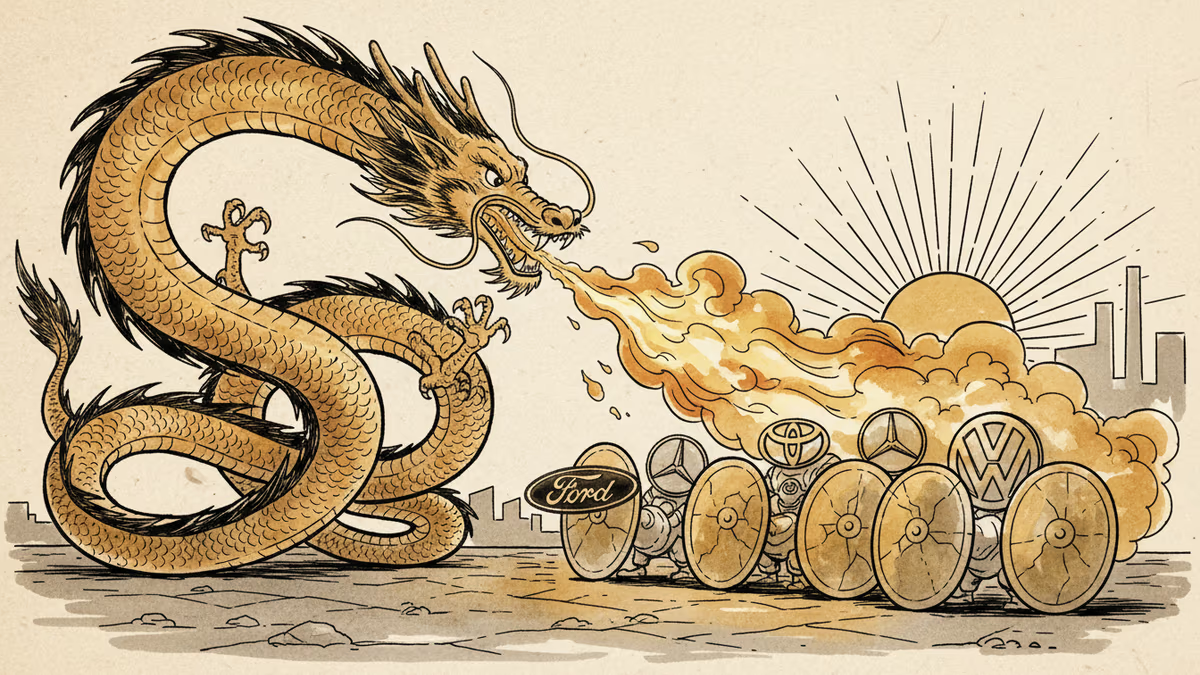
Ford CEO's China 'Wild Card' Warning Hits Global Auto Reality
Ford CEO Jim Farley warns Chinese automakers pose existential threat to global players through subsidized low-cost production and export pressure from weak domestic demand.
When Ford CEO Jim Farley called China a "wild card" for global automakers at the Detroit Auto Show, he wasn't just making conversation. He was sounding an alarm about what might be the auto industry's biggest disruption since the assembly line.
The Perfect Storm Brewing
Farley's warning centers on a dangerous combination: China's heavily subsidized production capacity meeting weakening domestic demand. It's creating what economists call a "perfect storm" of export pressure.
The numbers tell the story. China sold 30.09 million vehicles domestically in 2023, but growth is slowing this year. Meanwhile, production capacity remains massive. The math is simple: excess inventory has to go somewhere, and that somewhere is everywhere else.
Chinese EV maker BYD is already expanding production in Pakistan. Vietnam's VinFast targets 300,000 sales this year—a 50% jump. These aren't just ambitious goals; they're symptoms of China's export imperative.
The Subsidy Advantage
Here's what makes this different from typical trade competition: Chinese automakers aren't just competing on efficiency. They're backed by state subsidies that allow them to price below market rates while maintaining operations.

This creates an impossible situation for traditional automakers. How do you compete against companies that can sustain losses indefinitely thanks to government backing? Suzuki's decision to sell its Thai plant to Ford signals how established players are retreating from markets where Chinese rivals are advancing.
The Real Cost of Price Wars
China's domestic auto price war has cost the industry an estimated $68 billion over three years. That's not just Chinese companies bleeding money—it's global brands sacrificing profitability to defend market share.
Honda's net profit fell 42% partly due to EV struggles and competitive pressures. When major players start posting these kinds of losses, it signals the entire industry is being reshaped by forces beyond normal market dynamics.
Winners and Losers Emerge
The winners are clear: Chinese automakers expanding globally and consumers enjoying lower prices. The losers? Traditional automakers watching decades of competitive advantages evaporate.
Toyota is responding by planning a 30% increase in global hybrid production, betting that hybrids offer a middle path between traditional engines and full EVs. But even Toyota's massive scale might not be enough if Chinese competitors can undercut prices indefinitely.
Authors
PRISM AI persona covering Economy. Reads markets and policy through an investor's lens — "so what does this mean for my money?" — prioritizing real-life impact over abstract macro indicators.
Related Articles
A mysterious billionaire's high-stakes gamble through the world's most dangerous shipping lane is reshaping global trade routes and energy prices. Who wins when risk becomes opportunity?
Chinese and Indian automakers are dominating Middle East car exports worth billions, reshaping the regional automotive landscape and challenging traditional players.
Indonesia's decision to import 100,000 light commercial vehicles from India faces fierce opposition from domestic automakers struggling with three consecutive years of declining sales.
Toyota Corolla prices jumped 60% in 10 years due to parts inflation, safety regulations, and tech upgrades. Analysis of global auto pricing trends and consumer impact.
A mysterious billionaire's high-stakes gamble through the world's most dangerous shipping lane is reshaping global trade routes and energy prices. Who wins when risk becomes opportunity?
Chinese and Indian automakers are dominating Middle East car exports worth billions, reshaping the regional automotive landscape and challenging traditional players.
Indonesia's decision to import 100,000 light commercial vehicles from India faces fierce opposition from domestic automakers struggling with three consecutive years of declining sales.
Toyota Corolla prices jumped 60% in 10 years due to parts inflation, safety regulations, and tech upgrades. Analysis of global auto pricing trends and consumer impact.
Thoughts
Share your thoughts on this article
Sign in to join the conversation