
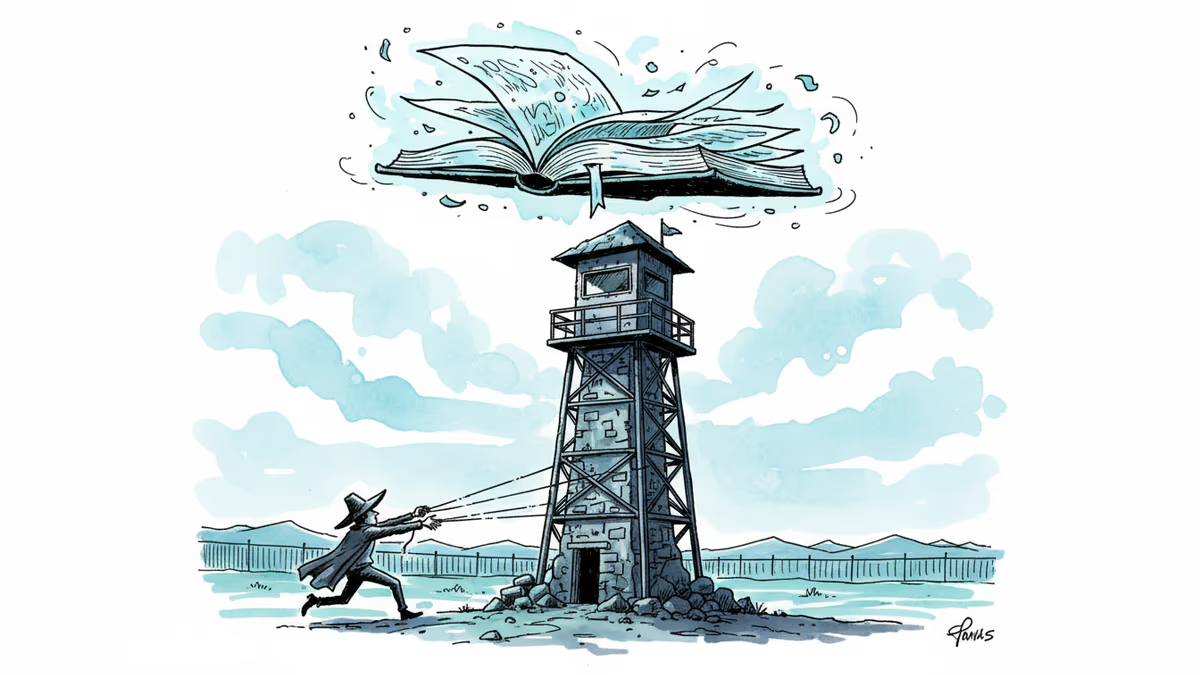
A Flashcard App Just Exposed US Border Security
A public Quizlet set apparently leaked confidential CBP security procedures near Kingsville, Texas. It stayed live for weeks—until a journalist sent a text.
It wasn't a hacker. It wasn't a foreign intelligence operation. It was a flashcard app.
Sometime in February 2026, someone created a public study set on Quizlet—the online learning platform used by hundreds of millions of students worldwide—titled "USBP Review." The cards didn't contain vocabulary words or history dates. According to WIRED, which first reported the story, they appeared to contain highly confidential information about security procedures at US Customs and Border Protection (CBP) facilities near Kingsville, Texas. Visible to anyone with a search engine. For weeks.
What Happened
The set stayed public until March 20—when it was made private less than 30 minutes after WIRED messaged a phone number potentially linked to the account. That timeline is worth sitting with. A journalist's text message accomplished what internal security protocols apparently did not.
An individual matching the account user's name was found listed at an address less than a mile from a Kingsville CBP facility. WIRED has not confirmed whether the creator was an active CBP agent or contractor. CBP responded with a statement that the incident is "being reviewed by CBP's Office of Professional Responsibility," adding that "a review should not be taken as an indication of wrongdoing."
In other words: we're looking into it, and that's all you're getting.
The Vulnerability No Firewall Can Fix
This isn't a story about sophisticated cyberattacks or state-sponsored espionage. It's a story about a default setting.
Quizlet sets are public by default. That design choice—optimized for sharing and collaboration among students—becomes a structural liability the moment someone with a security clearance uses it to study for work. The platform has no mechanism to detect sensitive government content. Why would it? It's a flashcard app.

But that's exactly the point. The boundary between consumer apps and professional environments has been eroding for years. Employees use personal devices, personal apps, and personal cloud storage for work tasks—sometimes out of convenience, sometimes out of habit, sometimes because their agency's own tools are clunky. The result is what security professionals call an uncontrolled data egress problem: sensitive information leaving secure environments through channels that were never designed to contain it.
Cybersecurity analysts will recognize this immediately as an insider threat scenario—not the malicious kind, but the accidental kind. Someone studying for a certification or internal review, uploading notes without thinking about visibility settings. No malice. Potentially enormous consequence.
Who's Accountable Here?
The stakeholder map gets complicated fast.
For CBP and federal agencies broadly: The question isn't just "who did this?"—it's "what policies existed to prevent it, and were employees actually trained on them?" The Zero Trust security model, which the US federal government has been pushing agencies to adopt since a 2021 executive order, focuses on internal network architecture. It doesn't stop an employee from typing classified procedures into a consumer app on their lunch break.
**For Quizlet and the EdTech industry:** The company faces an uncomfortable spotlight. Platforms like Quizlet, Notion, Google Docs, and dozens of others are built on openness and shareability. Asking them to police content for national security implications is both technically and legally fraught. But the "public by default" design choice is a policy decision, not an inevitability. Some platforms have begun offering enterprise tiers with stricter controls—but uptake among government employees using personal accounts is, by definition, zero.
For the general public: If you've ever uploaded anything to a public-facing platform without double-checking its visibility settings, you've made a version of this mistake. The scale and sensitivity differ wildly, but the mechanism is identical.
Why This Moment Matters
The timing lands in a particularly charged environment. CBP and US border security operations are under more political scrutiny than they've been in years. Operational security—what insiders call OPSEC—at border facilities isn't just an administrative concern. It has direct implications for agent safety, enforcement strategy, and the integrity of ongoing operations.
This incident also arrives as federal agencies are simultaneously being pressured to modernize their IT infrastructure and cut costs. That combination—legacy systems, budget pressure, and consumer app proliferation—is a recipe for exactly this kind of gap.
The broader trend is unmistakable: the attack surface for sensitive data has expanded far beyond what traditional cybersecurity frameworks were built to address. The perimeter isn't the network anymore. It's every app, every device, every default setting that an employee touches.
Authors
Related Articles
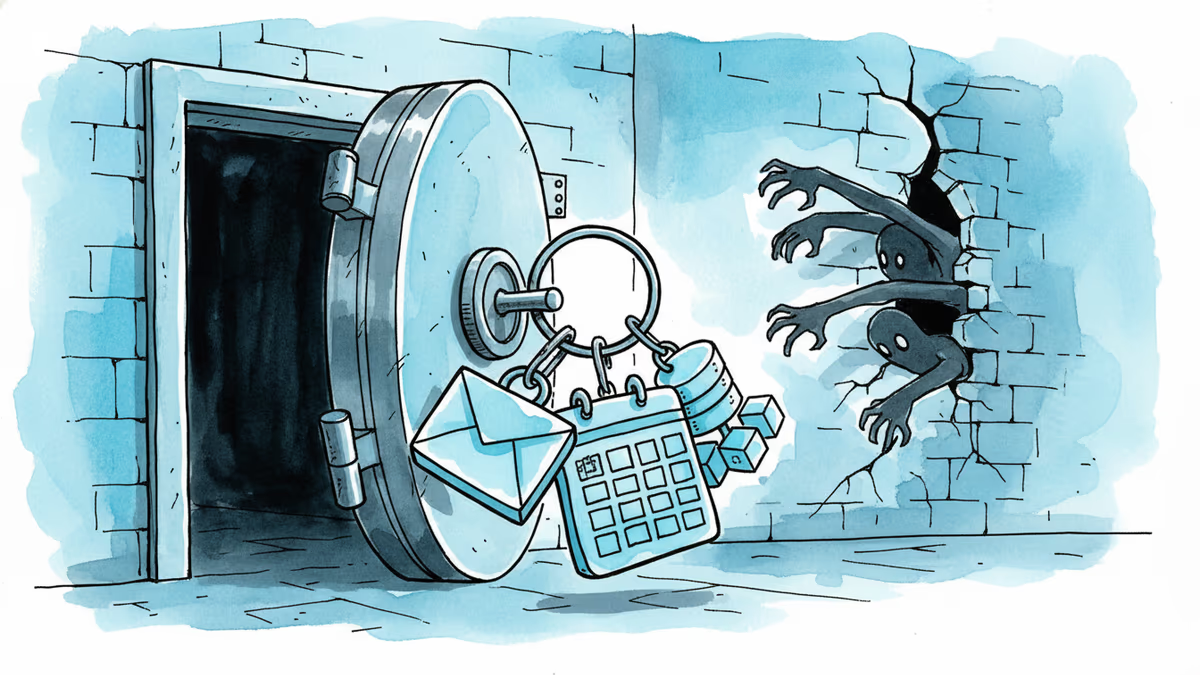
A critical vulnerability in Starlette—downloaded 325 million times per week—puts millions of AI agent servers at risk, exposing stored credentials for email, databases, and third-party services.
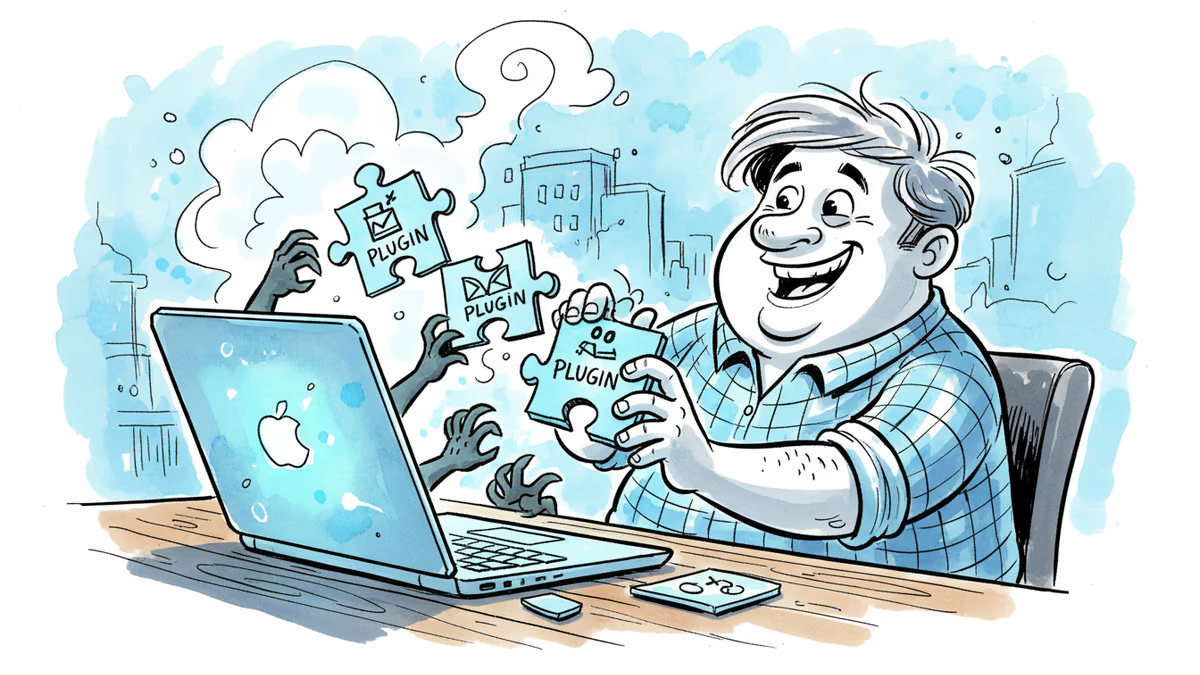
GitHub confirmed hackers stole data from 3,800 internal repositories via a poisoned VS Code extension. Here's why developer tools are now the most dangerous attack surface in tech.
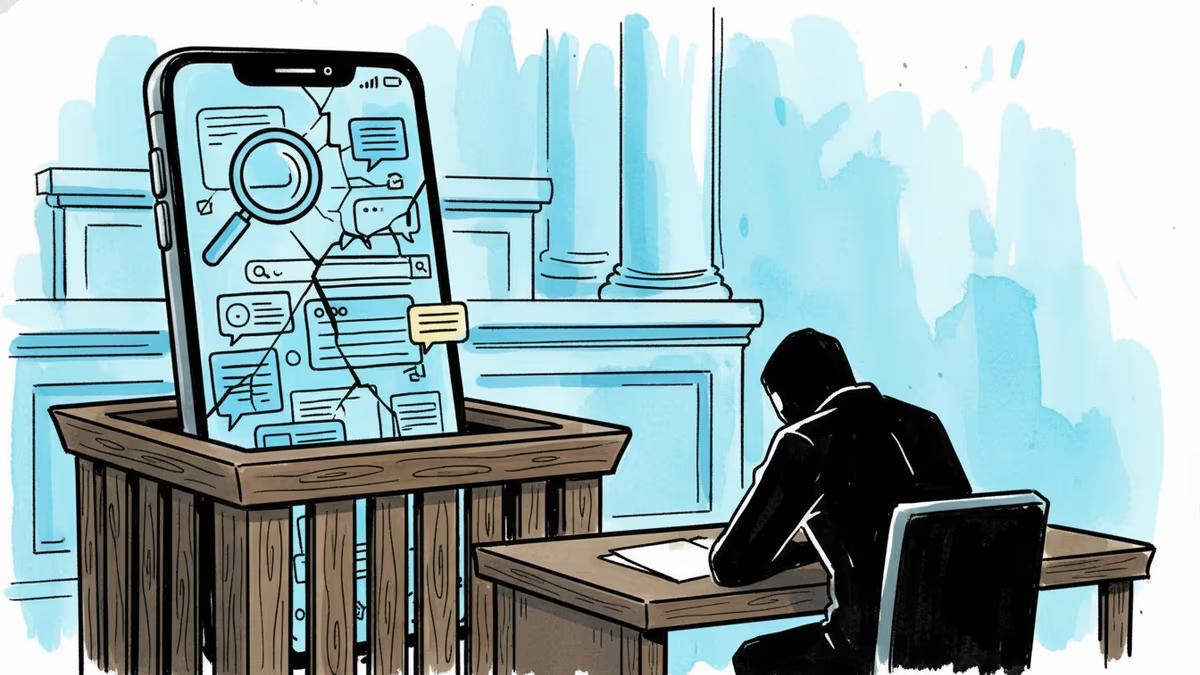
A Utah woman was sentenced to life in prison partly because of her Google searches and deleted texts. The Kouri Richins case reveals how digital footprints have become the courtroom's most reliable witness.
Dirty Frag gives low-privilege users root access on virtually every Linux distro. The exploit code leaked three days ago. Microsoft says attackers are already experimenting with it.
A critical vulnerability in Starlette—downloaded 325 million times per week—puts millions of AI agent servers at risk, exposing stored credentials for email, databases, and third-party services.
GitHub confirmed hackers stole data from 3,800 internal repositories via a poisoned VS Code extension. Here's why developer tools are now the most dangerous attack surface in tech.
A Utah woman was sentenced to life in prison partly because of her Google searches and deleted texts. The Kouri Richins case reveals how digital footprints have become the courtroom's most reliable witness.
Dirty Frag gives low-privilege users root access on virtually every Linux distro. The exploit code leaked three days ago. Microsoft says attackers are already experimenting with it.
Thoughts
Share your thoughts on this article
Sign in to join the conversation