
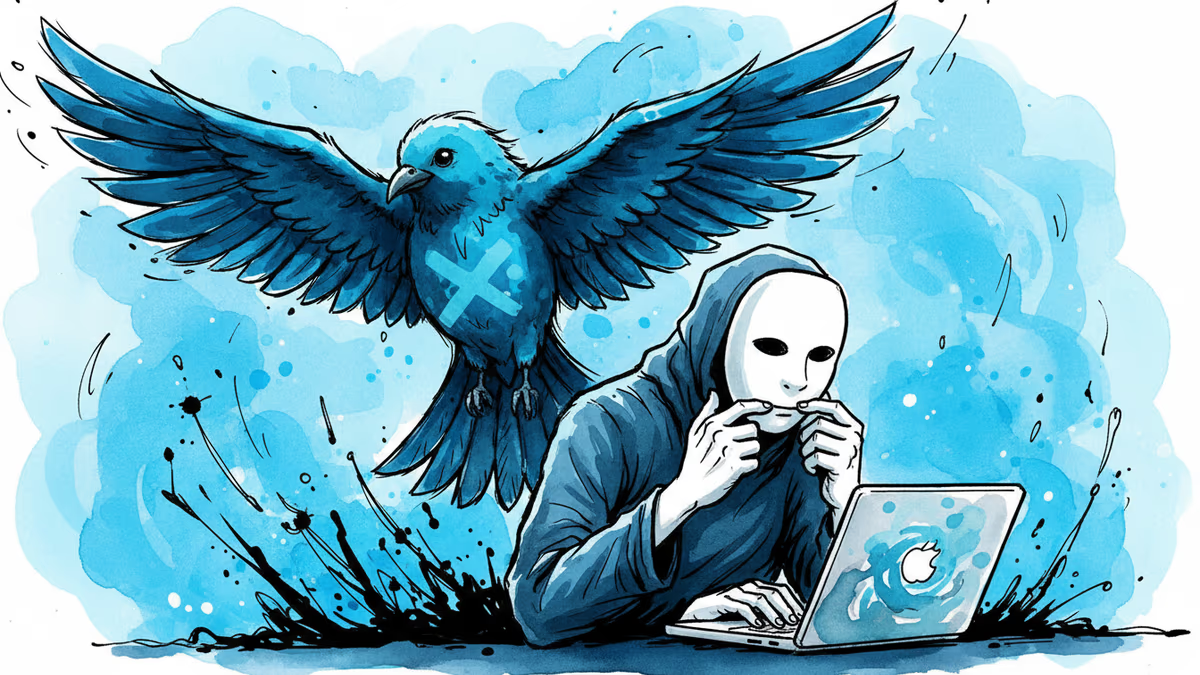
X Is Fighting to Keep Your Critics Anonymous
The Tate brothers are suing X to unmask anonymous accounts that criticized them. The case cuts to the heart of online anonymity, free speech, and who controls the cost of public criticism.
Posting a criticism online under a pseudonym feels like a basic act of self-protection. For over a dozen social media accounts that criticized Andrew and Tristan Tate, that assumption is now being tested in court.
What's Actually Happening
Andrew Tate and Tristan Tate—far-right influencers currently facing human trafficking charges in Romania—filed suit last year against the operators of more than a dozen social media accounts, alleging the accounts engaged in a coordinated "Conspiratorial Plot" to defame them. Several of those accounts were run pseudonymously.
A Florida court ruled the brothers couldn't proceed against unidentified defendants. So they split their legal strategy: they filed an amended complaint against the users they could already identify, and separately sued X directly, demanding the platform hand over the identities of the anonymous account holders.
X is pushing back, positioning itself as a defender of user anonymity. The company is fighting the disclosure demand in court rather than quietly complying.
Why This Case Is Bigger Than the Tates
On its face, this looks like a celebrity defamation spat. But the underlying legal question—how much protection does online anonymity actually carry?—has implications that stretch far beyond these two defendants.

U.S. courts have long treated anonymous speech as a First Amendment right. The landmark Dendrite and Cahill standards require plaintiffs to clear a meaningful legal bar before a platform can be compelled to unmask a user: the alleged speech must be specific, the legal claim must be viable on its merits, and the need to identify the speaker must outweigh the chilling effect of disclosure. Whether the Tates' defamation claims meet that threshold is the core question here.
The timing adds another layer. Elon Musk's X has loudly championed free speech as a founding principle since his $44 billion acquisition of the platform in 2022. Now it's invoking that same principle to shield users from a lawsuit brought by figures ideologically aligned with much of its current user base. Whether that's principled consistency or pragmatic self-interest—a platform that hands over user data on demand loses the trust that makes it valuable—is worth sitting with.
Who Wins, Who Loses, Who's Watching
For the Tates, the lawsuit's value may not hinge on winning. Legal scholars have a term for suits like this: SLAPP—Strategic Lawsuits Against Public Participation. The mechanism is simple: even a losing case costs defendants time, money, and stress. For anonymous critics who lack the resources of a well-funded legal team, the threat of unmasking alone can be enough to prompt deletion and silence.
For the anonymous account operators, the stakes are concrete. Exposure doesn't just mean a legal bill—it can mean harassment from a devoted and sometimes aggressive online following. The fear is rational, not hypothetical.
For X, the calculus is reputational and structural. Comply with the unmasking demand and you've signaled that powerful plaintiffs can use the courts as a tool to identify critics. Fight it and you absorb legal costs while setting a precedent that could protect users across future cases.
Digital rights organizations including the Electronic Frontier Foundation have consistently argued that anonymous speech protections are most important precisely when the speaker is criticizing someone with the resources to retaliate. This case is a live test of that argument.
This content is AI-generated based on source articles. While we strive for accuracy, errors may occur. We recommend verifying with the original source.
Related Articles
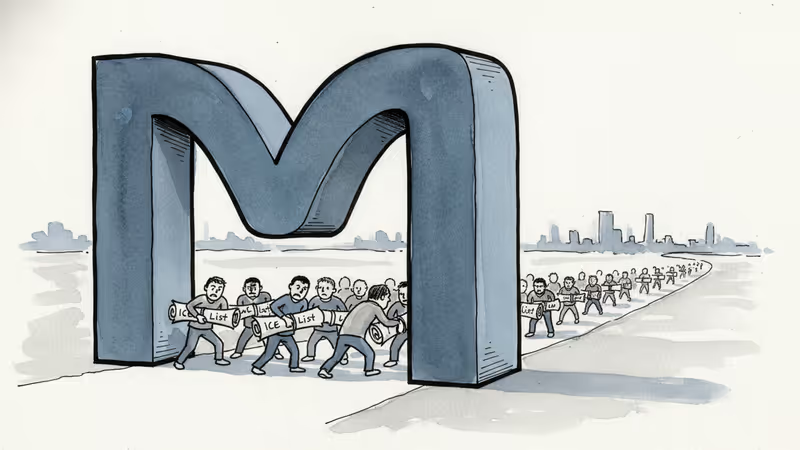
Meta has started blocking links to ICE List, a website exposing DHS employee names. The move raises questions about free speech, privacy, and Big Tech's gatekeeper power.
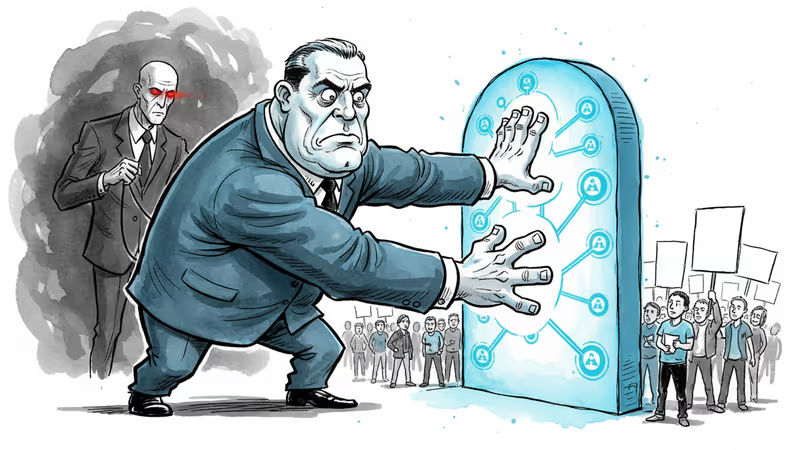
Meta starts blocking links to ICE List, a site tracking immigration agents, raising questions about platform accountability and free speech under Trump 2.0

Utah State Senator Calvin Musselman has proposed a 7% tax on adult site revenue. The Utah Adult Content Tax Bill 2026 aims to fund teen mental health services.

In early December, developer Joshua Aaron sued the DOJ and Apple over the removal of the ICEBlock app. The Apple ICEBlock app lawsuit 2025 challenges the constitutionality of government-pressured censorship.
Meta has started blocking links to ICE List, a website exposing DHS employee names. The move raises questions about free speech, privacy, and Big Tech's gatekeeper power.
Meta starts blocking links to ICE List, a site tracking immigration agents, raising questions about platform accountability and free speech under Trump 2.0
Utah State Senator Calvin Musselman has proposed a 7% tax on adult site revenue. The Utah Adult Content Tax Bill 2026 aims to fund teen mental health services.
In early December, developer Joshua Aaron sued the DOJ and Apple over the removal of the ICEBlock app. The Apple ICEBlock app lawsuit 2025 challenges the constitutionality of government-pressured censorship.
Thoughts
Share your thoughts on this article
Sign in to join the conversation