

Shot Down Warning Lifted After 10 Hours - What Really Happened at El Paso?
FAA issued shoot-down warning for El Paso airport closure, then lifted all restrictions 10 hours later without explanation. Border security or false alarm?
10 Hours That Left Everyone Guessing
At 11:30 PM Tuesday night, the Federal Aviation Administration dropped a bombshell. El Paso International Airport would be shut down for 10 days. All flights within a 10-nautical-mile radius were banned. Then came the kicker: violators could be "shot down."
By 9:30 AM Wednesday, it was over. No explanation. No details. Just a terse statement: "There is no threat to commercial aviation. All flights will resume as normal."
What happened in those 10 hours? And why did the FAA invoke its most extreme enforcement language?
When "Shoot Down" Becomes Policy
The FAA doesn't use "shoot down" language lightly. The last time was during 9/11, when military jets patrolled American skies with orders to intercept hijacked aircraft.
El Paso isn't just any airport—it's 5 miles from the Mexican border, in the heart of America's most porous frontier. This is where 40% of all U.S.-Mexico border crossings happen, and where drug cartels have increasingly turned to drones for smuggling operations.
Recent intelligence reports show cartel drones carrying fentanyl across the border have increased by 300% since 2022. These aren't hobby drones—they're sophisticated aircraft capable of carrying 20-30 pounds of cargo and flying pre-programmed routes to avoid detection.
Three Theories, No Answers
Without official explanation, aviation experts are left to speculate. Three scenarios emerge:

Theory 1: Real Threat Neutralized. Border Patrol or military assets may have intercepted hostile drones. But typically, successful interdictions are announced to deter future attempts. The silence suggests otherwise.
Theory 2: False Alarm. AI detection systems have a 15-20% false positive rate, according to Homeland Security data. A flock of birds, weather balloon, or civilian drone could have triggered maximum response protocols.
Theory 3: Political Pressure. El Paso handles 4.5 million passengers annually. A 10-day closure would cost the regional economy an estimated $50 million. Local officials may have pushed for rapid resolution regardless of the actual threat level.
The New Aviation Security Dilemma
This incident exposes a fundamental challenge facing modern aviation: how do you secure airspace against threats that cost $1,000 to deploy but $1 million to counter?
Traditional radar systems can't reliably detect small drones. New counter-drone technology exists, but deploying it at all 28 major airports along the Mexican border would cost $2.8 billion. Even then, sophisticated operators can use GPS spoofing and encrypted communications to evade detection.
The aviation industry faces an impossible choice: accept periodic disruptions from drone scares, or invest billions in detection systems that may already be obsolete.
Border Airports: The New Front Line
El Paso's predicament reflects a broader reality. Border airports from San Diego to Brownsville are becoming inadvertent battlegrounds between smugglers and security forces.
Unlike traditional smuggling methods, drones don't need corrupt officials or elaborate tunnel networks. A skilled operator can launch from Mexico, deliver contraband to a pickup point in Texas, and return—all within 30 minutes and without crossing official border checkpoints.
For airport operators, this creates an unprecedented challenge. "We're not equipped to be border security installations," says one airport executive who requested anonymity. "But that's effectively what we've become."
The silence from federal agencies suggests this won't be the last time we grapple with these questions.
Authors
Related Articles
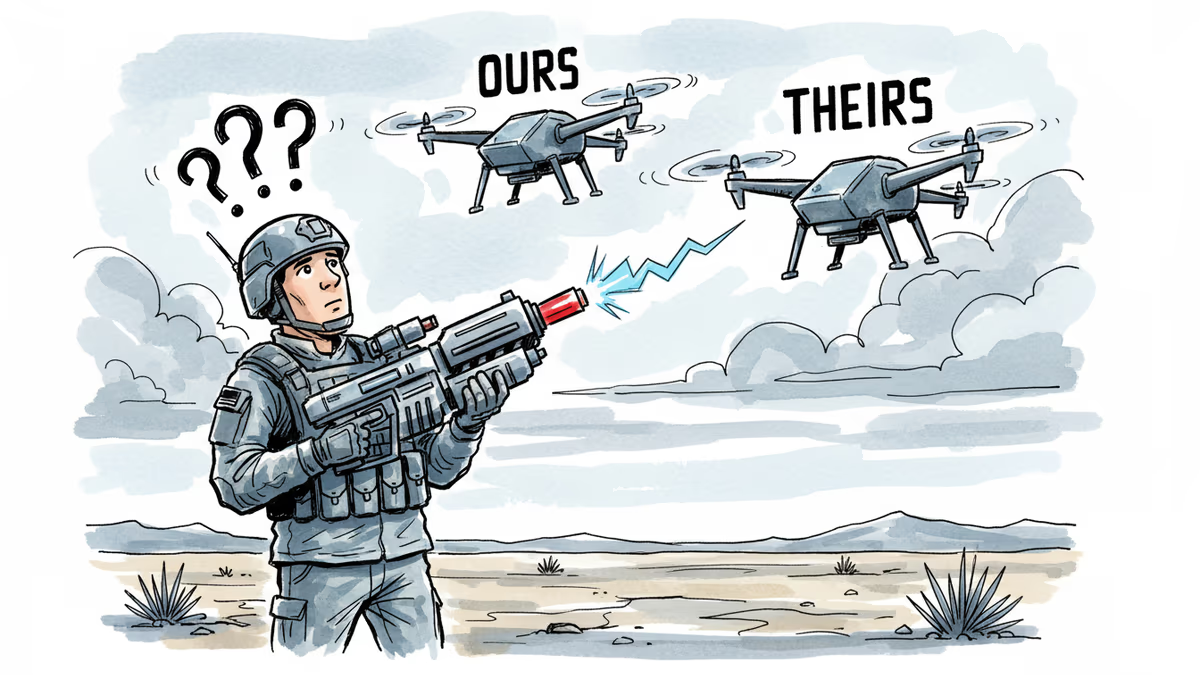
A US military laser system mistakenly destroyed a Border Patrol drone near Mexico, revealing the complex reality of modern border security technology

El Paso Airport's sudden closure and reopening raises questions about drone threats, government transparency, and border security protocols.
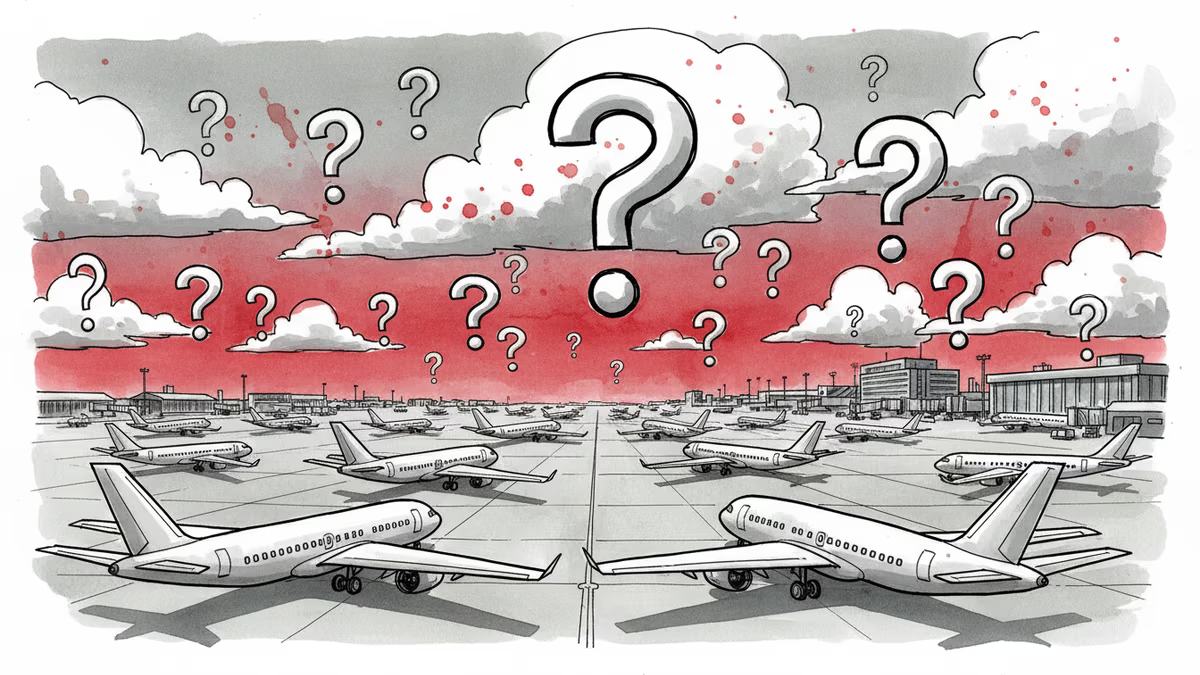
FAA closes El Paso International Airport and surrounding airspace for 10 days citing only 'Special Security Reasons' with no further explanation

Five stories from late September, traced to where the paper trail stops: Korea's export record, Nvidia's Hugging Face 8-K, a US-China AI channel, the UN on AI, and rising births.
A US military laser system mistakenly destroyed a Border Patrol drone near Mexico, revealing the complex reality of modern border security technology
El Paso Airport's sudden closure and reopening raises questions about drone threats, government transparency, and border security protocols.
FAA closes El Paso International Airport and surrounding airspace for 10 days citing only 'Special Security Reasons' with no further explanation
Five stories from late September, traced to where the paper trail stops: Korea's export record, Nvidia's Hugging Face 8-K, a US-China AI channel, the UN on AI, and rising births.
Thoughts
Share your thoughts on this article
Sign in to join the conversation