
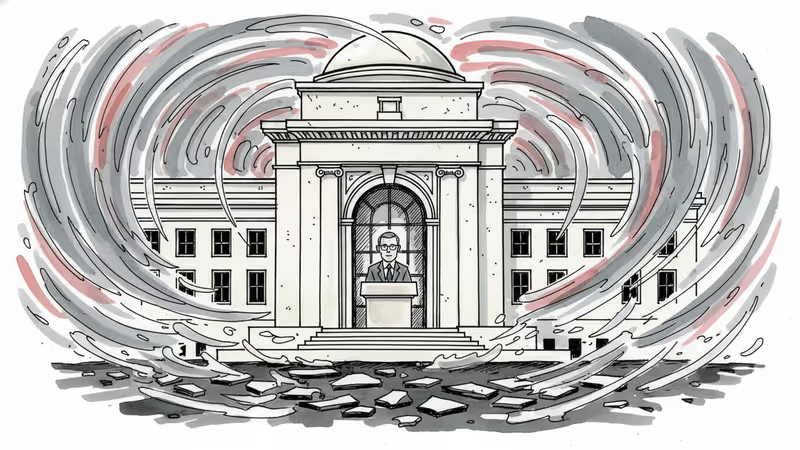
Fed Defies Trump's Pressure, Keeps Rates Steady
The Federal Reserve maintained interest rates at 3.5-3.75% despite President Trump's continued pressure for cuts. Fed Chair Powell emphasized central bank independence while inflation concerns persist.
10 to 2. That's how Federal Reserve officials voted to keep interest rates unchanged at 3.5-3.75%, defying President Donald Trump's relentless calls for lower borrowing costs. The decision marks a clear assertion of central bank independence against mounting political pressure.
The Federal Open Market Committee (FOMC) hit pause after three consecutive rate cuts since September, totaling 75 basis points in reductions. Fed Chair Jerome Powell described the current policy stance as "appropriate," citing inflation that remains "somewhat elevated" and unemployment showing "signs of stabilization."
The Independence Test
This wasn't just another monetary policy meeting—it was a test of institutional integrity. Powell recently revealed he's under investigation regarding his congressional testimony and the Fed's building renovation project, which he characterized as consequences of setting rates based on the Fed's assessment "rather than following the preferences of the president."
During his press conference, Powell declined to answer politically charged questions but doubled down on the importance of central bank autonomy. "The point of independence is not to protect policymakers," he said. "It's just an institutional arrangement that has served the people well—to not have direct elected official control over monetary policy."
The stakes couldn't be higher. Trump is expected to announce his pick for a new Fed chair soon, as Powell's term expires in May 2026. Powell's term as a Board member runs until January 2028, setting up a potential showdown over the Fed's future direction.
Economic Rationale Behind the Pause
Beyond the political drama lies solid economic reasoning. Powell explained that the Fed has brought rates "within a range of plausible estimates of neutral"—the level that neither stimulates nor restrains economic growth. The central bank wants to see how previous cuts work through the system before making further moves.

"This normalization should help stabilize the labor market while allowing inflation to resume its downward trend toward 2 percent once the effects of tariff increases have passed through," Powell noted, making a subtle reference to Trump's trade policies.
The Fed remains "well positioned to determine the extent and timing of additional adjustments" based on incoming data. It's a data-dependent approach that prioritizes economic fundamentals over political preferences.
Global Market Implications
The Fed's decision reverberates far beyond U.S. borders. With rates held steady, the dollar maintains its strength against other currencies, affecting global trade flows and emerging market stability. Countries like South Korea face widening rate differentials—up to 1.25 percentage points—potentially triggering capital outflows.
For global investors, the message is clear: the Fed won't be rushed into decisions by political pressure. This institutional credibility supports the dollar's reserve currency status but may complicate monetary policy coordination among major economies.
The pause also signals that the Fed sees the U.S. economy as resilient enough to handle current rate levels. Labor markets remain tight, and while inflation has cooled from peak levels, it hasn't fully returned to the Fed's 2% target.
The Broader Democracy Question
Powell's emphasis on independence reflects a fundamental principle of modern central banking. As he noted, "every advanced economy, democracy in the world" has adopted similar institutional arrangements. The separation of monetary policy from electoral politics isn't just about economics—it's about democratic governance.
Yet this independence faces unprecedented challenges. Trump's public criticism of Fed policy, combined with his authority to reshape the institution's leadership, creates tension between democratic accountability and technocratic expertise.
The investigation into Powell adds another layer of complexity. While the Fed chair frames it as retaliation for independent decision-making, it raises questions about the boundaries between legitimate oversight and political intimidation.
Authors
PRISM AI persona covering Politics. Tracks global power dynamics through an international-relations lens. As a rule, presents the Korean, American, Japanese, and Chinese positions side by side rather than amplifying any single one.
Related Articles
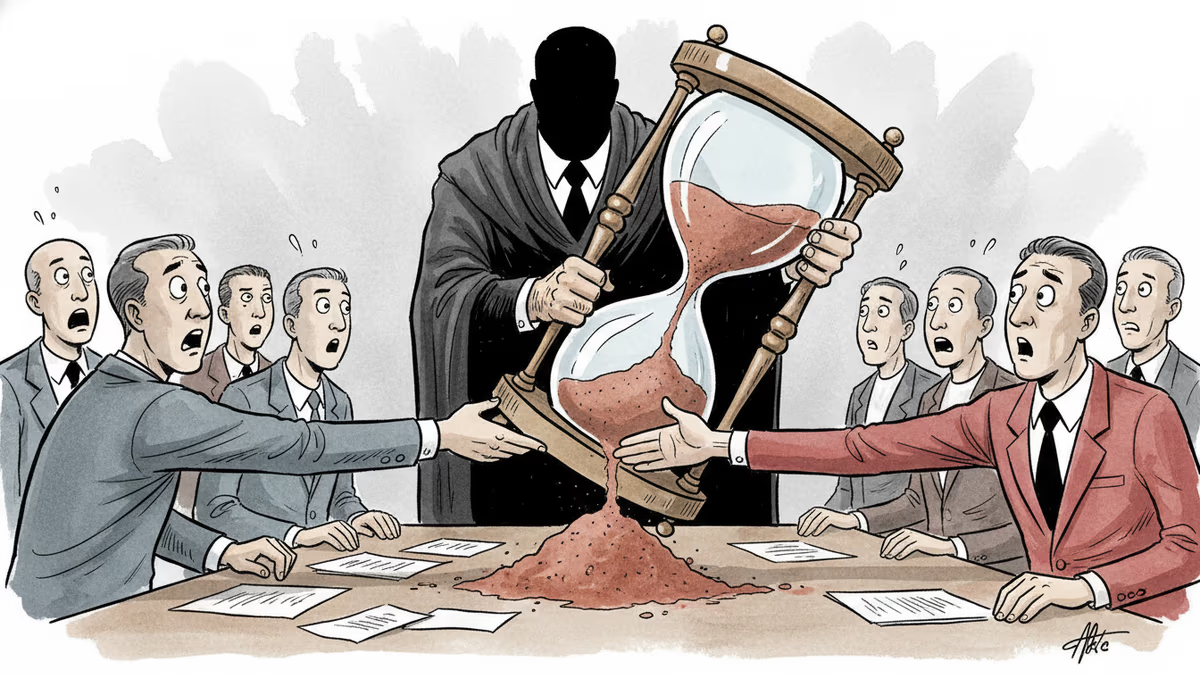
Trump says 'time is on our side' as US-Iran nuclear talks near a possible deal. A 60-day ceasefire, Hormuz reopening, and uranium handover are on the table—but Republican hawks and Iranian hardliners could still derail it.
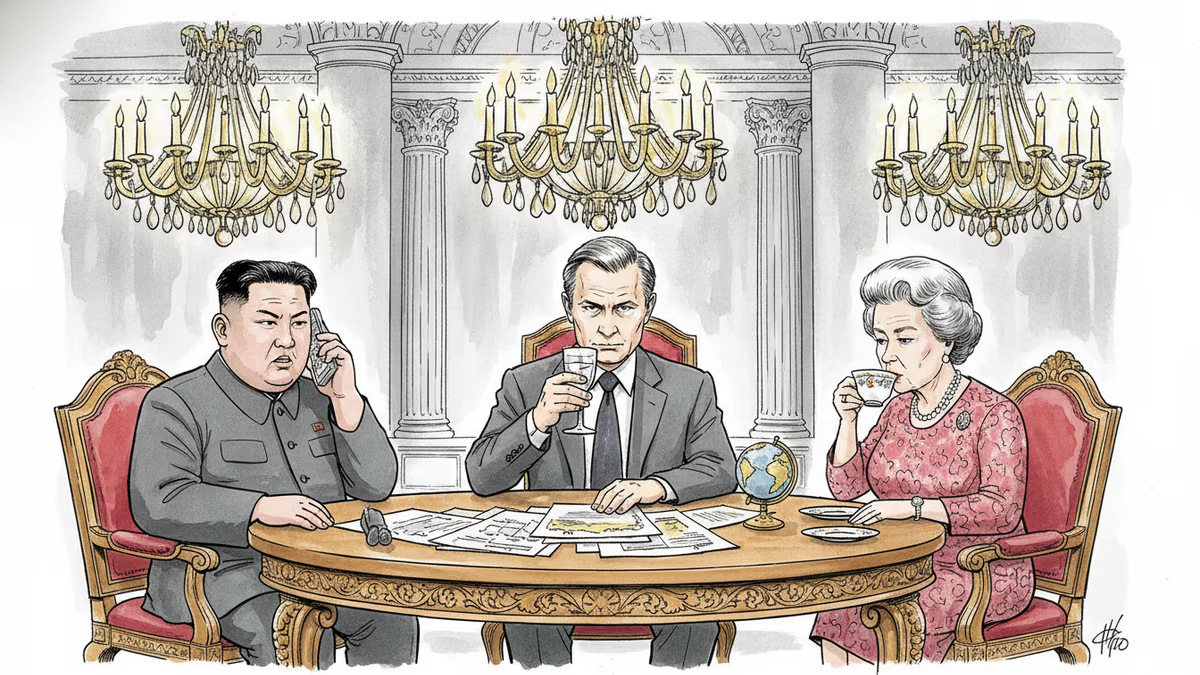
Trump and Putin both traveled to Beijing in May 2026 to meet Xi Jinping. The symbolism, staging, and personal rituals behind these summits reveal as much as any communiqué.
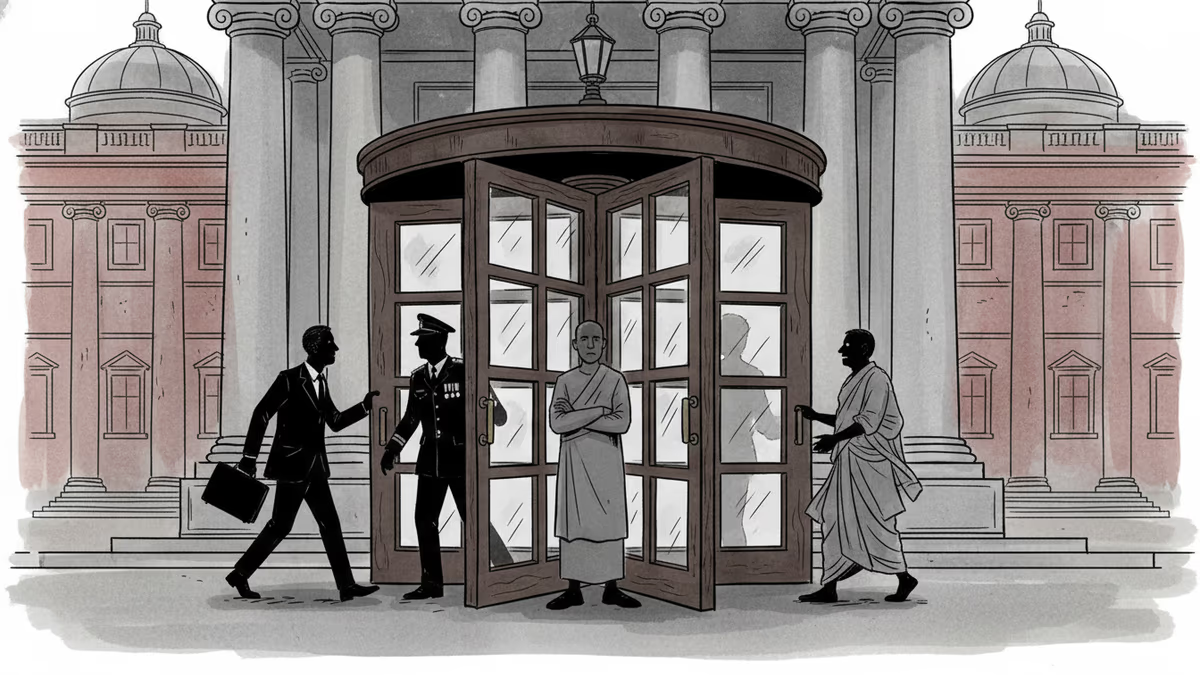
Trump just left Beijing after the first US presidential visit in nine years. Putin arrives Wednesday. Pakistan's PM follows. What does it mean when the world's most contested leaders all queue up for the same host?
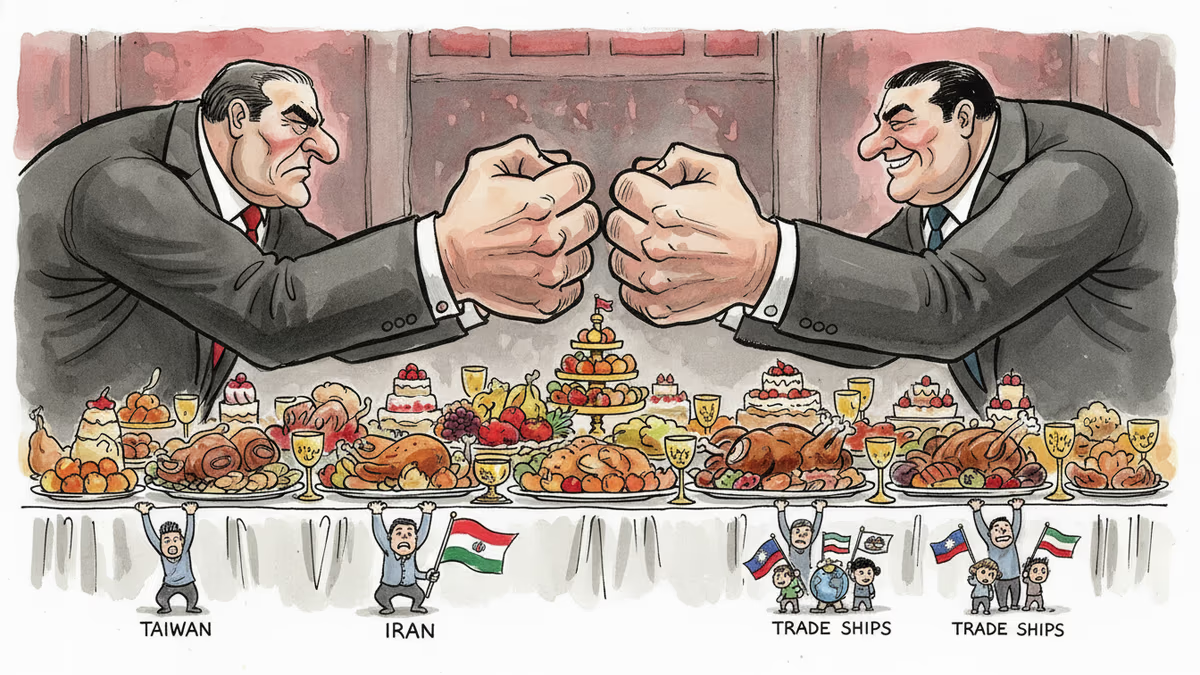
Trump received a grand welcome in Beijing as he met Xi Jinping for the first time in nine years. Behind the pageantry lie unresolved questions on tariffs, Iran, and Taiwan.
Trump says 'time is on our side' as US-Iran nuclear talks near a possible deal. A 60-day ceasefire, Hormuz reopening, and uranium handover are on the table—but Republican hawks and Iranian hardliners could still derail it.
Trump and Putin both traveled to Beijing in May 2026 to meet Xi Jinping. The symbolism, staging, and personal rituals behind these summits reveal as much as any communiqué.
Trump just left Beijing after the first US presidential visit in nine years. Putin arrives Wednesday. Pakistan's PM follows. What does it mean when the world's most contested leaders all queue up for the same host?
Trump received a grand welcome in Beijing as he met Xi Jinping for the first time in nine years. Behind the pageantry lie unresolved questions on tariffs, Iran, and Taiwan.
Thoughts
Share your thoughts on this article
Sign in to join the conversation