
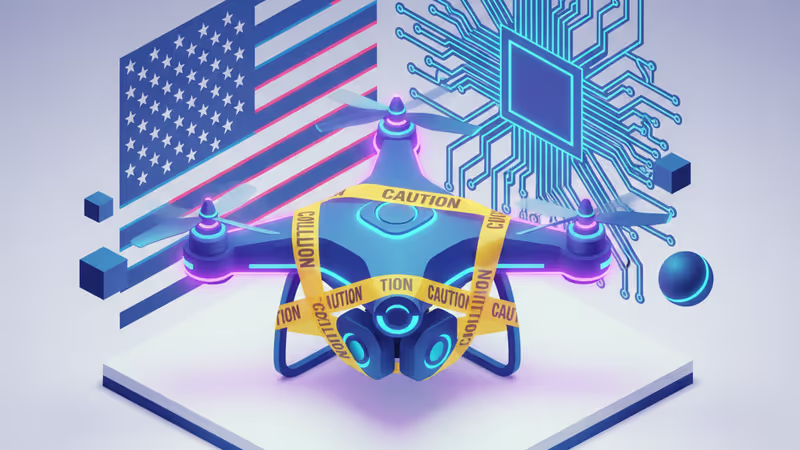
US Grounds Foreign Drones, Including DJI, Just Days Before Christmas
The U.S. FCC has banned new foreign drones, including market leader DJI, citing national security risks. Here's what the ban means for current owners, and why DJI is calling it protectionism.
Just days before Christmas, the U.S. has effectively banned the sale of new foreign drones, a move that targets the world's most popular drone maker, China-based . The decision by the Federal Communications Commission () raises immediate questions for consumers and industries that rely on the technology.
The Ban: National Security vs. Market Dominance
On Monday, the officially added foreign-made drones and their components to its "Covered List," effectively blacklisting them over national security concerns. The move impacts , a company that commands a staggering of the global drone market. According to the source, had recently agreed to comply with audits to avoid the blacklist, but the effort failed.
Brendan Carr, the Trump-appointed chair, stated the administration will "act to secure our airspace and unleash American drone dominance."

What If You Already Own a DJI Drone?
For the millions of U.S. consumers and businesses—from law enforcement to agriculture—who already use these drones, there’s some relief. The confirmed the ban doesn't affect existing drones. Americans can continue to own and operate their current devices.
In his statement, Carr clarified that the order "does not disrupt the ongoing use or purchase of previously authorized drones." This means retailers can also continue to sell off existing stock that has already been approved.
DJI Fires Back, Citing 'Protectionism'
DJI expressed its disappointment, criticizing the lack of transparency in the decision. "No information has been released regarding what information was used by the Executive Branch in reaching its determination," the company said in a statement. asserted that its products are among the "safest and most secure on the market," backed by reviews from U.S. government agencies. The company claims the concerns are not "grounded in evidence and instead reflect protectionism, contrary to the principles of an open market."
Authors
Related Articles
China is restricting AI researchers and startup founders from traveling abroad as the U.S.-China AI performance gap narrows to just 2.7%. What Beijing's talent lockdown means for the global AI race.
Beijing added an Nvidia gaming chip to its customs ban list the same week Jensen Huang visited China with Trump. Here's what it means for the chip war—and who actually wins.
Josh D'Amaro took over Disney with a bold Disney Plus vision. Days later, he's in a First Amendment fight with the Trump administration over The View. What does this mean for media freedom?
Anthropic's AI cybersecurity model is reportedly available to the NSA and Commerce Department—but not to CISA, the agency responsible for defending US federal infrastructure. What that gap reveals.
China is restricting AI researchers and startup founders from traveling abroad as the U.S.-China AI performance gap narrows to just 2.7%. What Beijing's talent lockdown means for the global AI race.
Beijing added an Nvidia gaming chip to its customs ban list the same week Jensen Huang visited China with Trump. Here's what it means for the chip war—and who actually wins.
Josh D'Amaro took over Disney with a bold Disney Plus vision. Days later, he's in a First Amendment fight with the Trump administration over The View. What does this mean for media freedom?
Anthropic's AI cybersecurity model is reportedly available to the NSA and Commerce Department—but not to CISA, the agency responsible for defending US federal infrastructure. What that gap reveals.
Thoughts
Share your thoughts on this article
Sign in to join the conversation