
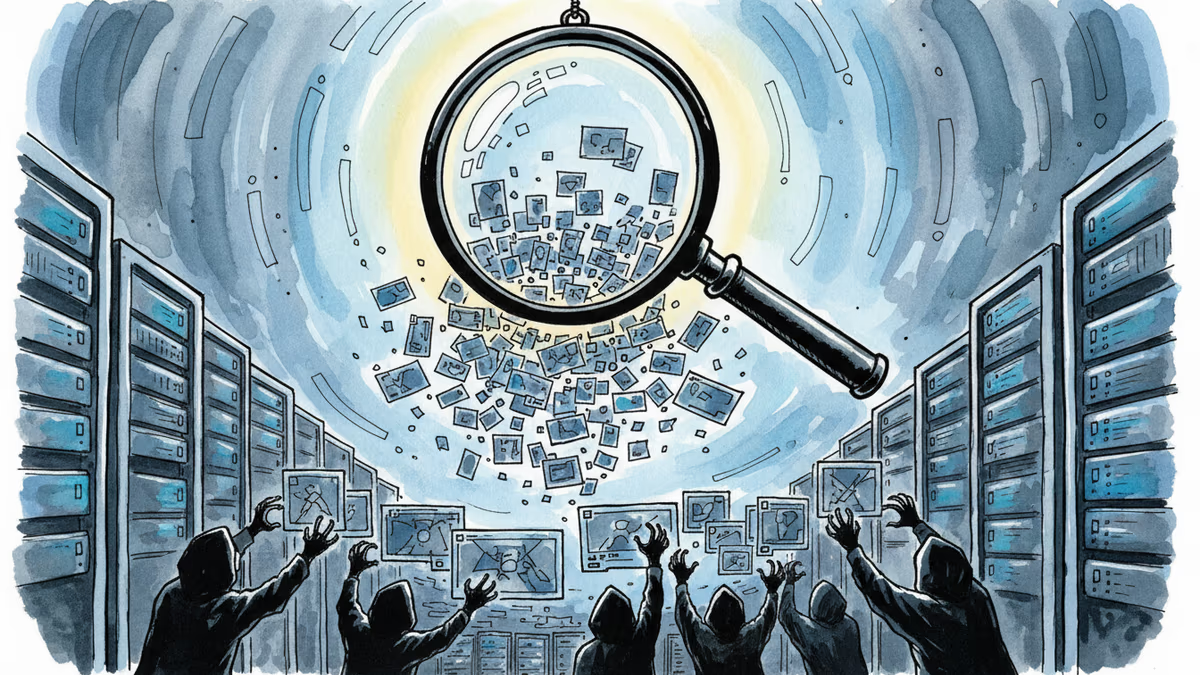
FBI Recovered Deleted Nest Camera Footage from Google's Servers
FBI retrieved surveillance video from Google's backend systems using 'residual data' in Nancy Guthrie missing person case, raising questions about cloud data permanence and privacy.
More than a week after Nancy Guthrie vanished, the FBI has done something that should make every cloud user pause: they've recovered deleted surveillance footage from Google's servers.
The twist? This wasn't a simple data request. The footage came from what FBI Director Kash Patel calls "residual data located in backend systems." In other words, data that was supposed to be gone.
When 'Deleted' Doesn't Mean Gone
The recovered Nest camera footage shows a masked individual approaching Guthrie's front door, covering the camera with a glove while apparently tampering with something below the frame. Google spokesperson Patrick Seybold confirms the company is "assisting law enforcement with their investigations."
But here's what's really significant: this footage existed in Google's systems even after it should have been deleted. The FBI worked with "private sector partners" to extract it from backend infrastructure most users don't even know exists.
This isn't just about one missing person case. It's about the fundamental nature of cloud storage and what happens to our data when we think we've erased it.
The Cloud's Dirty Secret
Cloud providers like Google, Amazon, and Microsoft design their systems for redundancy. Your data gets copied across multiple servers in different locations. When you hit "delete," you're really just changing a flag that makes the data invisible to you—not necessarily removing every copy from every server.
"True deletion in distributed systems is incredibly complex," explains a former Google engineer who requested anonymity. "Data can persist in backups, caches, and even temporary files for months or years."
This isn't necessarily malicious. Cloud providers need these safeguards to prevent accidental data loss and ensure service reliability. But it creates a gray zone where "deleted" data can be recovered by those with the right access and legal authority.
Law Enforcement's New Playbook

For investigators, this represents a significant shift in digital forensics. Previously, if a suspect deleted evidence from their device, recovery was often impossible. Now, law enforcement can potentially retrieve that data from cloud providers' backend systems.
The FBI's success in the Guthrie case could establish a new precedent. Legal experts predict we'll see more warrants targeting "residual data" in cloud systems, especially in high-stakes criminal investigations.
"This changes the game for digital evidence," says Jennifer Lynch, surveillance litigation director at the Electronic Frontier Foundation. "It means that even when users take steps to delete their data, law enforcement may still be able to access it through the cloud provider."
The Privacy Paradox
This development puts cloud providers in an uncomfortable position. They must balance user privacy expectations with legal compliance requirements.
Google processes approximately 150,000 government data requests annually, according to their transparency reports. The company says it carefully reviews each request and pushes back on overly broad demands. But when faced with valid legal process, they have little choice but to cooperate.
The challenge is that most users don't understand the technical realities of cloud storage. When they delete a file or video, they reasonably expect it to be gone. The discovery that "deleted" data can be recovered from backend systems undermines that basic assumption.
What This Means for You
If you're using cloud services—and you almost certainly are—consider these implications:
For individuals: Your deleted photos, videos, and documents may not be as gone as you think. This matters for everything from embarrassing personal content to sensitive business documents.
For businesses: Companies handling sensitive data need to understand that cloud "deletion" may not meet regulatory requirements for data disposal. Industries with strict compliance requirements may need to reconsider their cloud strategies.
For activists and journalists: Those working in sensitive areas should assume that cloud-stored data could potentially be recovered and accessed by authorities, even after deletion.
The Regulatory Response
European regulators are already grappling with these issues under GDPR's "right to be forgotten" provisions. The law requires companies to delete personal data upon request, but technical limitations in cloud systems make true deletion challenging.
U.S. lawmakers are beginning to take notice. Senator Ron Wyden has called for stronger data deletion requirements, arguing that "Americans deserve to know what happens to their data when they think they've deleted it."
Authors
Related Articles
The FTC fined Cox Media and two ad firms $930,000 — not for actually eavesdropping on users, but for falsely claiming they could. The case raises uncomfortable questions about surveillance capitalism.
A Utah woman was sentenced to life in prison partly because of her Google searches and deleted texts. The Kouri Richins case reveals how digital footprints have become the courtroom's most reliable witness.
After 15 years of fragmented mobile messaging, Apple and Google are rolling out end-to-end encrypted RCS messaging between iPhones and Android devices. Here's what changed, why it took so long, and what it means for your privacy.
New Mexico already won $375 million from Meta. Now it wants something harder to give: a court order forcing Facebook, Instagram, and WhatsApp to redesign themselves. A three-week trial starts Monday.
The FTC fined Cox Media and two ad firms $930,000 — not for actually eavesdropping on users, but for falsely claiming they could. The case raises uncomfortable questions about surveillance capitalism.
A Utah woman was sentenced to life in prison partly because of her Google searches and deleted texts. The Kouri Richins case reveals how digital footprints have become the courtroom's most reliable witness.
After 15 years of fragmented mobile messaging, Apple and Google are rolling out end-to-end encrypted RCS messaging between iPhones and Android devices. Here's what changed, why it took so long, and what it means for your privacy.
New Mexico already won $375 million from Meta. Now it wants something harder to give: a court order forcing Facebook, Instagram, and WhatsApp to redesign themselves. A three-week trial starts Monday.
Thoughts
Share your thoughts on this article
Sign in to join the conversation