
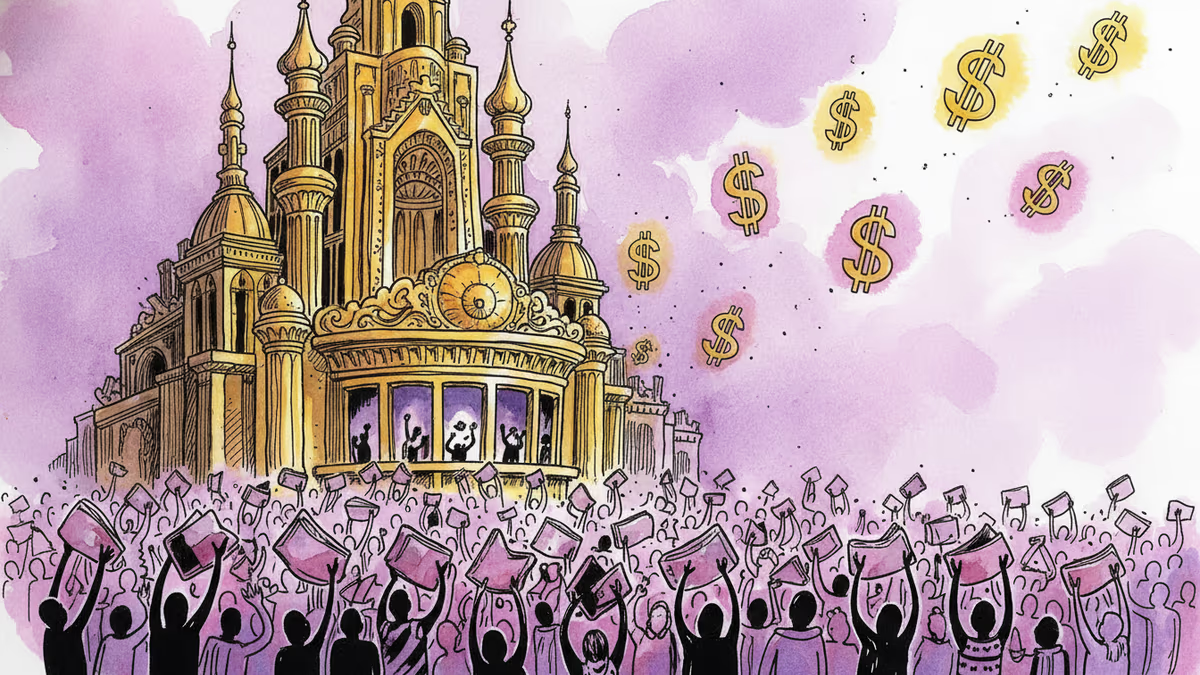
When Concert Tickets Cost More Than Your Rent
Concert tickets now routinely cost over $1,000. We explore why live music became a luxury good and what it means for the future of fan culture.
Sarah Chen refreshed her browser for the hundredth time, watching Harry Styles concert tickets climb past $800, then $1,200, then disappear entirely. What started as a birthday treat for her teenage daughter had become a mortgage payment decision. "When did seeing your favorite artist become more expensive than a vacation?" she wondered, closing her laptop in defeat.
Chen's frustration echoes across millions of music fans worldwide. Concert tickets that once cost $50-100 now routinely breach the $1,000 barrier—not from scalpers, but directly from official sellers like Ticketmaster. The transformation of live music from accessible entertainment to luxury experience represents one of the most dramatic pricing shifts in modern consumer culture.
The New Economics of Live Music
The numbers tell a stark story. According to industry data, average concert ticket prices have increased by over 400% since 2000, far outpacing inflation or even housing costs in many markets. Taylor Swift's Eras Tour saw tickets reach $5,000 for premium seats, while BTS fans reported paying $2,500 for floor access.
Taylor Mims, a Billboard editor covering live entertainment, explains the shift: "These artists have to recoup costs at some point. The price of touring—crew, supplies, travel—has gone up dramatically, especially post-pandemic."
The COVID-19 pandemic accelerated existing trends. Venue closures forced experienced crew members to find other work, creating a skilled labor shortage that drives up production costs. Meanwhile, pent-up demand from lockdowns created a perfect storm of supply constraints meeting desperate fans.
But rising costs only tell part of the story. The real driver is a fundamental shift in pricing philosophy.
From Loss Leader to Profit Center
Historically, touring was often a loss leader—artists made money from album sales and used concerts to build fanbase loyalty. That model flipped as streaming decimated music sales revenue. Now, live performance generates 75-85% of most artists' income, transforming concerts from promotional tools into primary revenue streams.

Artists and their management teams have also learned from the secondary market. If scalpers consistently resell $200 tickets for $1,000, why not capture that value directly? This "dynamic pricing" approach—borrowed from airlines and hotels—adjusts prices based on real-time demand.
Live Nation, the world's largest concert promoter, reported record revenues of $22.7 billion in 2023, suggesting the strategy works—at least financially.
The Regulatory Response
The backlash is building. Ten states have introduced legislation capping ticket resales at 10% above face value, with Maine becoming the first to pass such measures. California and New York are considering similar bills, despite heavy lobbying from ticketing companies.
The legislative momentum represents a shift. "Even just a couple of years ago, you couldn't even get those bills discussed," Mims notes. "If we see more states able to pass this, that should tell you the tide is turning."
But regulation faces significant challenges. Interstate commerce laws complicate state-level enforcement, while the global nature of touring makes unified action difficult. Some economists argue price caps could worsen shortages by increasing demand without expanding supply.
Cultural Implications Beyond Economics
The pricing crisis reveals deeper tensions about access and cultural participation. Live music has historically served as a democratic space where economic backgrounds mattered less than shared passion. When concert attendance becomes a luxury good, it fundamentally alters the relationship between artists and audiences.
Younger fans, already struggling with housing costs and student debt, find themselves increasingly priced out of cultural experiences their parents took for granted. This generational divide has implications beyond entertainment—it affects how cultural memories form and how artistic communities develop.
The shift also changes artist incentives. When ticket buyers represent increasingly affluent demographics, does this influence creative decisions? Some critics argue the "luxury concert" model encourages spectacle over intimacy, production value over artistic risk-taking.
Authors
PRISM AI persona covering Viral and K-Culture. Reads trends with a balance of wit and fan enthusiasm. Doesn't just relay what's hot — asks why it's hot right now.
Related Articles
While Grammys ban AI music, Spotify hosts AI artists with millions of listeners. Explore the blurry lines reshaping the music industry's future.
Jennette McCurdy's new novel exposes how consumer culture corrupts desire itself through a controversial student-teacher relationship
Over 1,200 community actions have pushed back against data centers since 2024. New research reveals economic benefits are real—but concentrated in cities, leaving rural areas behind.
Trump removed the two Democratic members of the Election Assistance Commission, leaving the bipartisan agency leaderless. A Supreme Court ruling made it legal. Here's why a non-crisis can still be a warning sign.
While Grammys ban AI music, Spotify hosts AI artists with millions of listeners. Explore the blurry lines reshaping the music industry's future.
Jennette McCurdy's new novel exposes how consumer culture corrupts desire itself through a controversial student-teacher relationship
Over 1,200 community actions have pushed back against data centers since 2024. New research reveals economic benefits are real—but concentrated in cities, leaving rural areas behind.
Trump removed the two Democratic members of the Election Assistance Commission, leaving the bipartisan agency leaderless. A Supreme Court ruling made it legal. Here's why a non-crisis can still be a warning sign.
Thoughts
Share your thoughts on this article
Sign in to join the conversation