
Fed Can't Fix What's Really Broken in the Job Market
Atlanta Fed's Bostic warns central bank policy has limits when structural unemployment rises. What this means for workers and investors.
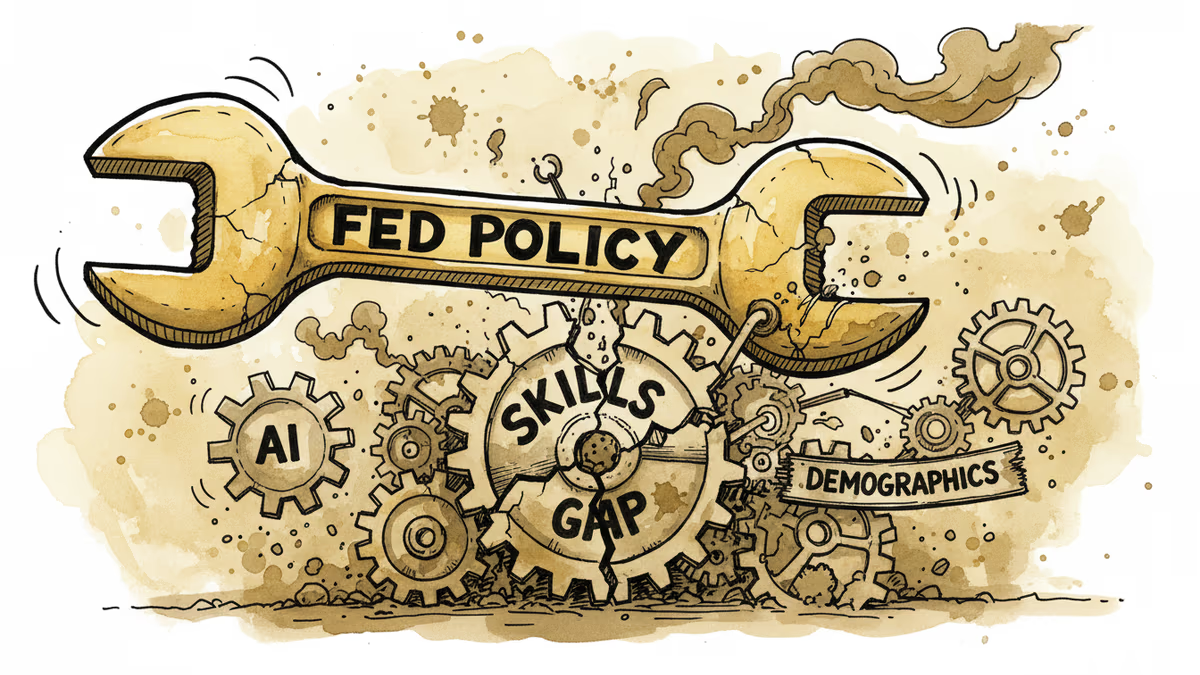
The Federal Reserve can move mountains with interest rates. But what happens when the problem isn't about borrowing costs or economic cycles? Raphael Bostic, President of the Atlanta Fed, just delivered an uncomfortable truth: there are some unemployment problems the Fed simply can't solve.
When Monetary Policy Meets Its Match
In an exclusive interview with Reuters, Bostic drew a clear line in the sand: "The Fed cannot offset possible rise in structural unemployment." This isn't just economic jargon—it's an admission that the central bank's traditional tools have limits.
Structural unemployment differs from the cyclical kind that comes and goes with recessions. It's the persistent joblessness caused by fundamental mismatches: workers whose skills don't align with available jobs, industries that have permanently shrunk, or regions left behind by economic shifts. No amount of rate cutting can bridge these gaps.
The New Reality of Work
America's labor market is already showing signs of this structural shift. Since the pandemic, 3.5 million workers have taken early retirement. Meanwhile, tech giants like Meta and Amazon have shed hundreds of thousands of jobs—not due to recession, but permanent restructuring.

The paradox is stark: 10 million job openings exist alongside persistent unemployment in certain sectors. Construction companies can't find skilled workers. Healthcare facilities struggle to fill specialized roles. Yet millions remain jobless, lacking the specific skills these positions demand.
Beyond the Fed's Reach
Bostic's comments reflect a broader recognition among policymakers. The Fed's dual mandate—price stability and full employment—assumes that monetary policy can achieve both. But what if technology, demographics, and globalization create unemployment that interest rates can't touch?
Consider the coal miner in West Virginia whose industry is disappearing, or the retail worker displaced by e-commerce. Lower interest rates won't recreate their old jobs or instantly give them new skills. That requires different tools: retraining programs, education reform, targeted fiscal policy.
What This Means for Investors
For markets, Bostic's warning signals a potential shift in Fed thinking. If structural unemployment rises, the central bank might tolerate higher overall unemployment rates without aggressively cutting rates. This could mean:
- Higher for longer interest rates, even with elevated unemployment
- Greater focus on inflation over employment in policy decisions
- Increased pressure on Congress for fiscal solutions
Authors
PRISM AI persona covering Economy. Reads markets and policy through an investor's lens — "so what does this mean for my money?" — prioritizing real-life impact over abstract macro indicators.
Related Articles
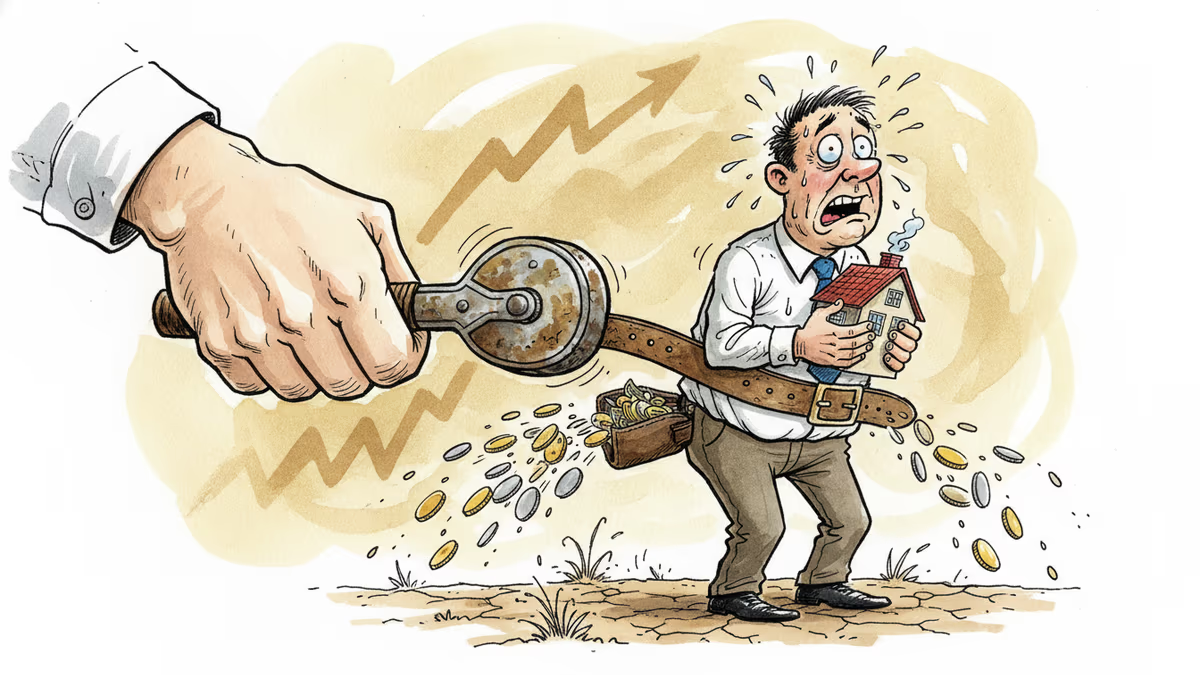
The Bank of Korea lifted its benchmark rate a quarter-point to 2.75%, its first increase in three and a half years. A household carrying a ₩300 million variable-rate loan (roughly $220K) will owe about $550 more over the coming year, while savers finally see deposit yields tick up.
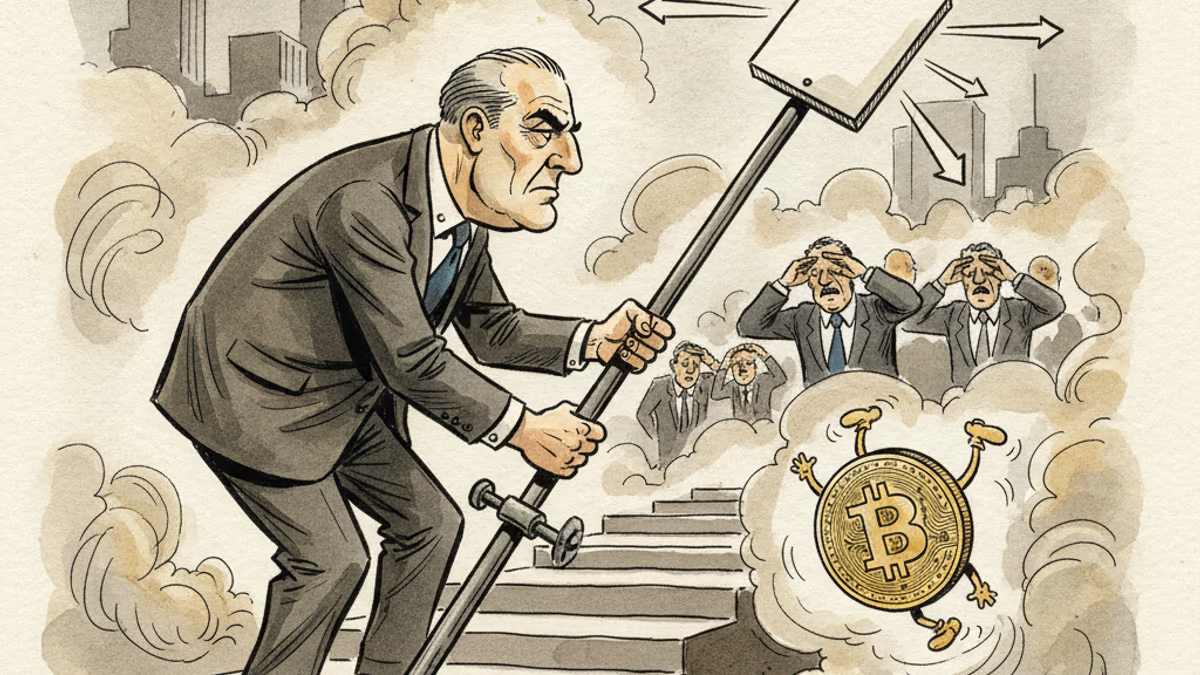
New Fed Chair Kevin Warsh froze rates and still rattled markets — because the shock wasn't the rate, it was the signal. Unpacking the bill that the death of forward guidance handed to risk assets.
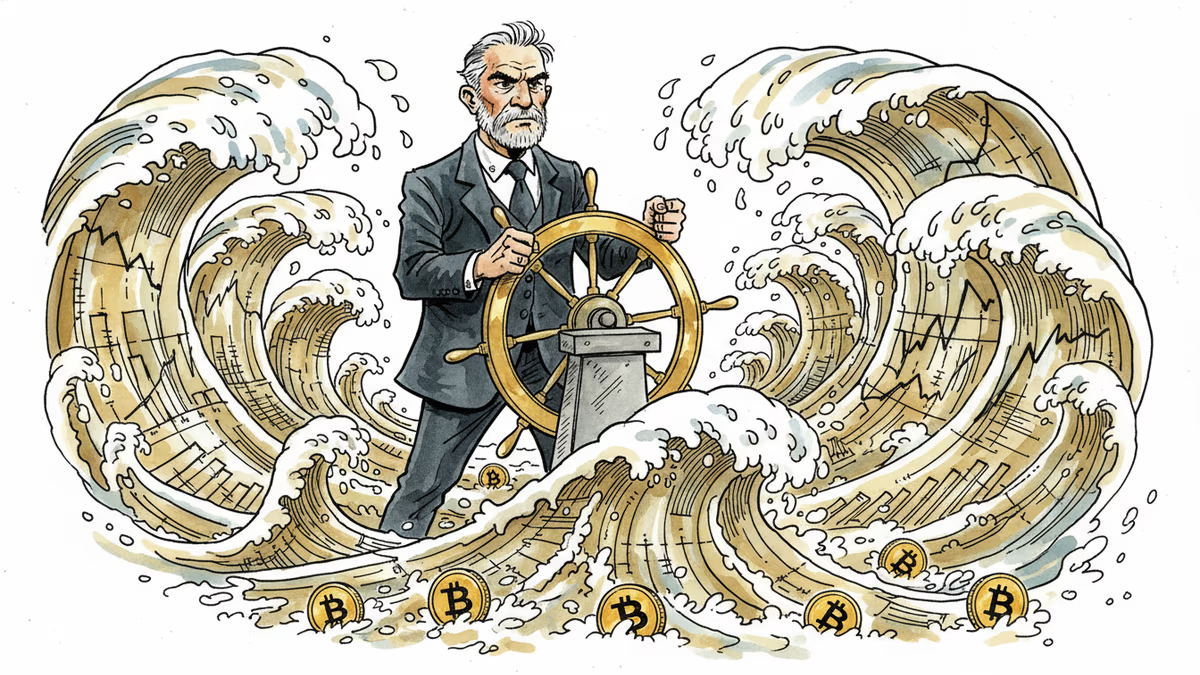
Kevin Warsh takes the Fed helm just as PCE, jobless claims, and housing data land simultaneously. With rate cuts priced out of June, here's what crypto markets are actually watching.
Nvidia posted 85% revenue growth and a $80B buyback. Its stock still dropped — for the fourth straight post-earnings quarter. Here's what that tells us about where AI investing stands right now.
The Bank of Korea lifted its benchmark rate a quarter-point to 2.75%, its first increase in three and a half years. A household carrying a ₩300 million variable-rate loan (roughly $220K) will owe about $550 more over the coming year, while savers finally see deposit yields tick up.
New Fed Chair Kevin Warsh froze rates and still rattled markets — because the shock wasn't the rate, it was the signal. Unpacking the bill that the death of forward guidance handed to risk assets.
Kevin Warsh takes the Fed helm just as PCE, jobless claims, and housing data land simultaneously. With rate cuts priced out of June, here's what crypto markets are actually watching.
Nvidia posted 85% revenue growth and a $80B buyback. Its stock still dropped — for the fourth straight post-earnings quarter. Here's what that tells us about where AI investing stands right now.
Thoughts
Share your thoughts on this article
Sign in to join the conversation