
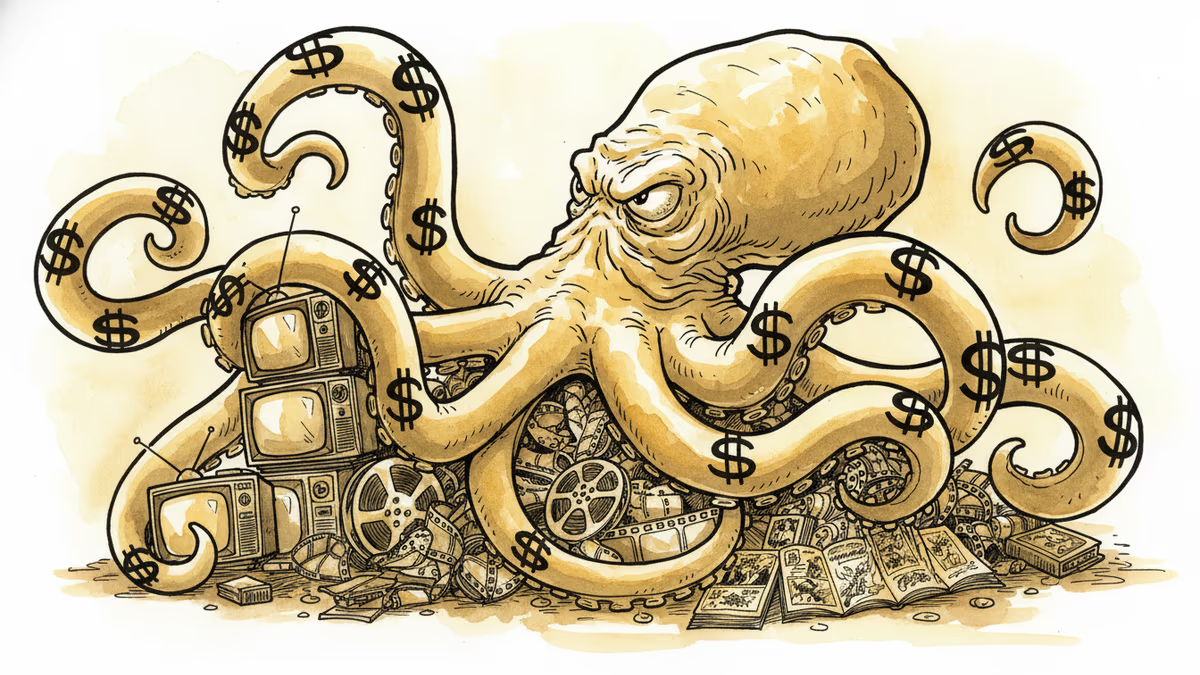
The Ellisons Now Control Half of American Entertainment
Oracle founder Larry Ellison's family expands media empire with $110B Warner Bros. Discovery deal, controlling everything from HBO to TikTok to DC Comics
When Larry Ellison bought a Hawaiian island in 2012, critics called it eccentric billionaire behavior. Today, his family's $110 billion acquisition of Warner Bros. Discovery looks less like eccentricity and more like empire-building on a scale that would make Citizen Kane blush.
The Oracle founder and his son David Ellison, CEO of Paramount Skydance, now stand to control an entertainment portfolio that touches nearly every American household daily. From Superman to South Park, from CNN to TikTok's US operations, the Ellisons are assembling what may be the most comprehensive media conglomerate in modern history.
The Streaming Wars Just Got Personal
Less than a year after closing their $8 billionParamount merger, the Ellisons moved swiftly when Netflix backed out of its WBD bid. The Friday deal includes a $7 billion termination fee if regulators block the merger—a sum that signals serious commitment to consolidation.
The combined entity would control HBO Max, Paramount+, and Discovery+, creating a streaming behemoth with content spanning from prestige dramas like The Wire to reality juggernauts like Survivor. More critically, they'd own the distribution rights to upcoming tentpoles like the Harry Potter HBO series and Dune: Part Three.
For consumers already juggling multiple streaming subscriptions, this consolidation could mean fewer platforms but potentially higher prices. The Ellisons haven't announced integration plans, but industry observers expect significant overlap elimination.
The News Landscape Shifts Right

Perhaps more consequentially, the deal positions the Trump-friendly Ellison family as power brokers in American news media. They'd control CBS News, CNN, and the cultural apparatus that shapes public discourse.
CBS News has already undergone significant changes since the Skydance merger, with Free Press founder Bari Weiss leading what insiders describe as a "cultural overhaul" as editor-in-chief. Mass layoffs have followed, raising questions about editorial independence under new ownership.
CNN, despite ratings dips, remains a top-5 cable network with household names like Anderson Cooper and Kaitlan Collins. How the Ellisons handle CNN's editorial direction will signal their broader approach to news media influence.
The Antitrust Elephant
Regulators face a complex calculation. The merger creates undeniable market concentration, but the entertainment industry argues it needs scale to compete with Apple, Amazon, and Google—tech giants with deeper pockets and broader ecosystems.
The $7 billion termination fee suggests the Ellisons expect regulatory scrutiny. Previous media mergers have faced lengthy review processes, and this deal's scope—spanning news, entertainment, and social media—presents novel antitrust challenges.
European regulators, already skeptical of American tech consolidation, may prove more aggressive than their US counterparts. The deal's global implications, particularly around content distribution and news media influence, extend far beyond American borders.
Authors
Related Articles
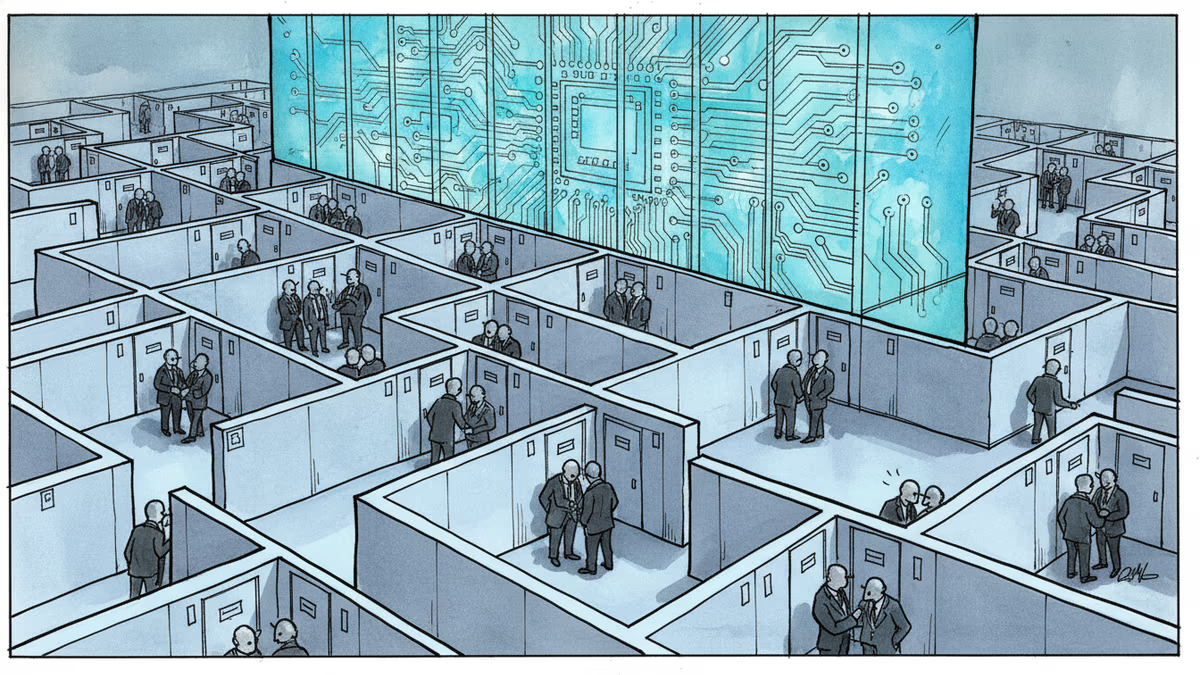
Behind every congressional hearing on Big Tech, there's a quieter room where the real rules get negotiated. As AI regulation, antitrust battles, and privacy law converge on Capitol Hill in 2026, the stakes have never been higher.
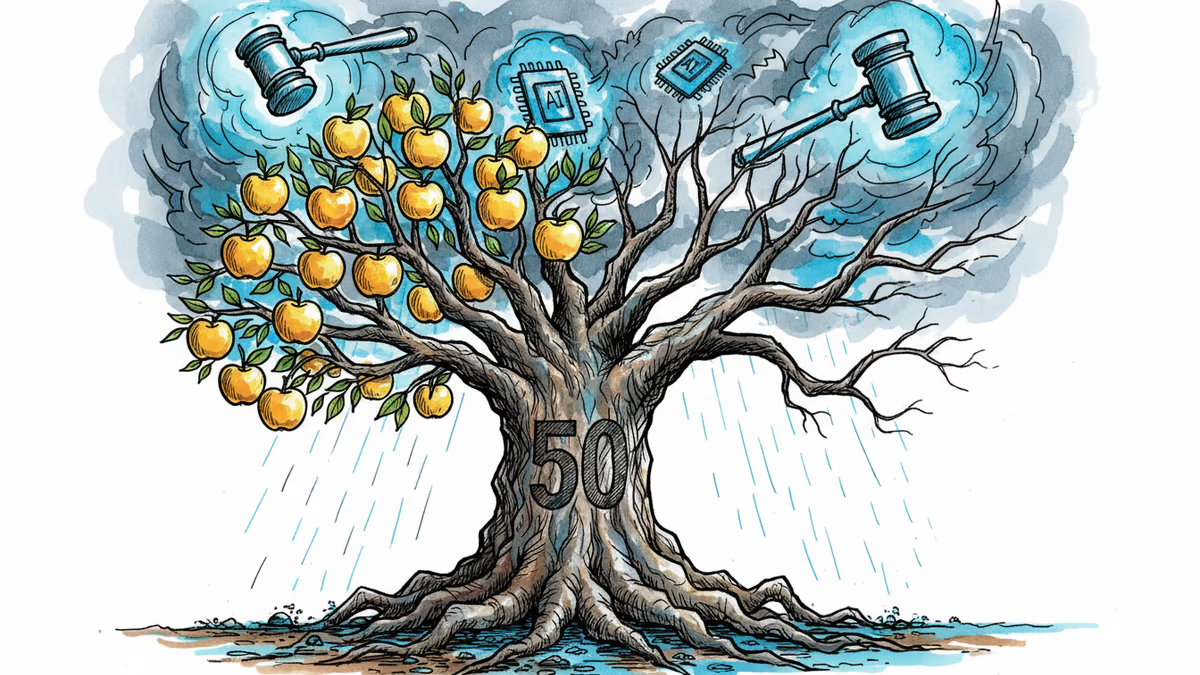
Apple hits its 50th birthday with a $3 trillion valuation — but AI struggles, antitrust pressure, and a quiet innovation drought are raising real questions about what comes next.
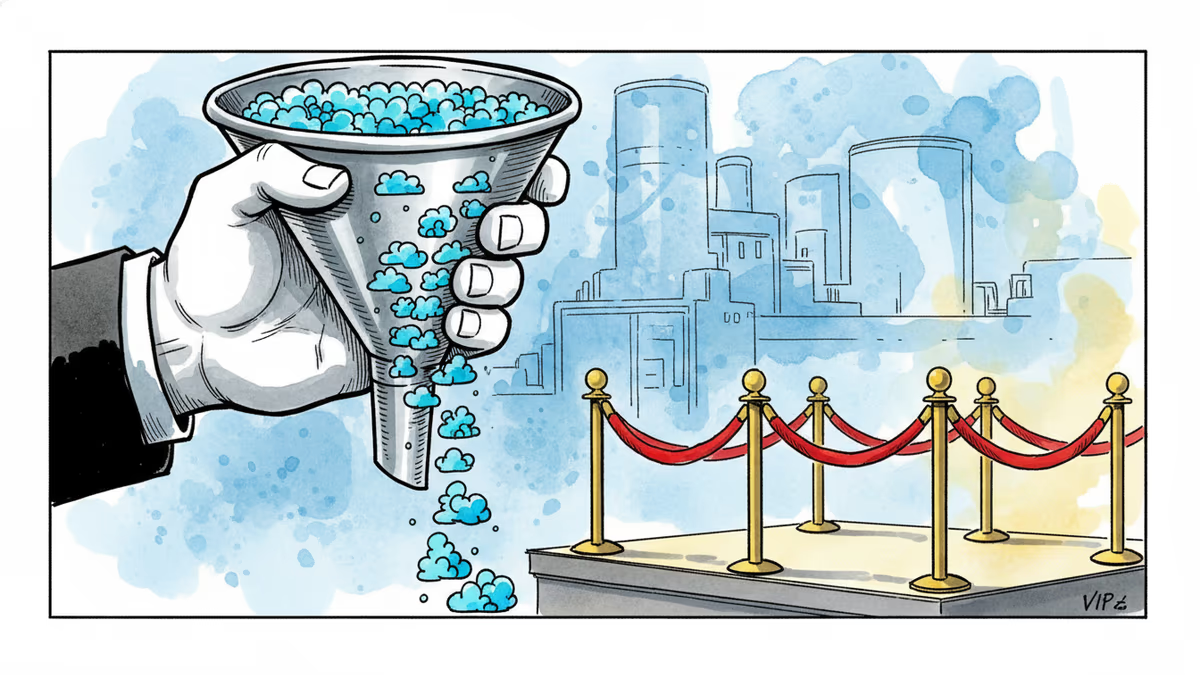
A cloud provider trade group has filed an EU antitrust complaint against Broadcom after it slashed VMware's CSP partner count from 4,000+ to just 19 in the US. Here's what's really at stake.
A federal judge dismissed Musi's lawsuit against Apple with prejudice after the free music app was pulled from the App Store. What does it mean for developers, users, and platform power?
Behind every congressional hearing on Big Tech, there's a quieter room where the real rules get negotiated. As AI regulation, antitrust battles, and privacy law converge on Capitol Hill in 2026, the stakes have never been higher.
Apple hits its 50th birthday with a $3 trillion valuation — but AI struggles, antitrust pressure, and a quiet innovation drought are raising real questions about what comes next.
A cloud provider trade group has filed an EU antitrust complaint against Broadcom after it slashed VMware's CSP partner count from 4,000+ to just 19 in the US. Here's what's really at stake.
A federal judge dismissed Musi's lawsuit against Apple with prejudice after the free music app was pulled from the App Store. What does it mean for developers, users, and platform power?
Thoughts
Share your thoughts on this article
Sign in to join the conversation