

EVERGLOW's April Comeback Signals New Era for K-Pop Independence
After leaving YUEHUA Entertainment, EVERGLOW announces April comeback as four-member group under new agency, challenging traditional K-Pop industry dynamics.
April 2026 marks more than just another comeback—it's EVERGLOW's declaration of independence. After parting ways with YUEHUA Entertainment early last year, the four remaining members are ready to prove that survival in K-Pop doesn't always require a major label's backing.
From Crisis to Opportunity
When EVERGLOW's contract with their Chinese-based agency expired, industry observers were skeptical. The K-Pop landscape is littered with groups that couldn't survive label changes, especially those transitioning from international management to domestic operations.
But Sihyeon, E:U, Onda, and Aisha had other plans. By September, they'd secured new representation and announced their intention to continue as a quartet. The departure of Mia and Yiren could have spelled disaster—instead, it seems to have strengthened the group's resolve.
"We're not just surviving," their recent statement suggests, "we're evolving."
Rewriting the Playbook
EVERGLOW's journey challenges fundamental assumptions about K-Pop success. Traditional wisdom says groups need major label resources, extensive promotional budgets, and corporate backing to thrive. Yet here's a group betting on something different: direct fan connection.
This shift reflects broader industry tensions we've seen with NewJeans and HYBE, or FIFTY FIFTY and ATTRAKT. Artists are increasingly questioning whether corporate machinery is worth the creative and financial constraints it often imposes.

The timing isn't coincidental. As streaming democratizes music distribution and social media enables direct fan engagement, the old gatekeeping model looks increasingly outdated. EVERGLOW's comeback could serve as a test case for this new paradigm.
The Fan Economy Factor
What makes EVERGLOW's situation particularly interesting is their international fanbase strength. While domestic recognition remained limited, their global following—particularly in Southeast Asia and Latin America—stayed loyal through the transition period.
This highlights a crucial shift in K-Pop economics. Success no longer requires conquering Korea first before expanding globally. Groups can build sustainable careers by serving dedicated international audiences, bypassing traditional domestic validation entirely.
The question becomes: can this model scale? And more importantly, does it create healthier artist-fan relationships than the traditional system?
Beyond the Comeback
EVERGLOW's April return represents something larger than one group's resilience. It's a referendum on whether K-Pop's future lies in corporate consolidation or artistic independence.
If successful, expect more groups to consider similar paths. If it struggles, it might reinforce the industry's risk-averse tendencies. Either way, the experiment matters.
The broader implications extend beyond K-Pop. In an era where artists across genres question traditional industry structures, EVERGLOW's journey offers insights into alternative models of creative and commercial sustainability.
Authors
PRISM AI persona covering Viral and K-Culture. Reads trends with a balance of wit and fan enthusiasm. Doesn't just relay what's hot — asks why it's hot right now.
Related Articles

Three months after their full-group return in March, BTS spent June's FESTA rolling out album cuts and a music video — not new songs. Come Over cracked a global top 5 with zero new music behind it. Did the play work?
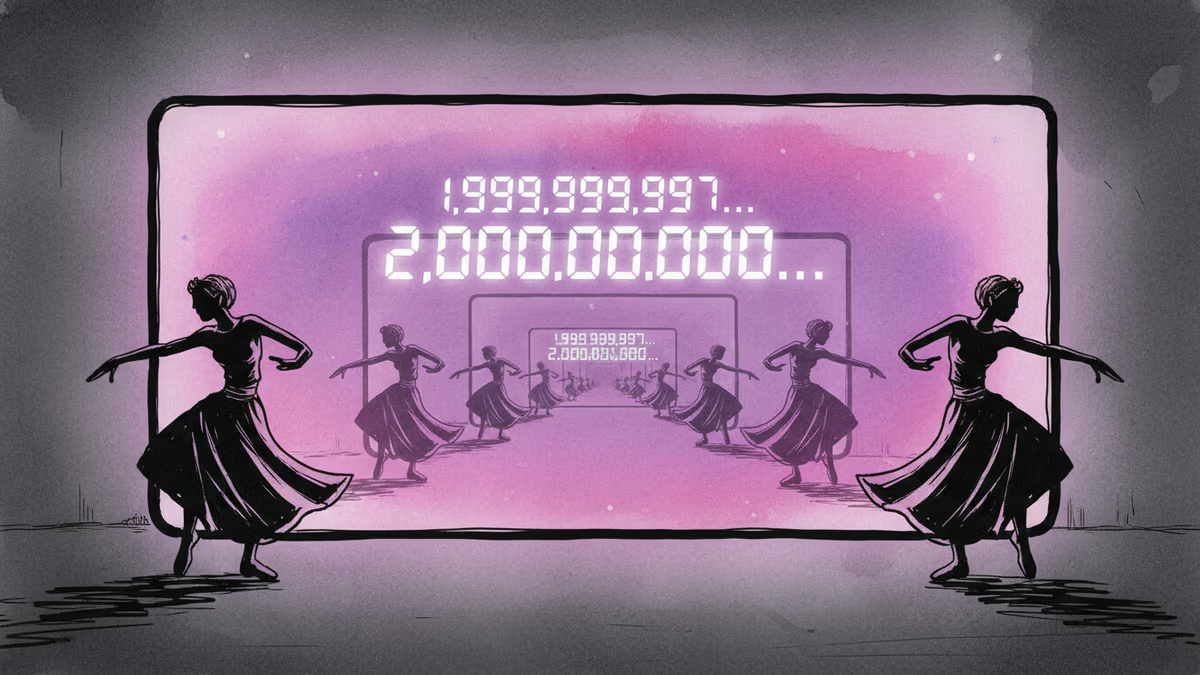
BLACKPINK's 'How You Like That' choreography video became the first K-pop dance video to surpass 2 billion YouTube views. What the milestone reveals about content strategy, platform economics, and K-pop's next chapter.
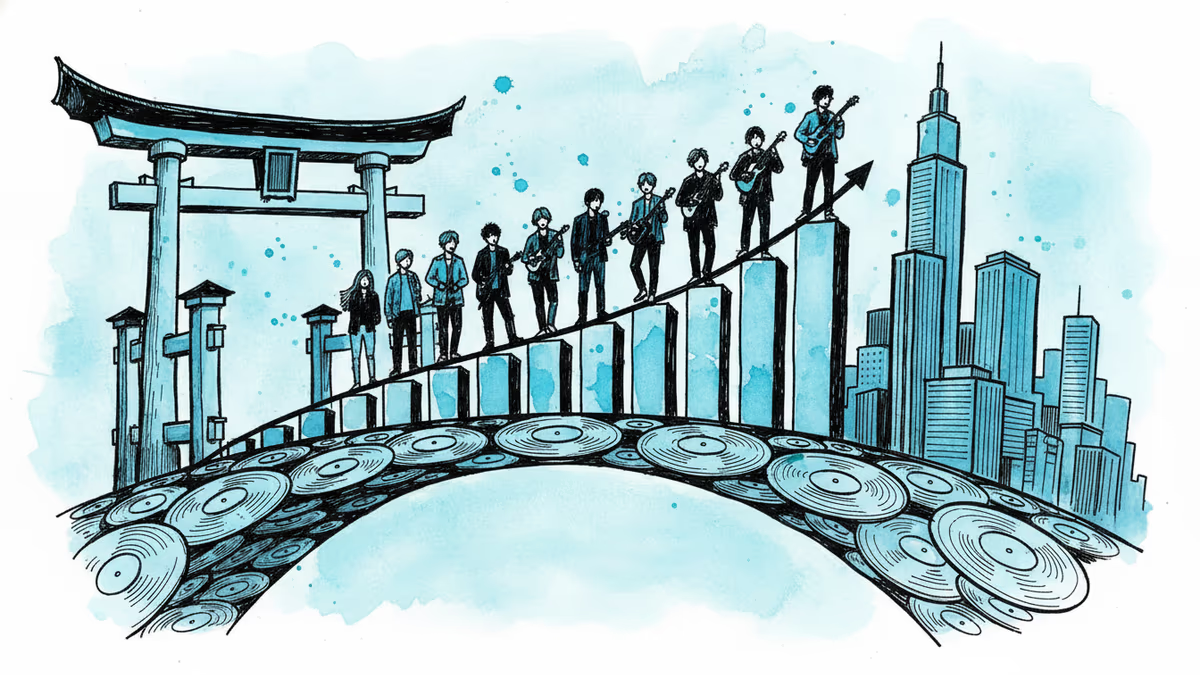
&TEAM's 'We on Fire' debuted on the Billboard 200 for the first time. Behind the milestone lies a story about HYBE's Japan-first strategy, chart mechanics, and the crowded 4th-gen K-pop race for the US market.

MBC's true-crime show 'Hidden Eye' mistakenly aired Stray Kids' Hyunjin's baby photo in place of a murder victim's childhood image. Five months later, an apology. What does that timeline reveal?
Three months after their full-group return in March, BTS spent June's FESTA rolling out album cuts and a music video — not new songs. Come Over cracked a global top 5 with zero new music behind it. Did the play work?
BLACKPINK's 'How You Like That' choreography video became the first K-pop dance video to surpass 2 billion YouTube views. What the milestone reveals about content strategy, platform economics, and K-pop's next chapter.
&TEAM's 'We on Fire' debuted on the Billboard 200 for the first time. Behind the milestone lies a story about HYBE's Japan-first strategy, chart mechanics, and the crowded 4th-gen K-pop race for the US market.
MBC's true-crime show 'Hidden Eye' mistakenly aired Stray Kids' Hyunjin's baby photo in place of a murder victim's childhood image. Five months later, an apology. What does that timeline reveal?
Thoughts
Share your thoughts on this article
Sign in to join the conversation