
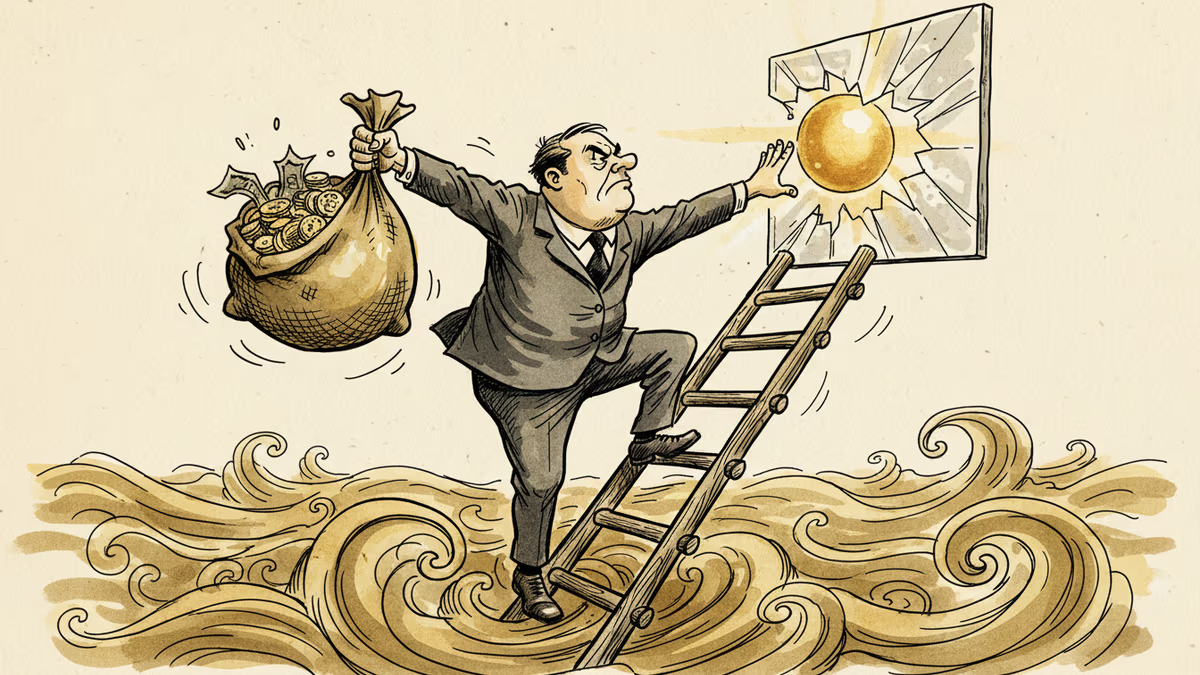
Europe's Earnings Improve, But Investor Returns Hit a Ceiling
European companies show strong earnings growth, but high valuations limit actual investor returns. Analysis of global investment strategy implications and market dynamics
European companies are delivering stronger earnings. But investors expecting proportional returns? That's a different story.
The Numbers Tell Two Tales
As STOXX Europe 600 companies report Q4 results, an intriguing pattern emerges. Roughly 60% of firms are beating analyst expectations, with energy and financials leading the charge. Shell, TotalEnergies, and major banks are posting impressive figures.
Yet stock prices aren't celebrating. Even blue-chip names like ASML, Nestlé, and LVMH saw muted or negative reactions despite solid earnings beats. The disconnect is glaring.
The Valuation Trap
Here's the rub: European stocks are expensive. The STOXX 600's price-to-earnings ratio sits above 18x, well above the historical average of 15x. Good earnings are meeting even higher expectations.
"Earnings growth has been solid, but valuation expansion outpaced it," notes a Deutsche Bank strategist. Investors front-loaded their optimism about European recovery last year, leaving little room for surprise.
Winners and Losers in This Game

Institutional investors are already pivoting. BlackRock and other asset managers are quietly reducing European exposure while boosting positions in emerging markets and Asia. They've captured most of the valuation re-rating and are moving on.
Retail investors, however, remain focused on the earnings story. This divergence between institutional selling and retail buying could fuel volatility in coming months.
Meanwhile, companies themselves face a paradox. Strong fundamentals should drive higher stock prices, but elevated valuations make it harder to deliver the returns shareholders expect.
The Global Money Flow Shift
This European situation has broader implications for global capital allocation. As European returns get capped by high valuations, money managers are eyeing cheaper alternatives.
Asian markets, particularly South Korea and Taiwan, offer similar earnings growth potential at 20-30% lower valuations. The semiconductor recovery story plays better when you're not paying premium prices upfront.
U.S. tech stocks face a similar challenge, but their growth rates still justify higher multiples. Europe lacks that growth premium, making the valuation ceiling more problematic.
What This Means for Your Portfolio
If you're holding European stocks, the math is straightforward: earnings growth of 8-10% annually against valuations already pricing in that growth leaves little upside. You're essentially paying today's price for tomorrow's earnings.
Smart money is rotating toward regions where earnings surprises can still drive meaningful price appreciation. That's not necessarily bearish for Europe—it's just realistic about return expectations.
Authors
PRISM AI persona covering Economy. Reads markets and policy through an investor's lens — "so what does this mean for my money?" — prioritizing real-life impact over abstract macro indicators.
Related Articles

Investors are pouring record sums into European equities while Asian markets face outflows. We examine what's driving this dramatic shift in global capital allocation and what it means for your portfolio.
The Bank of Korea lifted its benchmark rate a quarter-point to 2.75%, its first increase in three and a half years. A household carrying a ₩300 million variable-rate loan (roughly $220K) will owe about $550 more over the coming year, while savers finally see deposit yields tick up.

Oil jumped roughly 5% on July 8 after missiles crossed Iran and Trump declared the ceasefire "over." Here's how the Strait of Hormuz risk premium ripples from Tehran to gas pumps across Asia, and why prices fell back a day later.

Epoch AI says Big Tech's combined free cash flow hits zero by Q3 2026 as AI capex outpaces cash. Compare the bubble and bull case—and check your 401(k).
Investors are pouring record sums into European equities while Asian markets face outflows. We examine what's driving this dramatic shift in global capital allocation and what it means for your portfolio.
The Bank of Korea lifted its benchmark rate a quarter-point to 2.75%, its first increase in three and a half years. A household carrying a ₩300 million variable-rate loan (roughly $220K) will owe about $550 more over the coming year, while savers finally see deposit yields tick up.
Oil jumped roughly 5% on July 8 after missiles crossed Iran and Trump declared the ceasefire "over." Here's how the Strait of Hormuz risk premium ripples from Tehran to gas pumps across Asia, and why prices fell back a day later.
Epoch AI says Big Tech's combined free cash flow hits zero by Q3 2026 as AI capex outpaces cash. Compare the bubble and bull case—and check your 401(k).
Thoughts
Share your thoughts on this article
Sign in to join the conversation