

Tesla Revives Dojo 3 for Space-Based AI Compute Strategy
Elon Musk announces the revival of Tesla's Dojo 3 project, now dedicated to space-based AI compute. Explore how Starship might fuel this orbital data center vision.
Earth's power grids are gasping for air under the weight of AI demands. Elon Musk has a solution that's literally out of this world. After a brief hiatus, Tesla is restarting its abandoned Dojo 3 chip project, pivoting from self-driving training to orbital intelligence.
The Tesla Dojo 3 Space AI Compute Pivot
Just 5 months after dismantling the team, Elon Musk confirmed via X that Tesla is back in the custom silicon race. This time, the Dojo 3 (or AI7) chip isn't aimed at Earth-bound neural networks. Musk stated the project will focus on "space-based AI compute," positioning it as a moonshot for the company's long-term infrastructure.

This announcement marks a sharp turn from previous reports that Tesla would rely solely on partners like Nvidia, AMD, and Samsung. While the AI5 chip remains in "good shape" for FSD and Optimus robots, and a $16.5 billion deal with Samsung covers the terrestrial AI6, Dojo 3 represents a new frontier.
Orbiting the Power Problem
The logic behind moving compute to space is rooted in energy efficiency. Earth's grids are struggling to keep up with the massive cooling and power needs of AI data centers. By leveraging SpaceX and its upcoming Starship launches, Musk envisions a constellation of satellites harvesting 24/7 solar power in a vacuum. However, cooling remains a significant technical hurdle in the absence of an atmosphere.
Authors
Related Articles
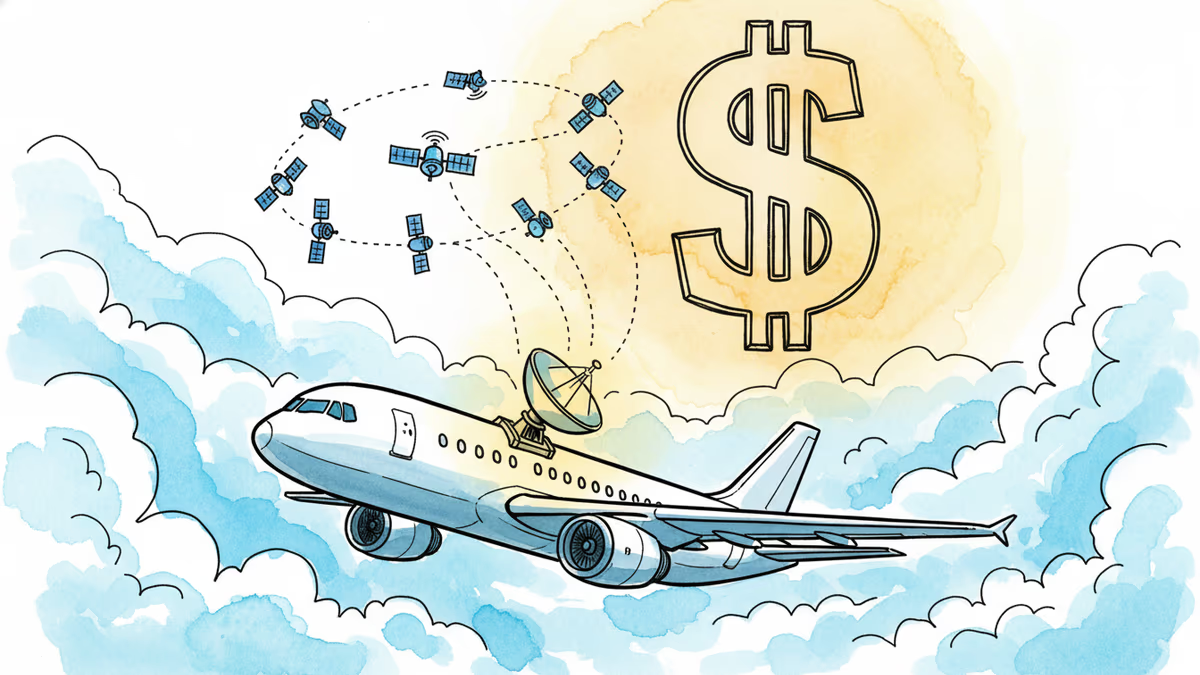
American Airlines just signed Starlink for 500+ aircraft. It's not just about faster inflight internet — it's a calculated move in the run-up to what could be the largest IPO in history.

SpaceX's upgraded Starship V3 completed its first test flight, deploying 20 Starlink simulators but losing the Super Heavy booster. With an IPO weeks away, the stakes just got higher.

SpaceX's IPO filing puts AI at the center, claiming a $26.5 trillion market opportunity. But can Grok compete with OpenAI and Anthropic for enterprise customers?
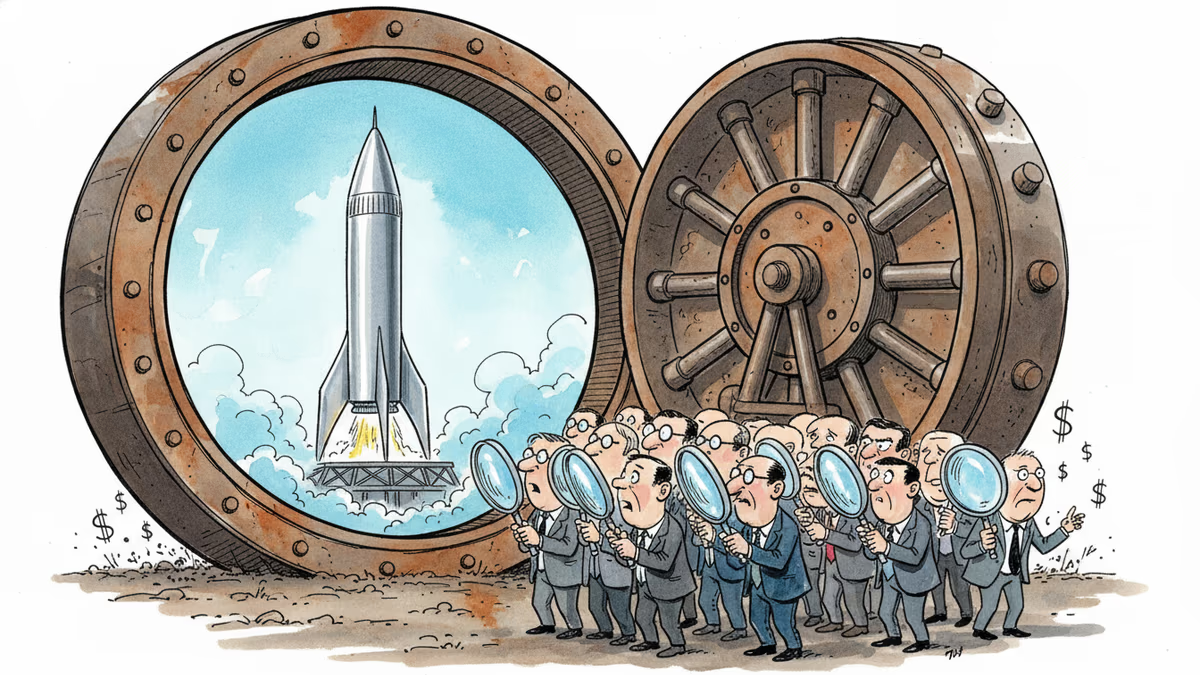
SpaceX filed a nearly 400-page S-1 with the SEC, targeting an IPO as early as June 12. Here's what the filing reveals—and what it doesn't.
American Airlines just signed Starlink for 500+ aircraft. It's not just about faster inflight internet — it's a calculated move in the run-up to what could be the largest IPO in history.
SpaceX's upgraded Starship V3 completed its first test flight, deploying 20 Starlink simulators but losing the Super Heavy booster. With an IPO weeks away, the stakes just got higher.
SpaceX's IPO filing puts AI at the center, claiming a $26.5 trillion market opportunity. But can Grok compete with OpenAI and Anthropic for enterprise customers?
SpaceX filed a nearly 400-page S-1 with the SEC, targeting an IPO as early as June 12. Here's what the filing reveals—and what it doesn't.
Thoughts
Share your thoughts on this article
Sign in to join the conversation