
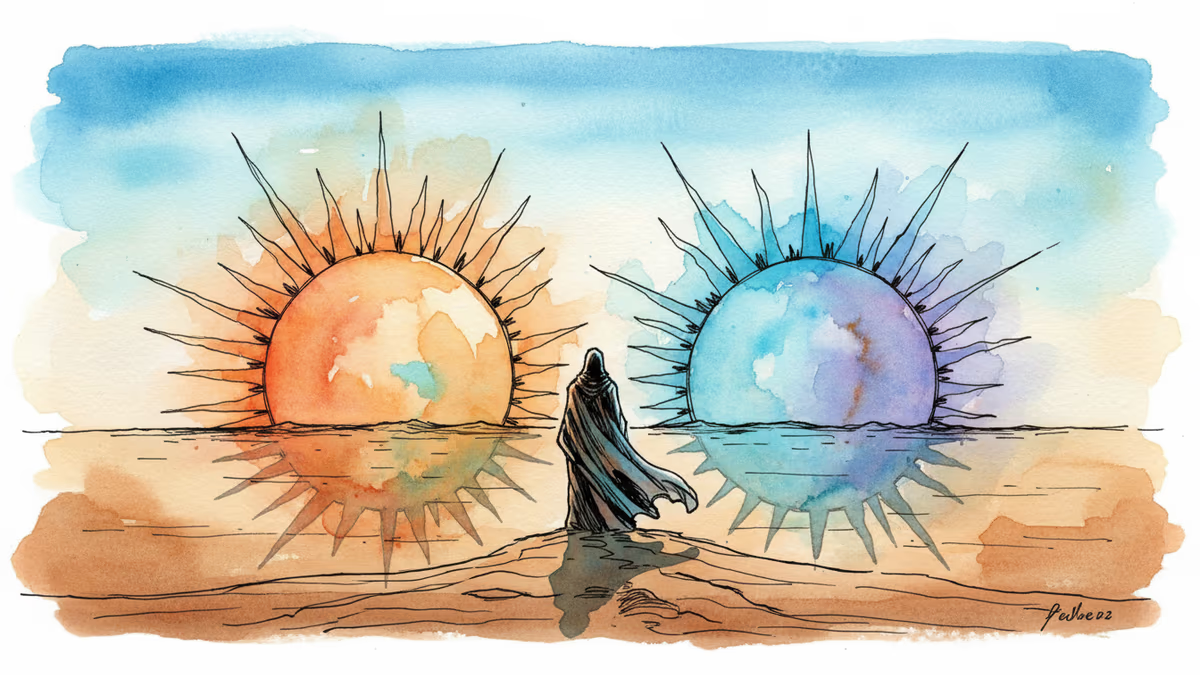
Dune: Part Three's Twins Trailer Asks What a Messiah Leaves Behind
The first full trailer for Denis Villeneuve's Dune: Part Three reveals Paul and Chani awaiting twins — a detail that carries enormous weight for fans of Frank Herbert's novels.
The messiah has won. Now what does he leave behind?
Warner Bros. has dropped the first full trailer for Denis Villeneuve's Dune: Part Three, and it opens not with war or prophecy, but with something far more intimate: a couple waiting for a child. Or, as it turns out, two children. Timothée Chalamet's Paul Atreides and Zendaya's Chani are expecting twins — though the trailer suggests they don't yet know it.
That single detail will mean very little to casual viewers. To anyone who has read Frank Herbert's source novel, Dune Messiah, it changes everything.
What the Trailer Shows — and Deliberately Withholds
Set several years after the events of Part Two, the trailer frames Part Three as the closing chapter of Paul's arc. The tone is quieter than the sandworm-riding crescendo of the previous film, leaning into consequence rather than conquest. Villeneuve, characteristically, keeps his cards close. No villain reveal. No climactic battle sequence. Just Paul and Chani, and the weight of what they've built.
The twins — Leto II and Ghanima in Herbert's text — are not minor characters. They are the living proof that a messiah's choices echo far beyond his own lifetime. In Dune Messiah, Paul's story ends not in triumph but in a reckoning with the holy war he unleashed across the universe. It is, deliberately, an anti-heroic conclusion to what began as a hero's journey.
Whether Villeneuve fully commits to that darkness is the central question hanging over this production.

The Box Office Question Nobody Wants to Ask Out Loud
Here's the uncomfortable math. Part One earned roughly $401 million globally. Part Two more than doubled that, crossing $700 million and becoming one of the rare sequels to outperform its predecessor. The studio now faces a sequel that, if faithful to its source, ends in tragedy, ambiguity, and the deliberate dismantling of its own protagonist.
Hollywood does not have a strong track record of rewarding that kind of storytelling at the box office. The Marvel Cinematic Universe trained audiences to expect triumph. Dune: Part Three is being asked to deliver the opposite.
Villeneuve has earned considerable trust. His adaptation choices in Parts One and Two — particularly the expansion of Chani's skepticism toward Paul's messianic role — suggest he understands the thematic core of Herbert's work. But the trailer's emphasis on the couple's domesticity and the emotional hook of impending parenthood may also signal a deliberate softening of the material for broader audiences.
Three Audiences, Three Very Different Films
The Dune fanbase entering Part Three is not a monolith.
For readers of Dune Messiah, this is the film they've been nervous about since Part One was announced. The novel is Herbert's explicit rebuke of the messiah myth he created — a text that punishes its own hero. Faithfulness to that vision requires Villeneuve to make a film that leaves audiences unsettled rather than satisfied.
For viewers who came to the story through the films alone, Part Three is simply the finale of an epic. The trailer's emotional beats — love, family, anticipation — are legible without any prior reading. This audience wants resolution. Whether they'll accept the kind Herbert wrote is an open question.
And then there are the investors and studio executives watching the global franchise ecosystem. A successful Part Three doesn't just close a trilogy. It opens the door to adaptations of Children of Dune, God Emperor of Dune, and beyond. The creative and commercial pressures on this film are pulling in genuinely opposite directions.
Authors
Related Articles
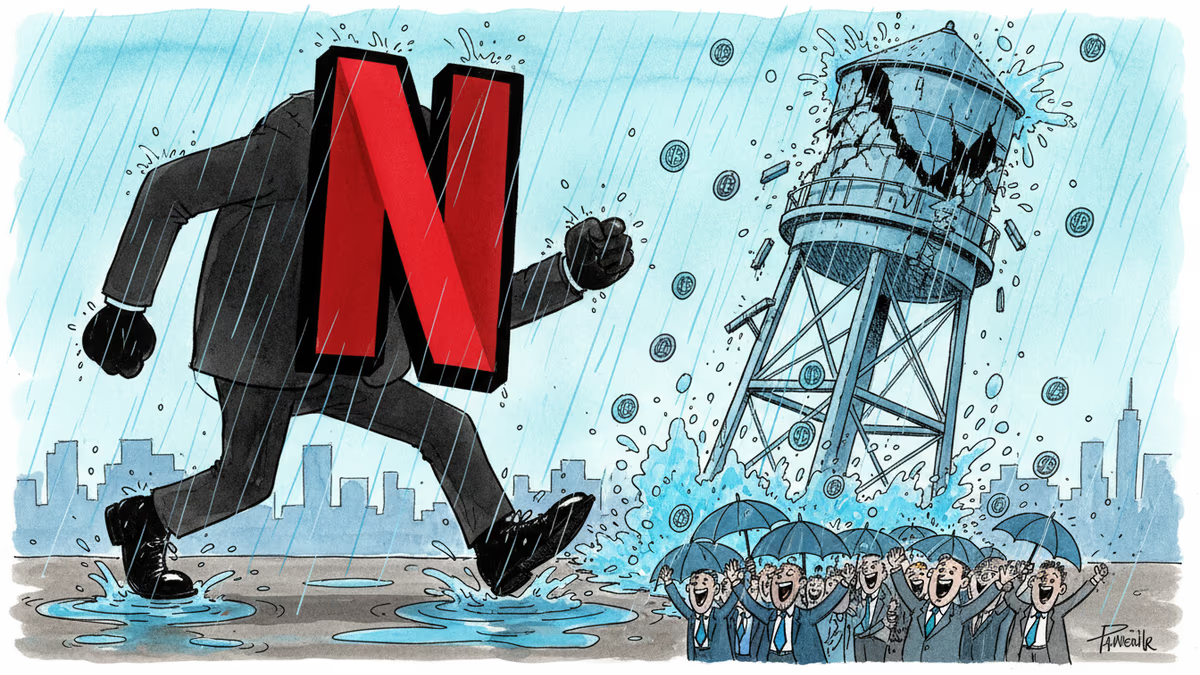
Netflix's shocking withdrawal from the Warner Bros. acquisition reveals deeper tensions between growth ambitions and shareholder demands in the streaming wars.
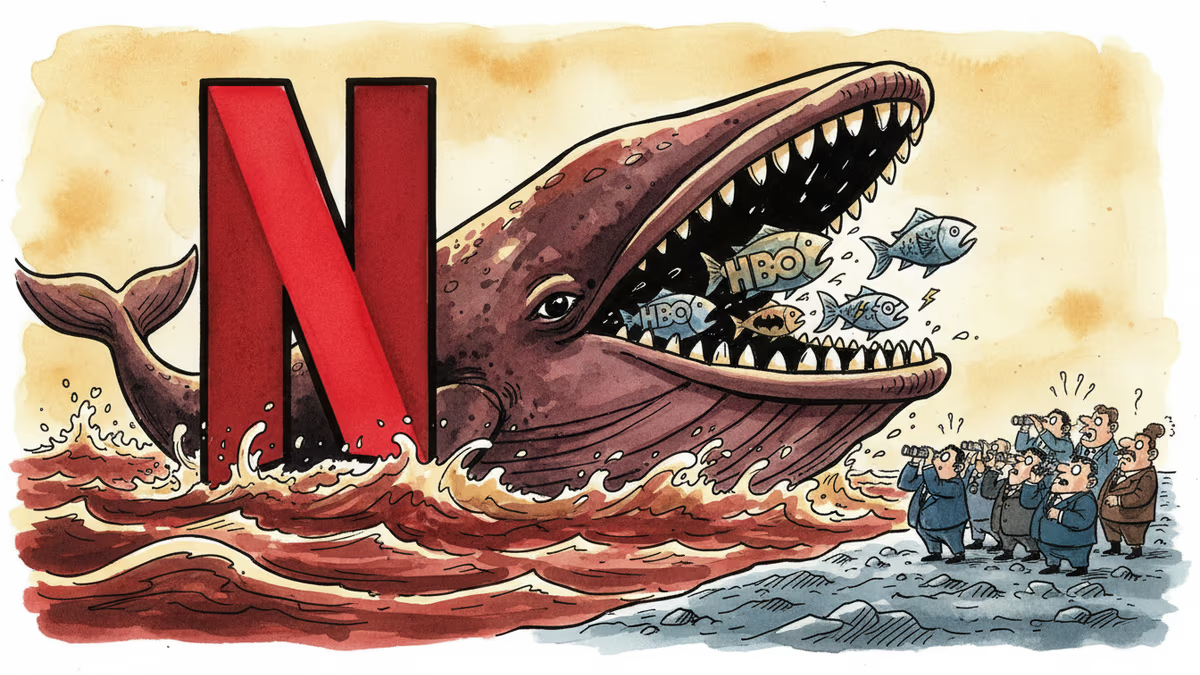
Netflix's $82.7B Warner Bros acquisition could reshape streaming forever. From regulatory battles to creator concerns, here's what's really at stake beyond the headlines.
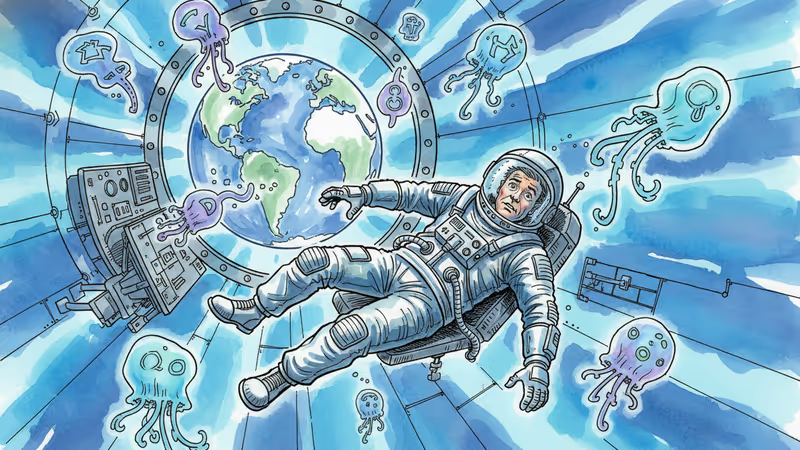
Amazon's Project Hail Mary adapts Andy Weir's bestseller about an amnesiac biologist-turned-teacher who must solve a cosmic mystery to save Earth, starring Ryan Gosling
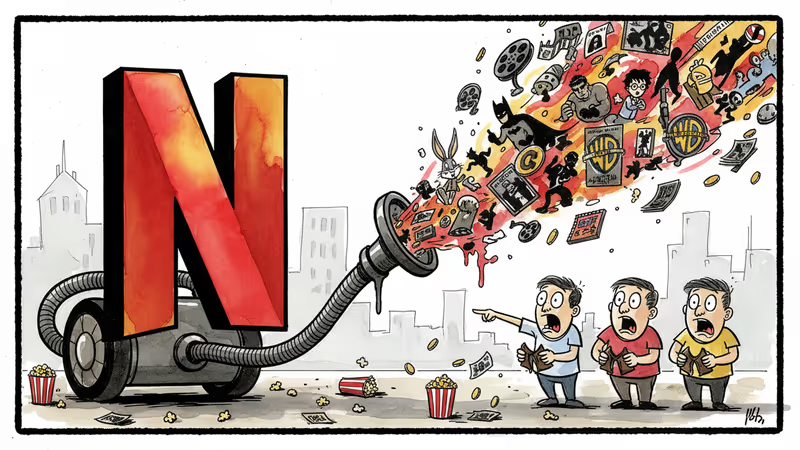
Netflix co-CEO Ted Sarandos tells Senate hearing that Warner Bros acquisition will lower prices and increase content, but monopoly concerns persist.
Netflix's shocking withdrawal from the Warner Bros. acquisition reveals deeper tensions between growth ambitions and shareholder demands in the streaming wars.
Netflix's $82.7B Warner Bros acquisition could reshape streaming forever. From regulatory battles to creator concerns, here's what's really at stake beyond the headlines.
Amazon's Project Hail Mary adapts Andy Weir's bestseller about an amnesiac biologist-turned-teacher who must solve a cosmic mystery to save Earth, starring Ryan Gosling
Netflix co-CEO Ted Sarandos tells Senate hearing that Warner Bros acquisition will lower prices and increase content, but monopoly concerns persist.
Thoughts
Share your thoughts on this article
Sign in to join the conversation