
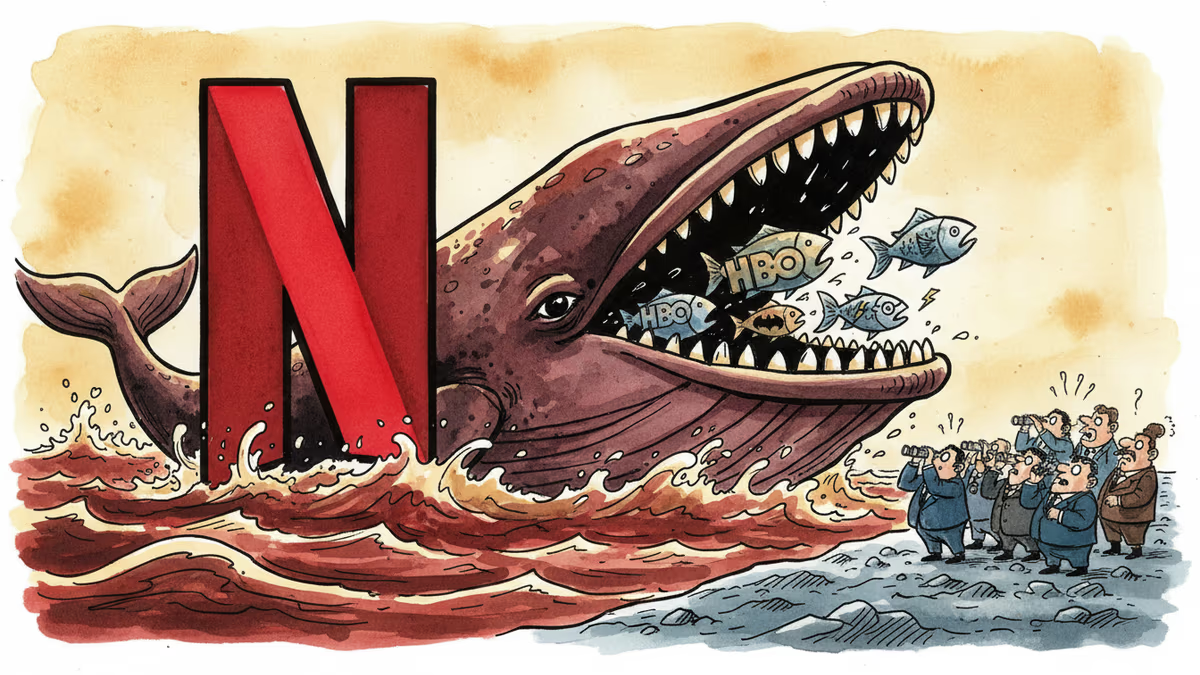
When Netflix Swallows Warner Bros, What Stories Will We Lose?
Netflix's $82.7B Warner Bros acquisition could reshape streaming forever. From regulatory battles to creator concerns, here's what's really at stake beyond the headlines.
$82.7 billion. That's not just a number—it's the price tag for potentially rewriting the rules of entertainment as we know it.
When Netflix announced its acquisition of Warner Bros. Discovery in early December, it wasn't just buying a studio. It was claiming ownership of Game of Thrones, Harry Potter, the entire DC Comics universe, and countless other cultural touchstones that have shaped global entertainment. The world's largest streaming platform, with over 325 million subscribers, is about to get significantly larger.
But size isn't everything. Sometimes it's what you lose in the process that matters most.
The Money War Netflix Won
This wasn't a sudden corporate whim. Warner Bros. Discovery had been bleeding money for months, crushed under billions in debt while cable viewership plummeted and streaming competition intensified. By October, the company was actively exploring a sale.
The bidding war was brutal. Paramount came swinging with a $108 billion all-cash offer for the entire company, initially looking like the frontrunner. Comcast threw its hat in the ring too. But Warner Bros.' board ultimately chose Netflix's more surgical approach—$27.75 per share in cash, targeting only the film, TV, and streaming assets while leaving the debt behind.
Paramount's offer would have saddled the combined company with $87 billion in debt. Netflix's deal was cleaner, smarter, and ultimately more attractive to shareholders who'd watched their investment hemorrhage value.
The Regulators Circle
Money talks, but regulators have the final word. This week, Netflix co-CEO Ted Sarandos is scheduled to testify before a U.S. Senate committee—a clear signal that lawmakers are taking this deal seriously.
Senators Elizabeth Warren, Bernie Sanders, and Richard Blumenthal have already fired warning shots at the Justice Department's Antitrust Division. Their concern? That such a massive merger could give Netflix "excessive market power," enabling price hikes and stifling competition.
If regulators block the deal, Netflix faces a $5.8 billion breakup fee. That's real money, even for a company of Netflix's size.

Hollywood's Revolt
The entertainment industry's response has been largely hostile. The Writers Guild of America is demanding the merger be blocked on antitrust grounds. Their fears go deeper than market concentration—they're worried about creative diversity.
Insiders fear the acquisition will squeeze independent creators and diverse voices out of the spotlight. When one company controls both the content pipeline and distribution platform, the range of stories that get told inevitably narrows. It's not just about market share—it's about whose stories get heard.
Job losses and wage suppression are additional concerns. When companies merge, redundancies are eliminated. When negotiating power concentrates, worker leverage diminishes.
What Subscribers Should Expect
For now, Netflix executives promise minimal immediate changes. HBO's operations will remain largely unchanged in the near term, and there are no definitive plans yet for app integration or bundling.
Pricing is where things get interesting. Sarandos has stated no immediate price changes will occur during regulatory approval. But Netflix has historically raised subscription prices every year or two. Post-acquisition, with reduced competition and expanded content libraries, price increases seem inevitable.
The real question isn't whether prices will rise—it's by how much.
The Stubborn Rival
Paramount isn't giving up quietly. After filing a lawsuit in January demanding more information about the Netflix deal, they sweetened their counteroffer in February. They're now promising a $0.25 per share "ticking fee" for each quarter the deal fails to close by December 31, 2026. They'll even pay Netflix's $2.8 billion breakup fee if the streaming giant walks away.
It's a Hail Mary play, but it shows how valuable these assets are considered across the industry.
Timeline and Uncertainty
The deal isn't done yet. A Warner Bros. stockholder vote is expected around April, with final closure anticipated 12-18 months afterward. But regulatory scrutiny could extend that timeline—or kill the deal entirely.
Even if approved, integration will take years. Netflix will need to navigate complex licensing agreements, union contracts, and the delicate process of merging two very different corporate cultures.
Authors
Related Articles
Netflix has hiked prices across all plans, including its ad-supported tier, just 14 months after its last increase. What this means for subscribers, competitors, and the future of streaming economics.
Streaming prices have doubled in a decade. Netflix, Disney, HBO Max — every platform is charging more and adding ads. Here's why, and what it means for you.
Days into his tenure, Disney CEO Josh D'Amaro faces simultaneous crises: OpenAI's Sora shutdown threatens a $1B AI deal, while Epic's layoffs cast doubt on a $1.5B metaverse plan.
A federal judge dismissed Musi's lawsuit against Apple with prejudice after the free music app was pulled from the App Store. What does it mean for developers, users, and platform power?
Netflix has hiked prices across all plans, including its ad-supported tier, just 14 months after its last increase. What this means for subscribers, competitors, and the future of streaming economics.
Streaming prices have doubled in a decade. Netflix, Disney, HBO Max — every platform is charging more and adding ads. Here's why, and what it means for you.
Days into his tenure, Disney CEO Josh D'Amaro faces simultaneous crises: OpenAI's Sora shutdown threatens a $1B AI deal, while Epic's layoffs cast doubt on a $1.5B metaverse plan.
A federal judge dismissed Musi's lawsuit against Apple with prejudice after the free music app was pulled from the App Store. What does it mean for developers, users, and platform power?
Thoughts
Share your thoughts on this article
Sign in to join the conversation