
Scientists Are Studying AI Like Alien Life Forms
Researchers are using biological approaches to understand how large language models work, treating them like vast alien creatures that have appeared in our midst. The mystery deepens as AI becomes more widespread.
What happens when hundreds of millions of people use technology that nobody—not even its creators—fully understands?
That's exactly where we are with large language models like ChatGPT and Claude. These systems have grown so vast and complex that even the engineers who build them can't explain precisely how they work or what their true limitations might be. Yet hundreds of millions of people now rely on this mysterious technology every single day.
Treating AI Like Alien Biology
To crack this puzzle, researchers are taking an unusual approach: they're studying LLMs as if they were doing biology or neuroscience on massive living creatures—city-sized xenomorphs that have suddenly appeared in our digital ecosystem.
The technique, called mechanistic interpretability, involves dissecting AI models layer by layer, much like biologists might study an unknown organism. And what they're finding is that large language models are even stranger than anyone imagined.
MIT Technology Review has recognized mechanistic interpretability as one of the 10 Breakthrough Technologies for 2026, highlighting just how crucial this field has become.

The Stakes Keep Rising
This isn't just academic curiosity. As AI systems become embedded in everything from medical diagnosis to financial services, the "black box" problem becomes increasingly dangerous. How can doctors trust an AI's cancer diagnosis if they can't understand the reasoning? How can judges rely on AI-assisted sentencing recommendations without transparency?
Major tech companies are pouring resources into interpretability research, but they're also racing to deploy ever-larger models. It's a tension between moving fast and understanding what you've built.
The Philosophical Question
Some argue we don't need to fully understand AI to benefit from it—after all, we don't completely understand human consciousness, yet we function just fine. But critics counter that AI systems are human-made tools with society-wide impact, making transparency not just helpful but essential.
There's also a deeper question: Are we creating something that will eventually surpass our ability to comprehend it entirely? The researchers treating AI like alien biology might be more prescient than they realize.
Authors
Related Articles
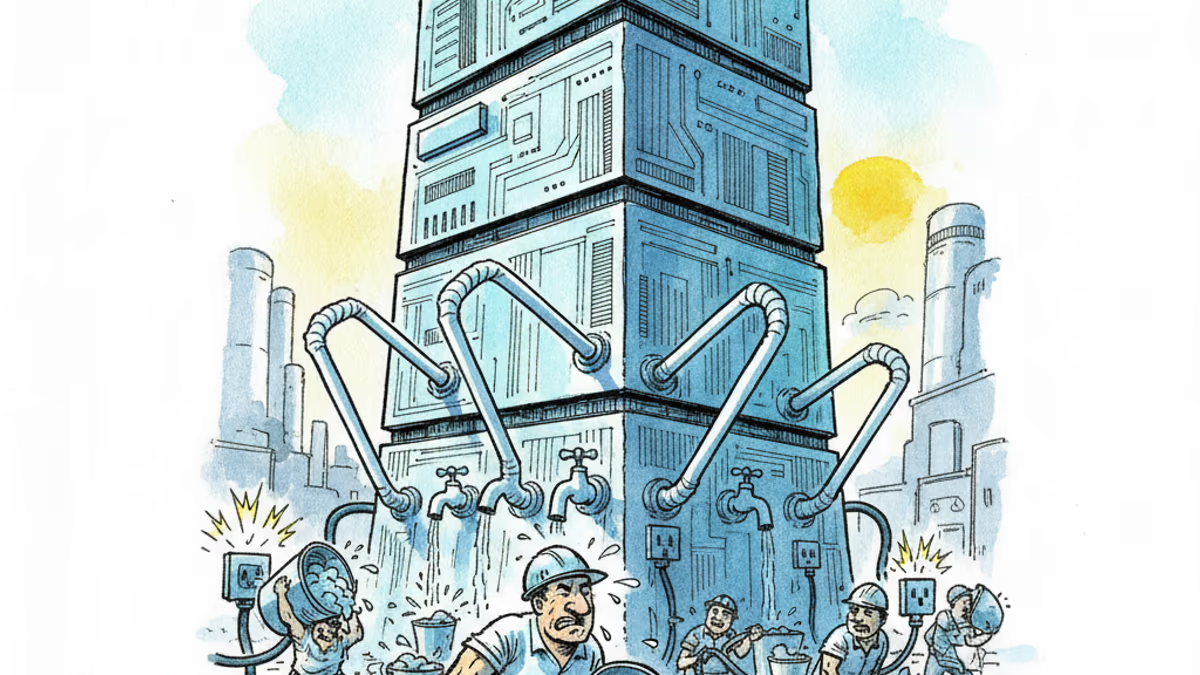
Samsung and SK unveiled a chip and AI investment package worth thousands of trillions of won on June 29. The headline number swings wildly by outlet, but the real contest isn't capital — it's water and power.

Viral videos show 2026 graduates jeering executives who praise AI at commencement ceremonies. It's not just rudeness — it's a signal about who pays for technological optimism.

Filipino virtual assistants using AI to ghost-manage LinkedIn profiles for executives is now a structured industry. 30 comments a day, fake engagement rings, and a platform struggling to tell real from fabricated.
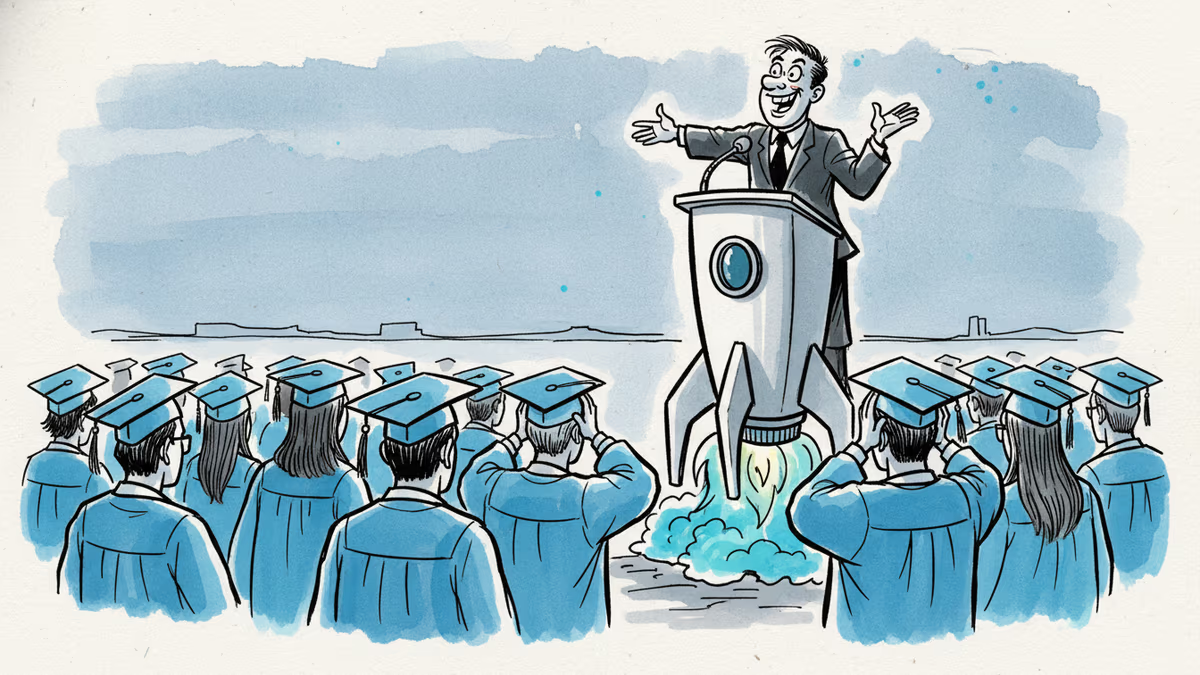
Two commencement speakers learned the hard way that AI enthusiasm doesn't land well with today's graduates. The backlash reveals a widening gap between tech optimism and Gen Z's economic reality.
Samsung and SK unveiled a chip and AI investment package worth thousands of trillions of won on June 29. The headline number swings wildly by outlet, but the real contest isn't capital — it's water and power.
Viral videos show 2026 graduates jeering executives who praise AI at commencement ceremonies. It's not just rudeness — it's a signal about who pays for technological optimism.
Filipino virtual assistants using AI to ghost-manage LinkedIn profiles for executives is now a structured industry. 30 comments a day, fake engagement rings, and a platform struggling to tell real from fabricated.
Two commencement speakers learned the hard way that AI enthusiasm doesn't land well with today's graduates. The backlash reveals a widening gap between tech optimism and Gen Z's economic reality.
Thoughts
Share your thoughts on this article
Sign in to join the conversation