

The $20 Question: Why Users Are Quitting ChatGPT Plus
QuitGPT campaign gains momentum as frustrated users cancel their ChatGPT subscriptions. What's driving the exodus from OpenAI's premium service?
When $20 Feels Like Too Much
Alfred Stephen thought he'd found the perfect coding companion. The Singapore-based freelance developer signed up for ChatGPT Plus in September, paying $20 monthly for faster access to OpenAI's advanced models. Four months later, he canceled.
"The responses were too verbose and meandering," Stephen explains. "The coding abilities didn't live up to the hype."
He's not alone. Reddit threads about the 'QuitGPT' campaign have exploded in recent weeks, with hundreds of users sharing their cancellation stories. The movement represents something bigger than individual frustration—it's a reckoning with AI's promise versus reality.
The Honeymoon Is Over
The complaints follow familiar patterns. Users cite verbose responses that bury useful information in corporate-speak pleasantries. Others point to inconsistent performance—the same query producing wildly different quality responses. Then there's the competition factor: free alternatives like Google's Gemini and Anthropic's Claude have narrowed the performance gap.
"These companies are terrified that no one's going to notice them," notes Tom Goodwin, co-founder of business consulting firm All We Have Is Now. The desperation shows in OpenAI's recent product launches—a $200 monthly pro tier that feels disconnected from user needs.

The Subscription Trap
The QuitGPT phenomenon reveals a fundamental tension in AI monetization. Unlike Netflix or Spotify, where content libraries justify recurring fees, AI services compete on utility that users can easily compare across platforms.
OpenAI faces what economists call the "commodity trap." As AI capabilities become standardized, differentiation becomes harder. Why pay $20 for ChatGPT when Claude offers similar performance for free? The value proposition gets murky fast.
Industry analysts note another factor: AI fatigue. Early adopters who rushed to subscribe are now questioning whether they actually need AI for daily tasks. The novelty has worn off, leaving cold utility calculations.
The Bigger Stakes
For OpenAI, subscriber churn threatens more than revenue—it challenges the company's narrative of AI leadership. If users abandon the service that sparked the AI boom, what does that say about the technology's maturity?
The timing is particularly awkward. OpenAI is reportedly seeking funding at a $150 billion valuation, partly based on subscription growth projections. User exodus complicates that story.
Meanwhile, competitors are watching closely. Google, Microsoft, and Anthropic are positioning their AI services as more practical alternatives. The message is clear: premium AI needs to prove its premium worth.
Authors
Related Articles
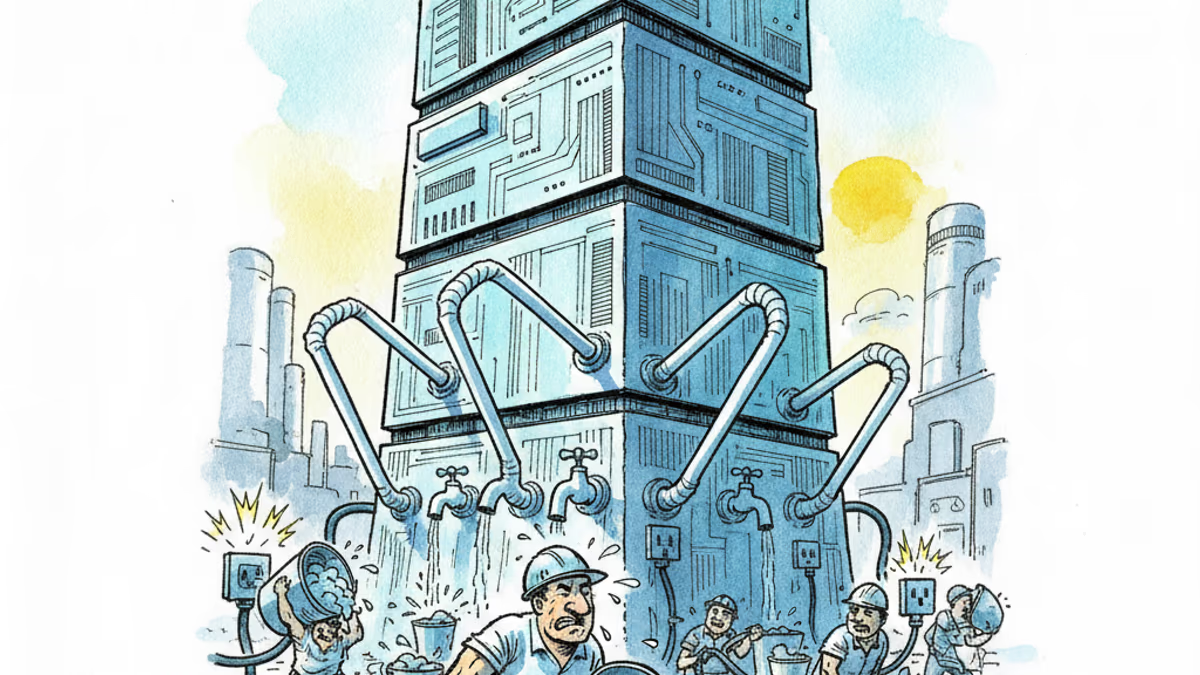
Samsung and SK unveiled a chip and AI investment package worth thousands of trillions of won on June 29. The headline number swings wildly by outlet, but the real contest isn't capital — it's water and power.
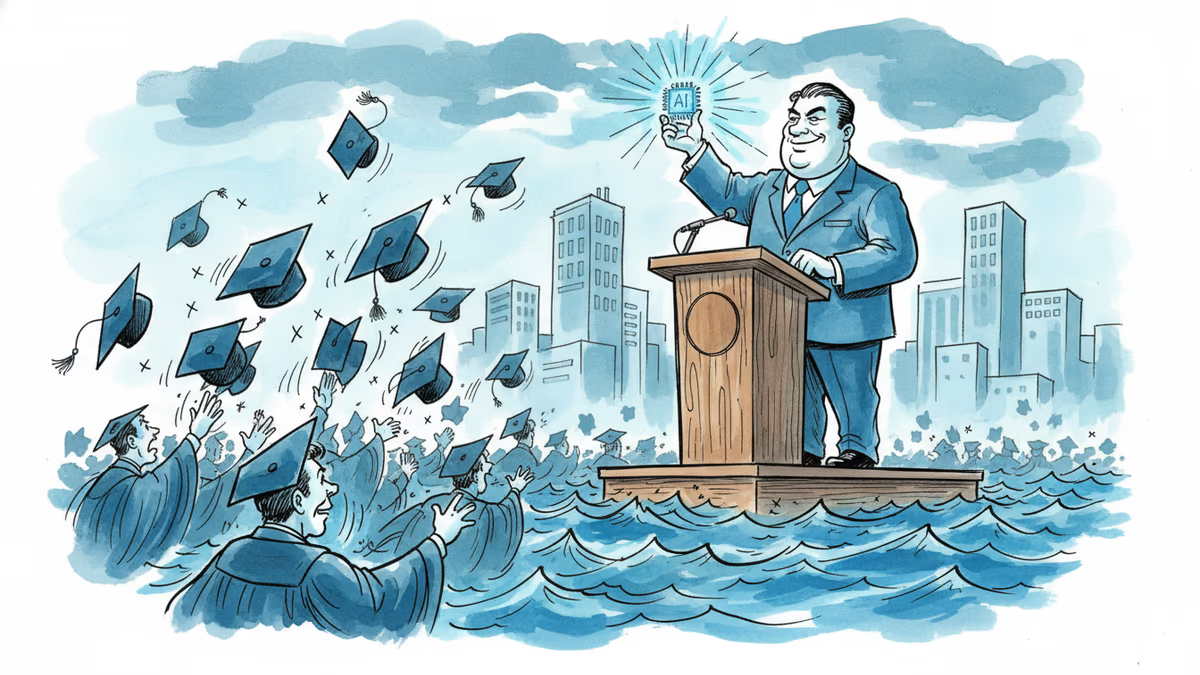
Viral videos show 2026 graduates jeering executives who praise AI at commencement ceremonies. It's not just rudeness — it's a signal about who pays for technological optimism.
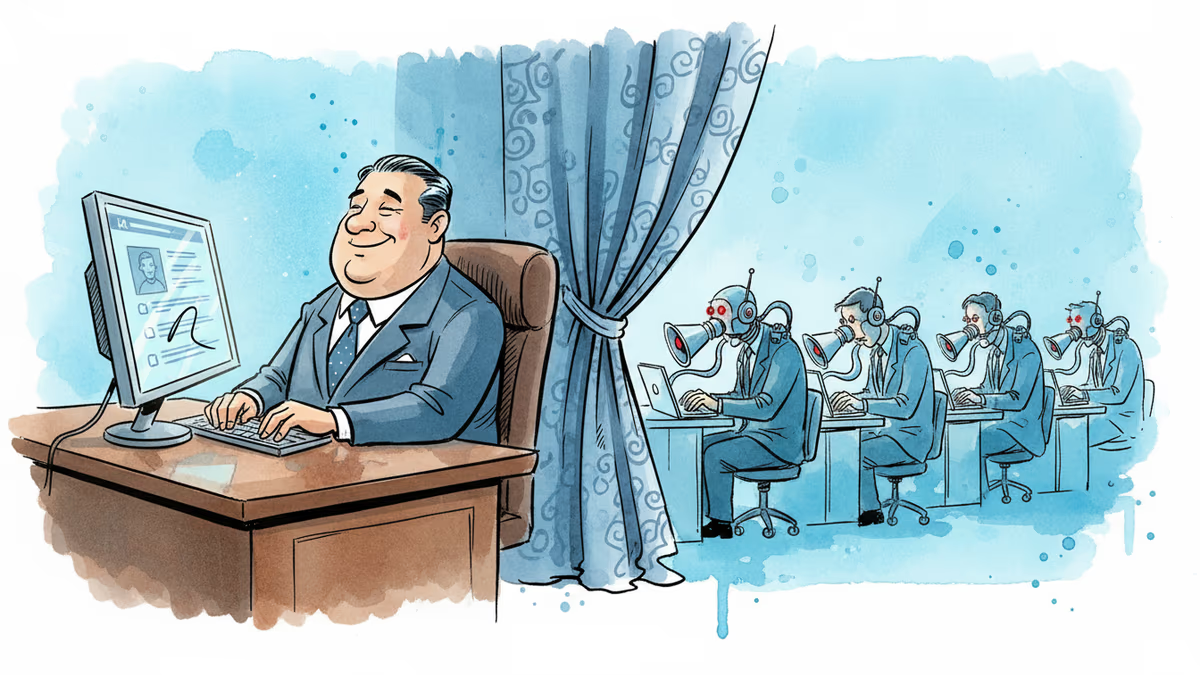
Filipino virtual assistants using AI to ghost-manage LinkedIn profiles for executives is now a structured industry. 30 comments a day, fake engagement rings, and a platform struggling to tell real from fabricated.
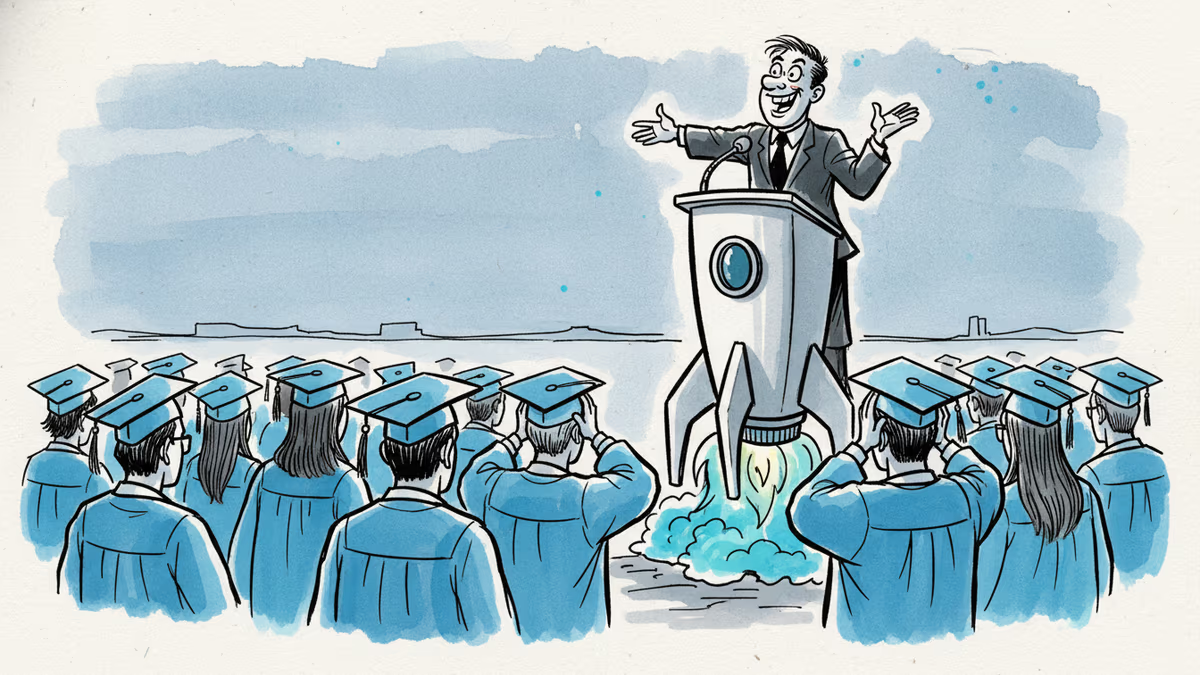
Two commencement speakers learned the hard way that AI enthusiasm doesn't land well with today's graduates. The backlash reveals a widening gap between tech optimism and Gen Z's economic reality.
Samsung and SK unveiled a chip and AI investment package worth thousands of trillions of won on June 29. The headline number swings wildly by outlet, but the real contest isn't capital — it's water and power.
Viral videos show 2026 graduates jeering executives who praise AI at commencement ceremonies. It's not just rudeness — it's a signal about who pays for technological optimism.
Filipino virtual assistants using AI to ghost-manage LinkedIn profiles for executives is now a structured industry. 30 comments a day, fake engagement rings, and a platform struggling to tell real from fabricated.
Two commencement speakers learned the hard way that AI enthusiasm doesn't land well with today's graduates. The backlash reveals a widening gap between tech optimism and Gen Z's economic reality.
Thoughts
Share your thoughts on this article
Sign in to join the conversation