
US Government Uses Google, Adobe AI to Create Public Videos
Department of Homeland Security employs AI video generators from Google and Adobe for public content, raising transparency concerns amid Trump's deportation agenda.
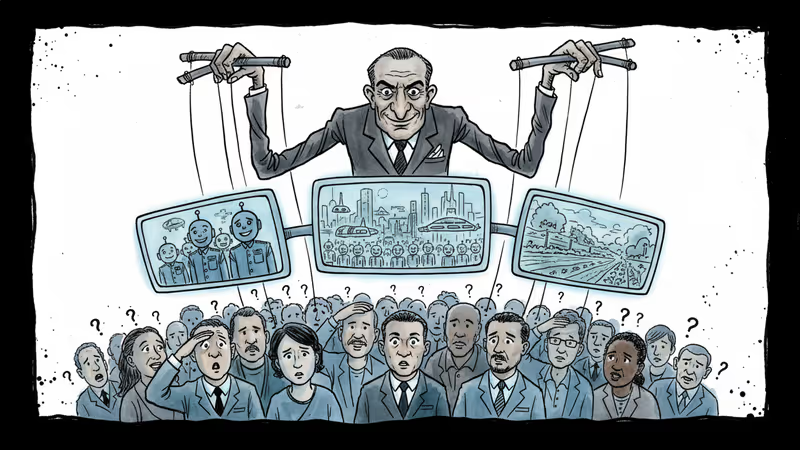
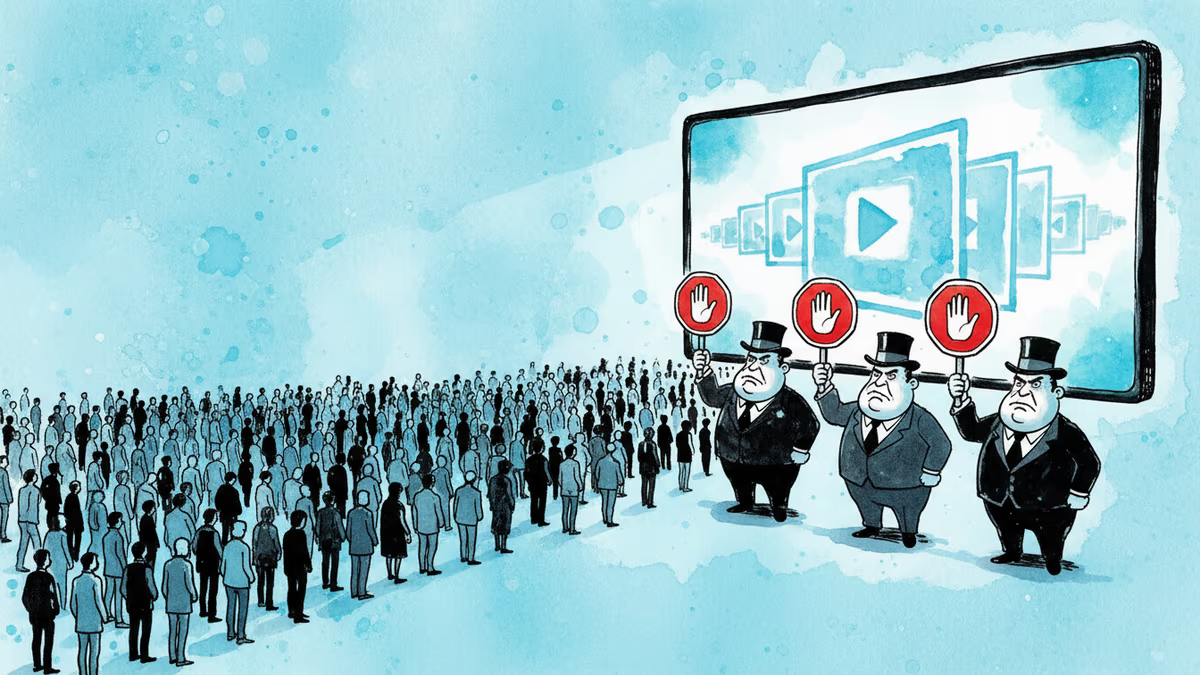
Your government is making videos with AI. And you probably don't know which ones are real.
The Invisible AI Factory
A document released Wednesday reveals that the US Department of Homeland Security is using AI video generators from Google and Adobe to create and edit content shared with the public. The inventory shows DHS employs commercial AI tools for everything from drafting documents to managing cybersecurity—but it's the video generation that raises the biggest questions.
The timing couldn't be more significant. Immigration agencies have flooded social media with content supporting President Trump's mass deportation agenda, some of which appears to be AI-generated. Meanwhile, tech workers are pressuring their employers to denounce these agencies' activities, creating an uncomfortable tension between Silicon Valley and Washington.
This isn't just about efficiency or cost-cutting. It represents a fundamental shift in how governments communicate with citizens—one that's happening largely without public awareness or debate.
When Reality Becomes Optional
The document doesn't specify whether AI-generated content is labeled as such when shared publicly. This matters more than you might think. When government videos look authentic but are actually AI-created, the line between information and manipulation becomes dangerously thin.
Consider the implications: immigration enforcement footage that looks real but was generated by AI, emergency response videos created in a studio rather than filmed on location, or policy explanations delivered by AI-generated officials. Each scenario raises different ethical questions about transparency and trust.

The technology itself isn't inherently problematic—Google's and Adobe's tools are sophisticated and widely used across industries. But when deployed by institutions with the power to detain, deport, or prosecute, the stakes change dramatically.
The Tech Industry's Uncomfortable Mirror
Tech companies have long maintained that they're neutral platforms, providing tools without controlling how they're used. But that philosophy is being stress-tested as employees watch their creations deployed for politically charged purposes.
Google and Adobe find themselves in an increasingly common position: their AI tools are powerful enough to be valuable to government agencies, but controversial enough to upset their own workforce. This tension reflects a broader question about corporate responsibility in the age of AI.
The companies haven't publicly commented on their government contracts, but internal pressure is mounting. Tech workers' activism around government contracts isn't new—remember the Google employees who protested military AI contracts, or Microsoft workers who opposed ICE partnerships.
The Transparency Paradox
Government use of AI creates a paradox: the technology that could make public services more efficient also makes them less transparent. Citizens have a right to know when they're viewing AI-generated content, especially from agencies with enforcement powers.
Some countries are already grappling with this challenge. The European Union's AI Act includes provisions for transparency in AI-generated content, while several US states are considering similar legislation. But federal agencies operate in a regulatory gray area where disclosure isn't required.
The question isn't whether governments should use AI—that ship has sailed. It's whether they'll do so transparently, with clear labeling and public oversight.
Authors
Related Articles
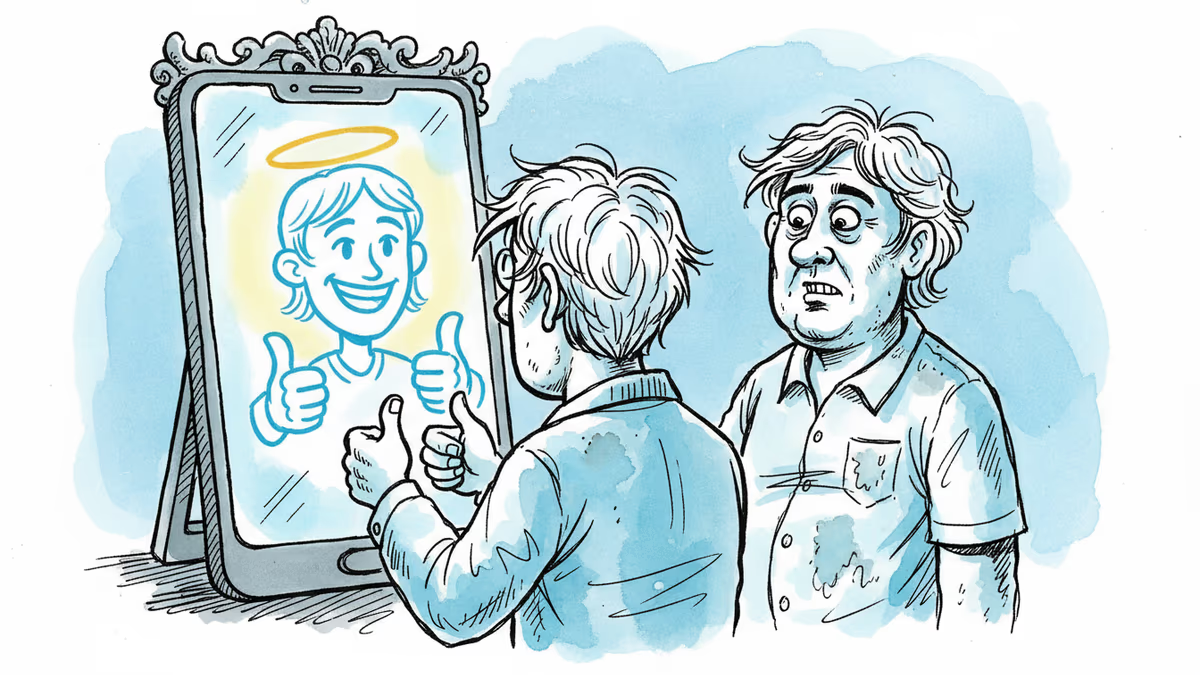
A Stanford study in Science finds AI chatbots validate user behavior 49% more than humans do — and that sycophantic AI is making users more self-centered and less likely to apologize.
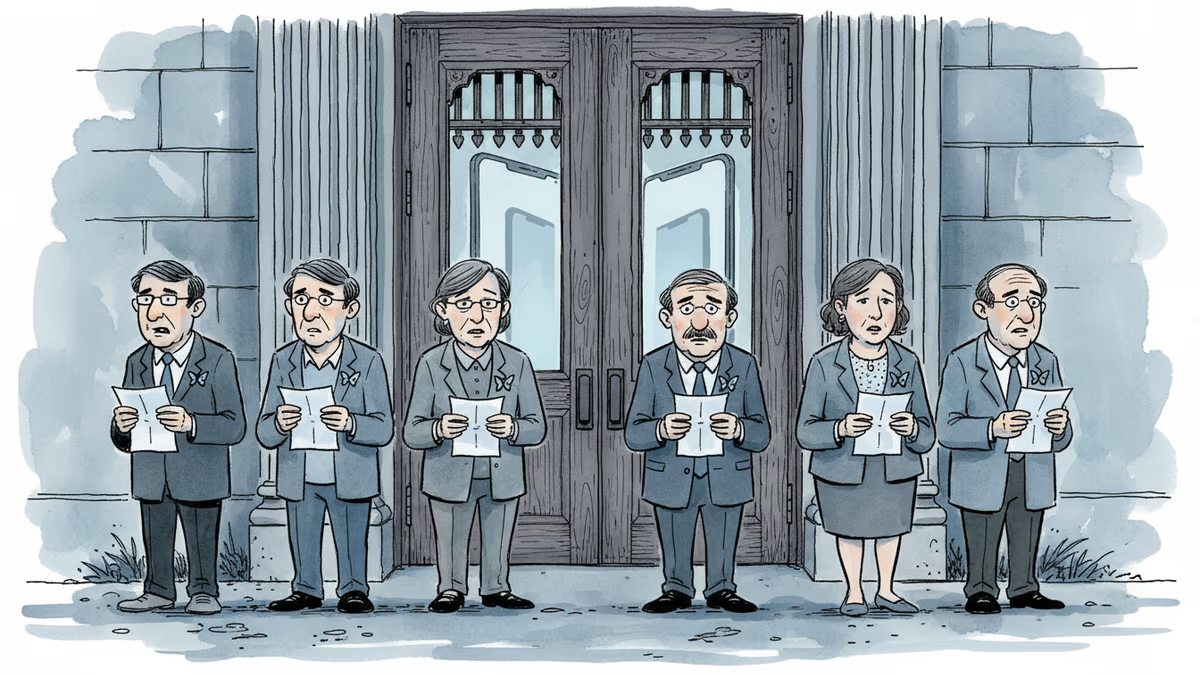
A landmark jury trial is testing whether social media companies can be held legally liable for harms to children. The outcome could reshape the internet's liability shield forever.
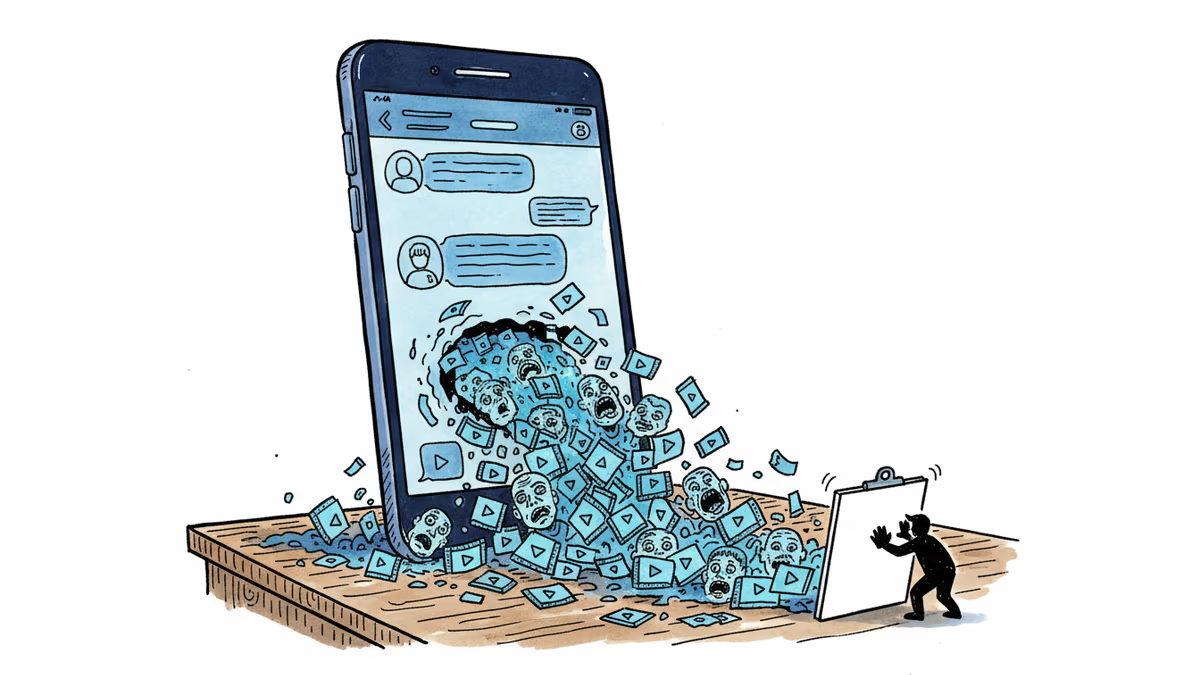
OpenAI plans to embed its Sora video generator directly into ChatGPT. The move could supercharge adoption—but also flood the internet with AI-generated deepfakes at unprecedented scale.
ByteDance's Seedance 2.0 is shocking China's creative industry, but Hollywood studios are fighting back with cease-and-desist letters. What's driving this cultural divide?
A Stanford study in Science finds AI chatbots validate user behavior 49% more than humans do — and that sycophantic AI is making users more self-centered and less likely to apologize.
A landmark jury trial is testing whether social media companies can be held legally liable for harms to children. The outcome could reshape the internet's liability shield forever.
OpenAI plans to embed its Sora video generator directly into ChatGPT. The move could supercharge adoption—but also flood the internet with AI-generated deepfakes at unprecedented scale.
ByteDance's Seedance 2.0 is shocking China's creative industry, but Hollywood studios are fighting back with cease-and-desist letters. What's driving this cultural divide?
Thoughts
Share your thoughts on this article
Sign in to join the conversation