
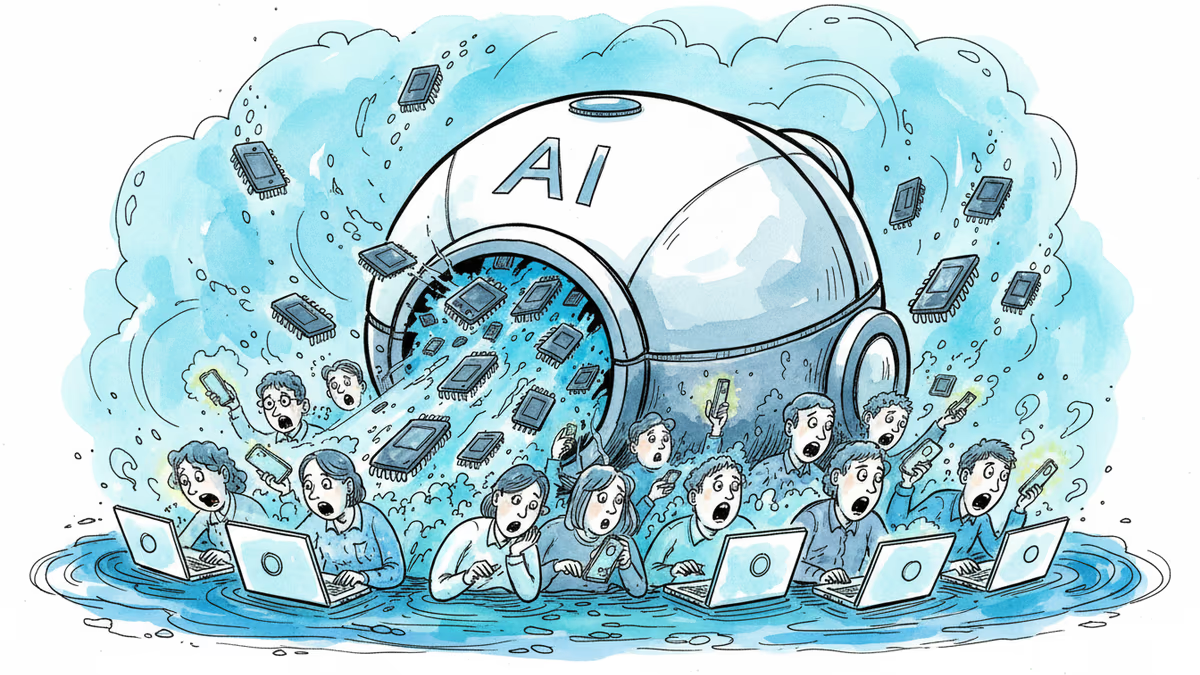
When AI Eats the World's Memory
Global memory chip shortage driven by AI demand pushes consumer electronics prices up 90%, threatening budget smartphones and reshaping tech supply chains.
The $200 Billion Question: Who Gets the Memory?
Your next smartphone might cost significantly more—not because of fancy cameras or sleeker designs, but because artificial intelligence is literally eating the world's memory supply. As AI data centers devour unprecedented quantities of specialized memory chips, manufacturers are making a stark choice: feed the AI boom or keep consumer electronics affordable.
The numbers tell the story. Memory chip prices are exploding at historic rates: DRAM prices up 90-95% and NAND flash up 55-60% in just the first quarter of 2026. For the first time ever, Samsung and SK Hynix—the memory chip titans—have surpassed the combined market value of Chinese tech giants Alibaba and Tencent.
The Great Memory Divide
Memory chips come in two flavors that power our digital lives. DRAM provides the short-term memory that keeps your apps running smoothly, while NAND flash stores your photos, documents, and operating system. Both have been commodities for decades—until AI changed everything.
AI data centers demand something entirely different: high-bandwidth memory (HBM). These aren't your typical memory chips. HBM stacks DRAM chips vertically like a skyscraper and places them directly next to graphics processing units. This architecture is essential for large language models that constantly crunch through massive datasets.
The problem? The same factories that make memory for your laptop are now pivoting to produce HBM for AI companies willing to pay premium prices. Samsung, SK Hynix, and Micron—who control over 90% of global memory production—are racing to expand capacity, but it takes years to build new fabrication plants.

The Consumer Casualties
While tech giants celebrate record AI investments, everyday consumers face a harsh reality: their devices are getting more expensive. Counterpoint Research predicts global smartphone shipments will fall by 2.1% in 2026 as rising memory costs squeeze manufacturers.
Budget smartphones are taking the biggest hit. Chinese brands like Honor, Vivo, and Oppo—known for affordable devices—may be forced to pull entire product lines from the market as profit margins evaporate. The era of the $100 smartphone might be ending.
But smartphones are just the beginning. Laptops, tablets, and even cars rely on the same memory technologies now in short supply. Every device that needs to think fast or remember much is caught in this squeeze.
The Geopolitical Memory Game
China finds itself in a particularly precarious position. The country imports most of its memory chips but faces U.S. export restrictions on HBM technology—a deliberate move to limit China's AI advancement. Beijing's response? Double down on domestic production.
ChangXin Memory Technologies, China's homegrown DRAM maker, is projected to capture nearly 15% of global production by 2026. Meanwhile, Yangtze Memory Technologies is expanding into AI-focused DRAM chips. It's a technological arms race where memory capacity equals strategic advantage.
The irony isn't lost: as the U.S. restricts China's access to advanced chips, American tech companies are driving up global memory prices, making electronics more expensive for consumers worldwide.
Authors
Related Articles

Snowflake's new $6 billion AWS contract is about more than cloud spending. It signals a shift in AI infrastructure—away from Nvidia GPUs and toward cheaper, homegrown chips for the agent era.

At Milken 2026, five AI insiders—from the CEO of ASML to a quantum physicist challenging LLMs—laid out the physical, energy, and geopolitical limits the AI boom is running into.

Palantir co-founder Peter Thiel and other Silicon Valley investors have poured $140 million into Panthalassa, a startup building wave-powered floating AI data centers in the open ocean. Here's what that actually means.
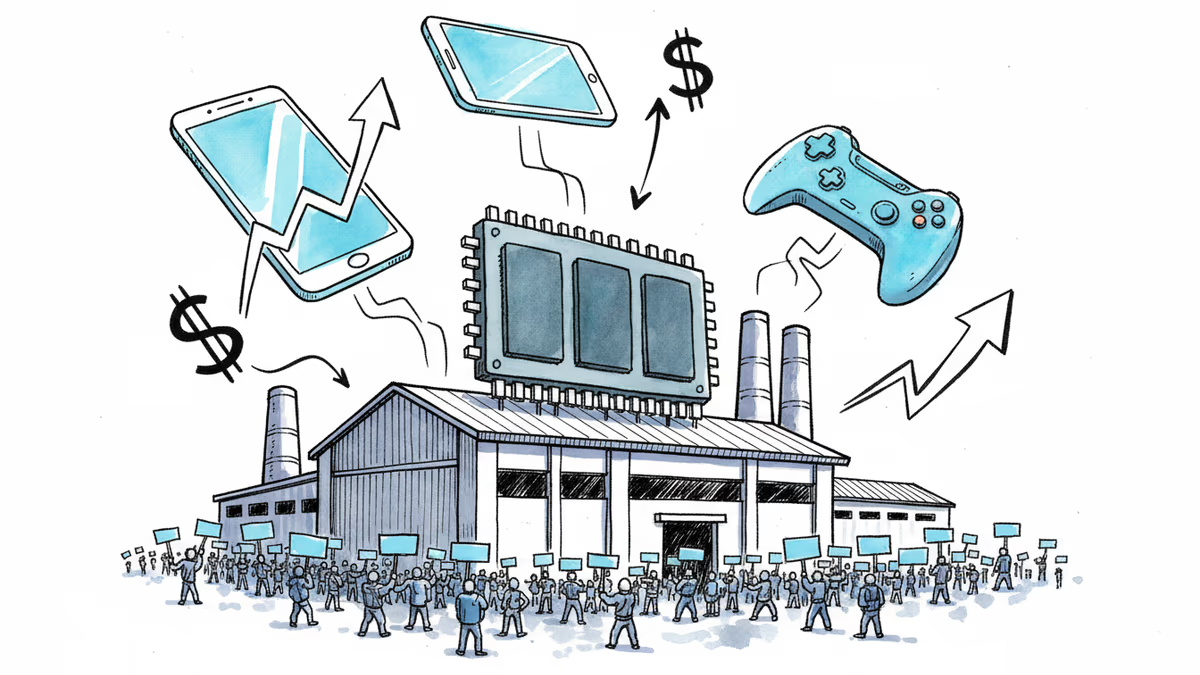
40,000 Samsung union workers rallied at its Pyeongtaek chip plant, threatening an 18-day strike over wages. With AI-driven RAM shortages already lifting consumer prices, the timing couldn't be worse.
Snowflake's new $6 billion AWS contract is about more than cloud spending. It signals a shift in AI infrastructure—away from Nvidia GPUs and toward cheaper, homegrown chips for the agent era.
At Milken 2026, five AI insiders—from the CEO of ASML to a quantum physicist challenging LLMs—laid out the physical, energy, and geopolitical limits the AI boom is running into.
Palantir co-founder Peter Thiel and other Silicon Valley investors have poured $140 million into Panthalassa, a startup building wave-powered floating AI data centers in the open ocean. Here's what that actually means.
40,000 Samsung union workers rallied at its Pyeongtaek chip plant, threatening an 18-day strike over wages. With AI-driven RAM shortages already lifting consumer prices, the timing couldn't be worse.
Thoughts
Share your thoughts on this article
Sign in to join the conversation