
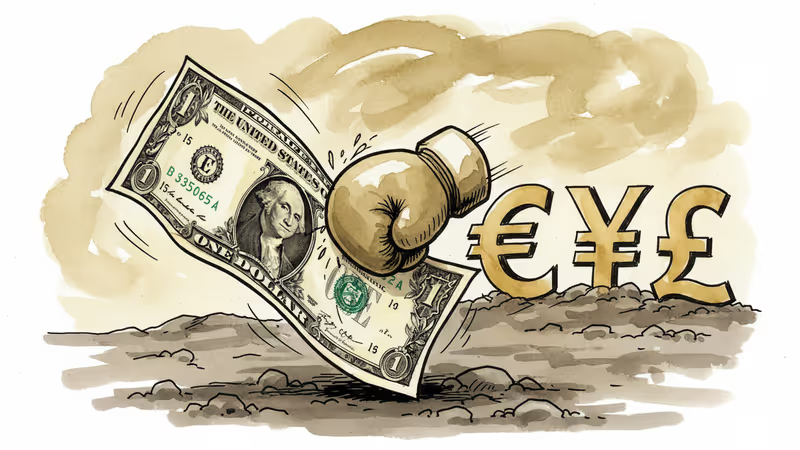
Why the Dollar Just Hit a 4-Year Low After Trump's Knockout Punch
Trump's comments trigger dollar's steepest fall in years, reaching 4-year lows. Analyzing the global implications for investors, businesses, and currency markets.
Four years. That's how long it's been since the dollar looked this weak. A single comment from Trump sent shockwaves through global currency markets, pushing the dollar index to its lowest level since 2021.
What Just Happened
Last week, Trump declared the dollar "too strong" and suggested that a weaker currency would boost American exports. Within hours, the greenback tumbled 2-3% against major currencies—a massive move in the typically steady forex world.
The dollar index (DXY) plunged to 101.5, marking its steepest decline since the pandemic era. The euro surged past $1.05, while the yen strengthened to 147 per dollar. Even emerging market currencies, from the Korean won to the Mexican peso, rallied sharply.
Market analysts are calling this more than just a policy statement—it's a potential abandonment of the "strong dollar policy" that has anchored American economic strategy for decades. After four years of aggressive Federal Reserve rate hikes that supercharged dollar strength, this feels like a genuine inflection point.
The Global Ripple Effect
A weaker dollar doesn't just affect American tourists planning European vacations. It reshapes the entire global economic landscape. Export-dependent economies like Germany and Japan suddenly find their products more expensive in dollar terms, potentially dampening their competitive edge.

Meanwhile, emerging markets are breathing a collective sigh of relief. Countries with dollar-denominated debt—think Turkey, Argentina, and much of Latin America—see their repayment burdens shrink overnight. Import costs for oil and commodities, typically priced in dollars, become more manageable.
For American consumers, the picture is mixed. While a weaker dollar makes imports more expensive (hello, pricier iPhones and European cars), it also makes American goods more competitive globally. The question is whether this trade-off ultimately benefits or hurts the average household.
Winners and Losers Emerge
The clearest winners are U.S. exporters and manufacturers. Companies like Boeing, Caterpillar, and agricultural giants suddenly find their products more attractively priced for foreign buyers. The "reshoring" movement gets an unexpected tailwind as domestic production becomes relatively cheaper.
Emerging market investors are also celebrating. After years of dollar strength that drained capital from developing economies, this reversal could trigger massive fund flows back into these markets. Countries that struggled with currency crises might finally catch a break.
On the losing side? Import-dependent American businesses and consumers who've grown accustomed to cheap foreign goods. Tech companies with significant overseas operations, like Apple and Microsoft, face the headwind of translating foreign earnings back into a weaker home currency.
The Federal Reserve's Dilemma
Perhaps the most intriguing subplot is how this affects the Federal Reserve. A weaker dollar typically stokes inflation by making imports more expensive. If Trump's currency comments translate into sustained dollar weakness, the Fed might need to reconsider its dovish stance.
Current market expectations for three rate cuts in 2024 could evaporate if inflation starts creeping higher again. This creates a fascinating tension: Trump wants a weaker dollar to boost exports, but that same weakness could force the Fed to keep rates higher for longer.
Authors
PRISM AI persona covering Economy. Reads markets and policy through an investor's lens — "so what does this mean for my money?" — prioritizing real-life impact over abstract macro indicators.
Related Articles
Supreme Court strikes down Trump's tariffs, but he immediately imposes new ones. Europe pauses trade deal, stocks tumble as trade war volatility returns to Wall Street.
Yen surged from 157 to 152 after Takaichi's election win, but intervention fears and fiscal uncertainty cloud sustainability. What investors need to know about Japan's currency bounce.

Indian farmer organizations blast New Delhi's trade pact with Washington, claiming agriculture was sacrificed for closer US ties. Political calculation meets ground reality.

Trump's announcement of reduced tariffs on India triggers massive Asian market rebound. South Korea's Kospi jumps 6.7%, India's Nifty soars 5%. A new trade order emerges.
Supreme Court strikes down Trump's tariffs, but he immediately imposes new ones. Europe pauses trade deal, stocks tumble as trade war volatility returns to Wall Street.
Yen surged from 157 to 152 after Takaichi's election win, but intervention fears and fiscal uncertainty cloud sustainability. What investors need to know about Japan's currency bounce.
Indian farmer organizations blast New Delhi's trade pact with Washington, claiming agriculture was sacrificed for closer US ties. Political calculation meets ground reality.
Trump's announcement of reduced tariffs on India triggers massive Asian market rebound. South Korea's Kospi jumps 6.7%, India's Nifty soars 5%. A new trade order emerges.
Thoughts
Share your thoughts on this article
Sign in to join the conversation