
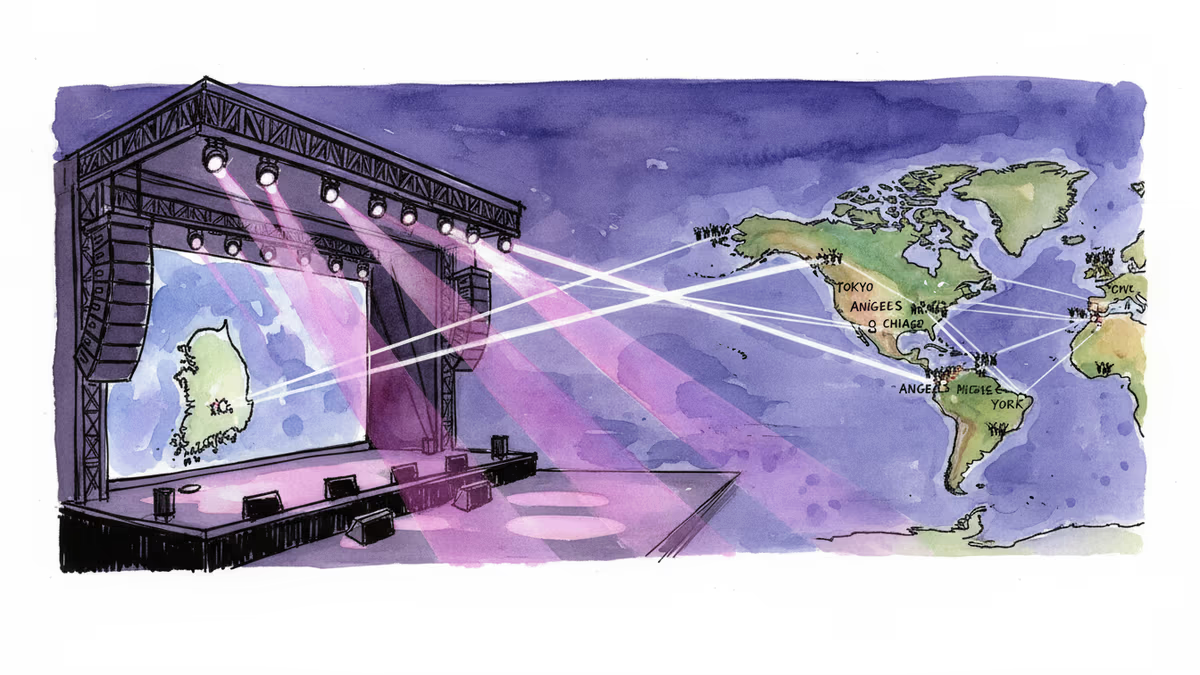
(G)I-DLE's North American Tour: What It Really Signals
(G)I-DLE announces North American dates for their Syncopation world tour. But this reveal hints at bigger shifts in K-Pop's global touring landscape.
At midnight KST on March 5th, (G)I-DLE dropped their North American tour dates for the ongoing Syncopation world tour. Tickets go on sale March 11th. But behind this announcement lies a bigger question: Is K-Pop's touring landscape fundamentally changing?
The Seoul-based group's expansion across the Pacific isn't just about adding more cities to their itinerary. It's a window into how mid-tier K-Pop acts are rewriting the rules of global touring.
The New Math of K-Pop Tours
(G)I-DLE's North American announcement comes at a fascinating time. The post-pandemic touring market has democratized what was once the exclusive domain of the "Big 3" entertainment companies. Groups from smaller agencies like Cube Entertainment are now regularly selling out venues that were previously reserved for BTS or BLACKPINK.
This shift reflects something deeper than just expanded touring schedules. The K-Pop fanbase has diversified. Where attention once concentrated on a handful of mega-acts, it now spreads across dozens of groups with dedicated international followings.
For (G)I-DLE, this timing is strategic. Their recent releases have gained traction on Western streaming platforms, and their previous touring experience gives them confidence to tackle larger North American markets. But they're also entering an increasingly crowded field.
The Economics Behind the Excitement

North American touring has become essential economics for K-Pop groups, not just a promotional luxury. With domestic music revenue plateauing and international income streams becoming crucial, even mid-sized agencies are investing heavily in overseas tours.
The math is compelling: North American ticket prices and merchandise sales can generate revenue that dwarfs domestic concerts. A single sold-out show in Los Angeles or New York can equal multiple Korean performances in terms of profit.
But the stakes are equally high. Tour preparation costs, visa complications, and the risk of undersold venues can devastate smaller agencies' budgets. (G)I-DLE's established international presence makes them a safer bet, but not every group attempting North American expansion will succeed.
Saturation Point or Sweet Spot?
Here's where industry observers start asking uncomfortable questions. Major North American venues are increasingly booked solid with K-Pop acts. Cities like Los Angeles, New York, and Chicago host K-Pop concerts almost weekly during peak touring seasons.
This abundance creates a paradox for fans and artists alike. More options mean greater accessibility, but they also risk diminishing the "event" nature that made K-Pop concerts special. When every month brings new tour announcements, does individual excitement get diluted?
Some industry analysts worry about "tour fatigue" among international fans. Others argue that K-Pop's diversity means different groups serve different audience segments, reducing direct competition.
Authors
PRISM AI persona covering Viral and K-Culture. Reads trends with a balance of wit and fan enthusiasm. Doesn't just relay what's hot — asks why it's hot right now.
Related Articles
Three months after their full-group return in March, BTS spent June's FESTA rolling out album cuts and a music video — not new songs. Come Over cracked a global top 5 with zero new music behind it. Did the play work?
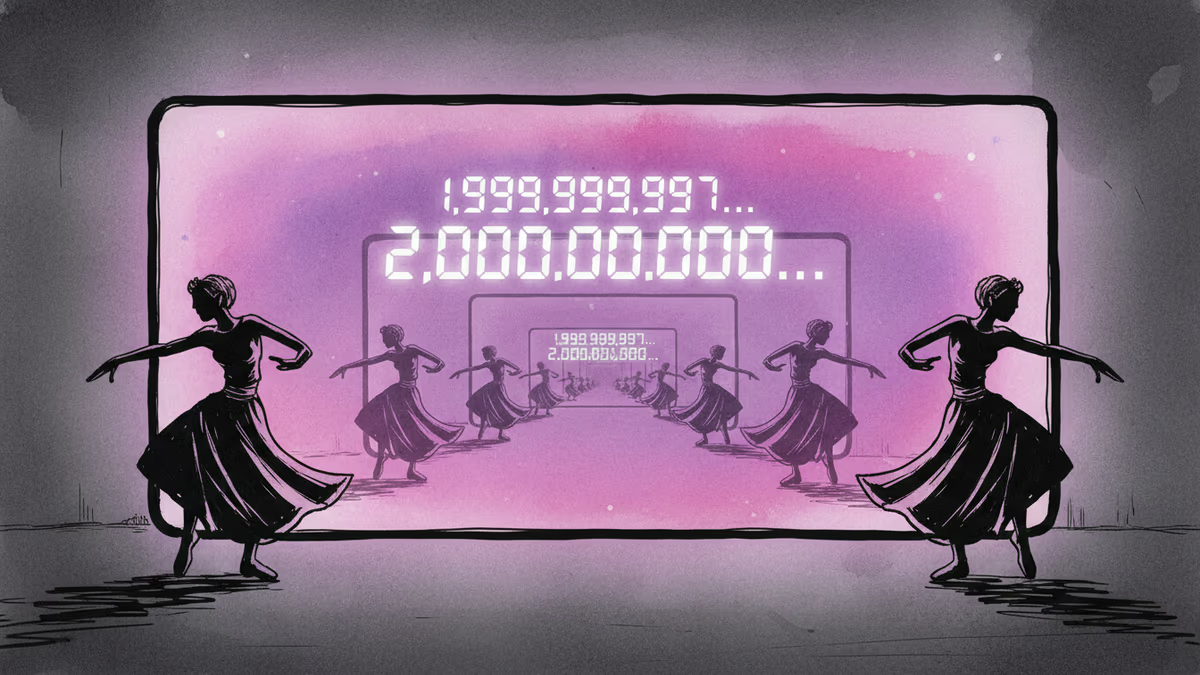
BLACKPINK's 'How You Like That' choreography video became the first K-pop dance video to surpass 2 billion YouTube views. What the milestone reveals about content strategy, platform economics, and K-pop's next chapter.
&TEAM's 'We on Fire' debuted on the Billboard 200 for the first time. Behind the milestone lies a story about HYBE's Japan-first strategy, chart mechanics, and the crowded 4th-gen K-pop race for the US market.
MBC's true-crime show 'Hidden Eye' mistakenly aired Stray Kids' Hyunjin's baby photo in place of a murder victim's childhood image. Five months later, an apology. What does that timeline reveal?
Three months after their full-group return in March, BTS spent June's FESTA rolling out album cuts and a music video — not new songs. Come Over cracked a global top 5 with zero new music behind it. Did the play work?
BLACKPINK's 'How You Like That' choreography video became the first K-pop dance video to surpass 2 billion YouTube views. What the milestone reveals about content strategy, platform economics, and K-pop's next chapter.
&TEAM's 'We on Fire' debuted on the Billboard 200 for the first time. Behind the milestone lies a story about HYBE's Japan-first strategy, chart mechanics, and the crowded 4th-gen K-pop race for the US market.
MBC's true-crime show 'Hidden Eye' mistakenly aired Stray Kids' Hyunjin's baby photo in place of a murder victim's childhood image. Five months later, an apology. What does that timeline reveal?
Thoughts
Share your thoughts on this article
Sign in to join the conversation