

Discord Says No Face Scans for 'Most Users' – But Who's Left Out?
Discord backtracks on age verification requirements, promising most users won't need face scans or ID uploads. But the devil's in the details of who counts as 'most.
The Magic Word: 'Most'
When Discord announced Tuesday that the "vast majority of people can continue using Discord exactly as they do today" without face scans or ID verification, users collectively exhaled. But buried in that reassurance is a word that should make everyone pause: most.
What happens to the rest?
The platform's latest update promises to use "age prediction" based on information it already has about users. No specifics on what data points they're analyzing, but it likely includes account creation patterns, usage behavior, and server participation history.
The Algorithm Knows... Or Does It?
Here's where things get murky. Discord is essentially saying: "Trust our AI to guess your age correctly." But algorithms make mistakes – sometimes spectacularly.
Consider the scenarios: A 25-year-old gamer gets flagged as potentially underage because they play Minecraft and use certain emojis. Suddenly, they're locked out of age-restricted servers until they prove otherwise. Or worse – a 15-year-old gets classified as an adult and gains access to content their parents would definitely not approve of.
The company hasn't revealed error rates, appeal processes, or what happens when the prediction goes wrong.
Privacy Advocates vs. Child Safety: The Eternal Standoff

Discord's about-face reflects the impossible position tech platforms find themselves in. On one side, privacy advocates argue that requiring government IDs for a chat app is dystopian overreach. On the other, child safety groups point to real dangers kids face online.
The UK's Online Safety Act and various US state laws are tightening the screws on platforms, demanding more robust age verification. Meanwhile, users threaten to jump ship if their anonymity disappears.
Discord's "age prediction" is essentially a middle ground that might satisfy no one completely.
Parents: Don't Relax Just Yet
For parents whose teens use Discord for everything from gaming to study groups, this announcement might feel like good news. No awkward conversations about uploading family IDs to a gaming platform.
But here's the reality check: automated age prediction is still experimental technology. Your 14-year-old might get adult-level access to servers you'd never want them in, or your 18-year-old college student might get treated like a child.
The burden of oversight hasn't disappeared – it's just shifted from Discord's verification system back to parents' shoulders.
The Bigger Question: Who Decides?
This isn't just about Discord. Every major platform grapples with the same fundamental question: How do you protect children online without turning the internet into a surveillance state?
YouTube, Instagram, TikTok – they all use similar "AI-powered age detection" systems with varying degrees of success. The difference is that most don't announce their methods or promise to avoid biometric data collection.
Discord's transparency is refreshing, but it also highlights how much guesswork goes into these systems.
Authors
Related Articles
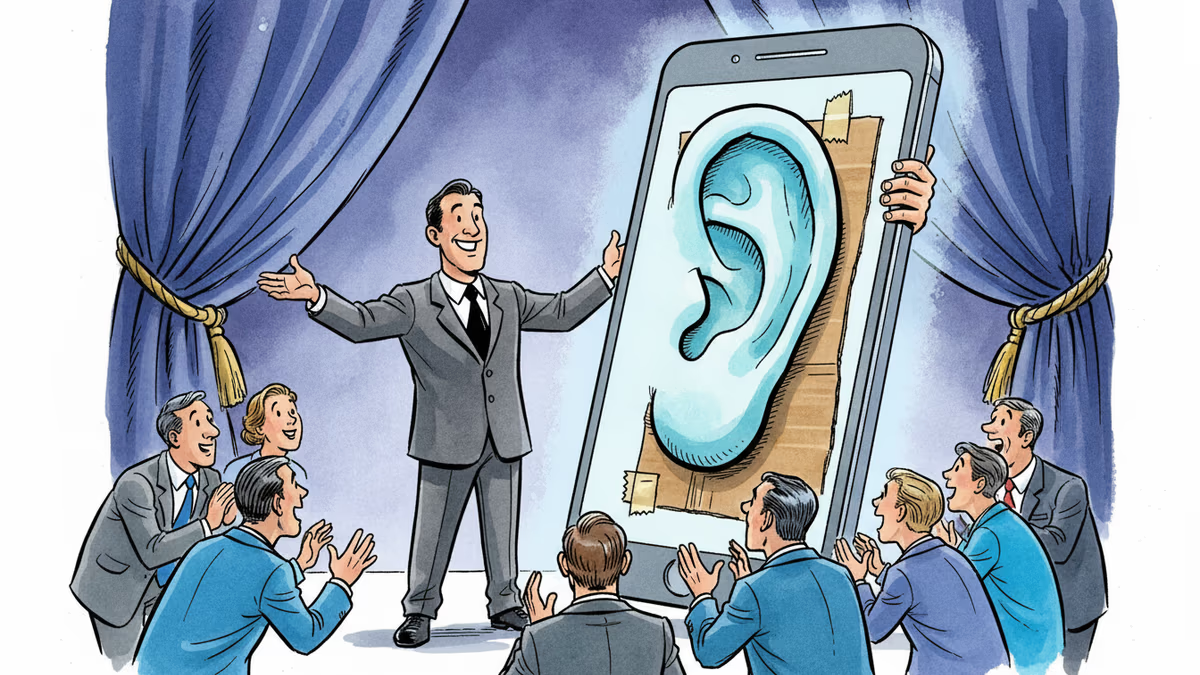
The FTC fined Cox Media and two ad firms $930,000 — not for actually eavesdropping on users, but for falsely claiming they could. The case raises uncomfortable questions about surveillance capitalism.
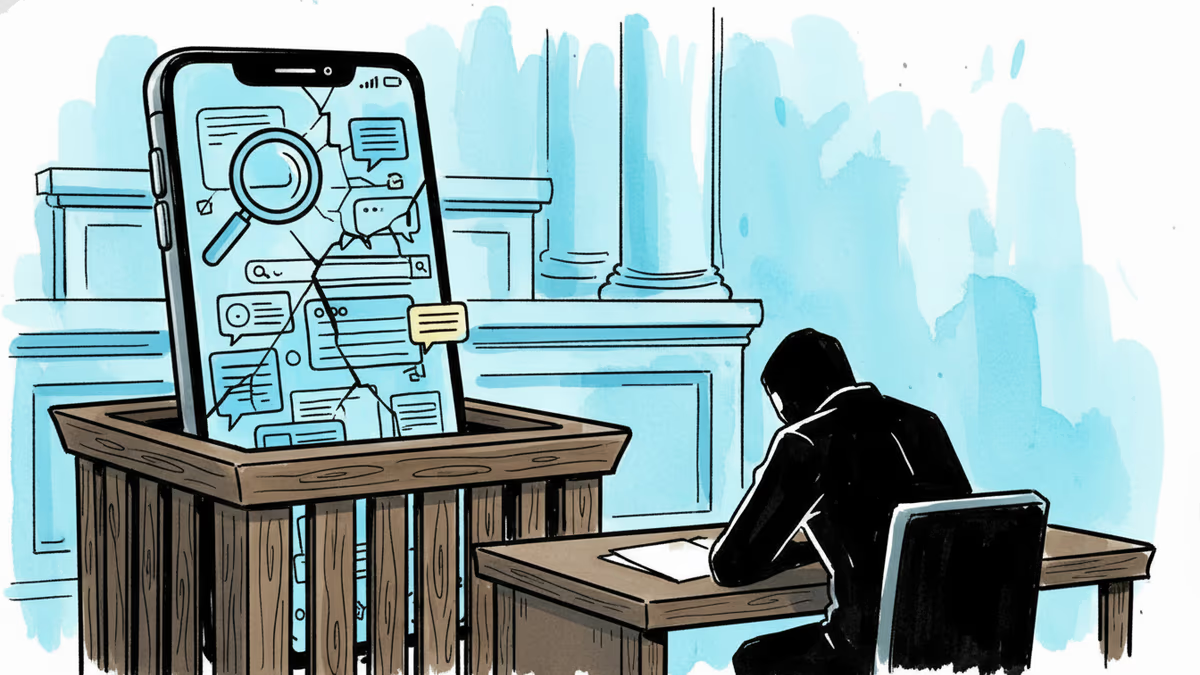
A Utah woman was sentenced to life in prison partly because of her Google searches and deleted texts. The Kouri Richins case reveals how digital footprints have become the courtroom's most reliable witness.
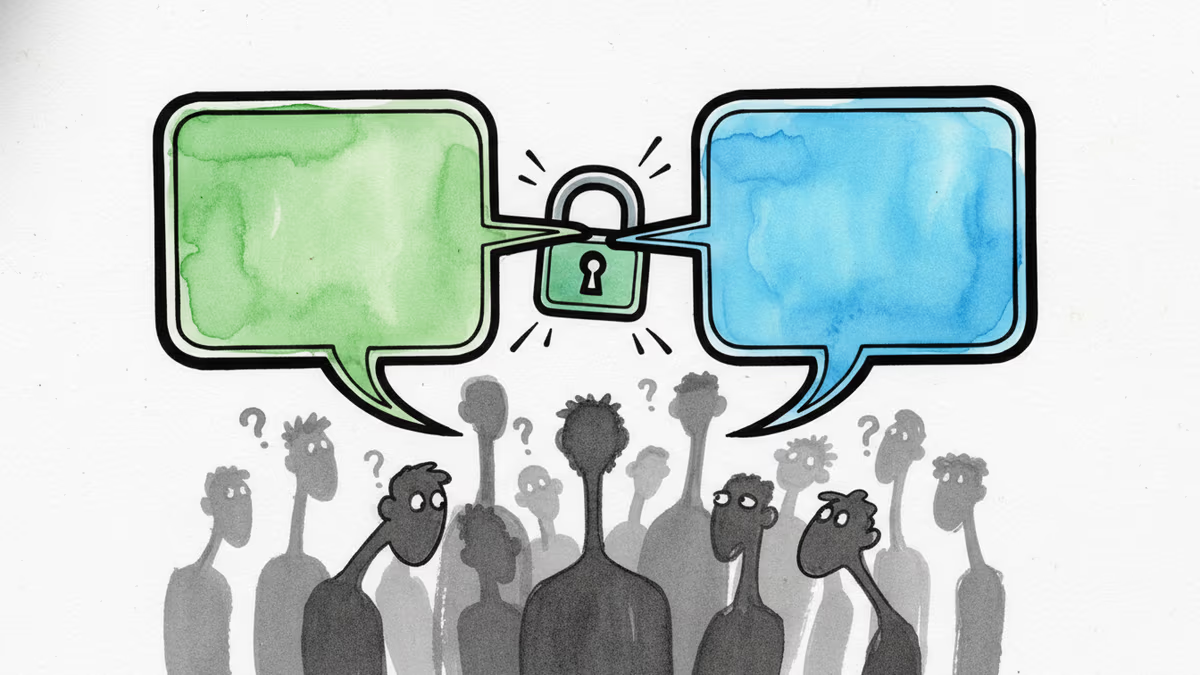
After 15 years of fragmented mobile messaging, Apple and Google are rolling out end-to-end encrypted RCS messaging between iPhones and Android devices. Here's what changed, why it took so long, and what it means for your privacy.
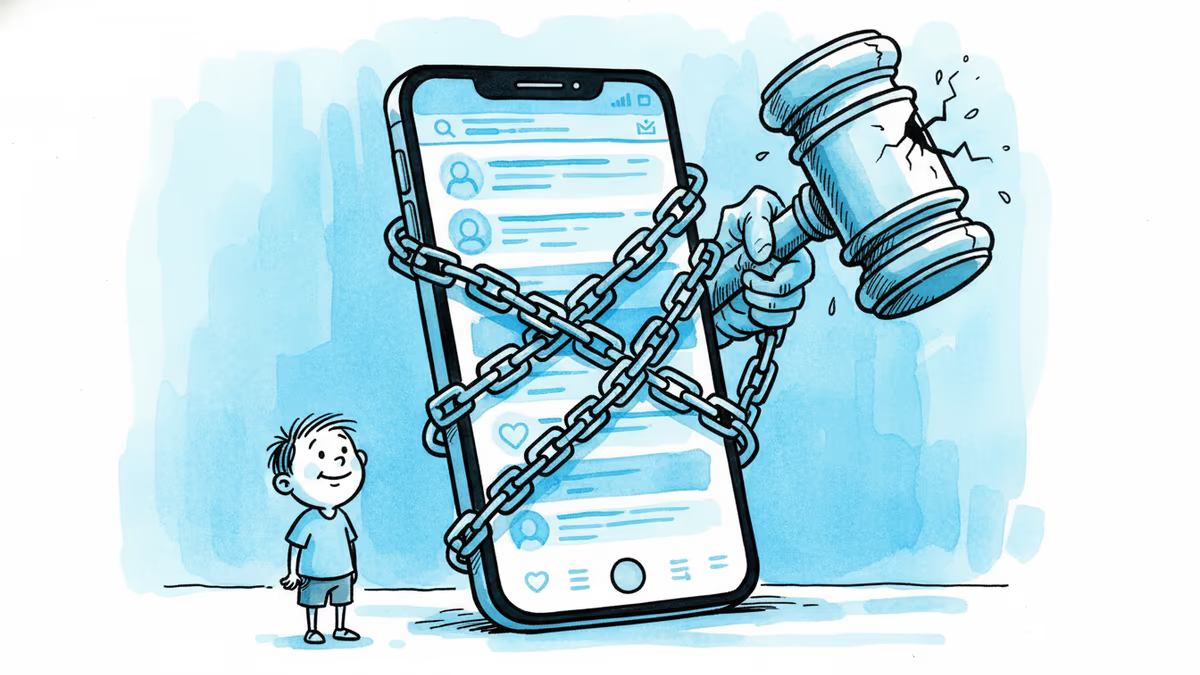
New Mexico already won $375 million from Meta. Now it wants something harder to give: a court order forcing Facebook, Instagram, and WhatsApp to redesign themselves. A three-week trial starts Monday.
The FTC fined Cox Media and two ad firms $930,000 — not for actually eavesdropping on users, but for falsely claiming they could. The case raises uncomfortable questions about surveillance capitalism.
A Utah woman was sentenced to life in prison partly because of her Google searches and deleted texts. The Kouri Richins case reveals how digital footprints have become the courtroom's most reliable witness.
After 15 years of fragmented mobile messaging, Apple and Google are rolling out end-to-end encrypted RCS messaging between iPhones and Android devices. Here's what changed, why it took so long, and what it means for your privacy.
New Mexico already won $375 million from Meta. Now it wants something harder to give: a court order forcing Facebook, Instagram, and WhatsApp to redesign themselves. A three-week trial starts Monday.
Thoughts
Share your thoughts on this article
Sign in to join the conversation