
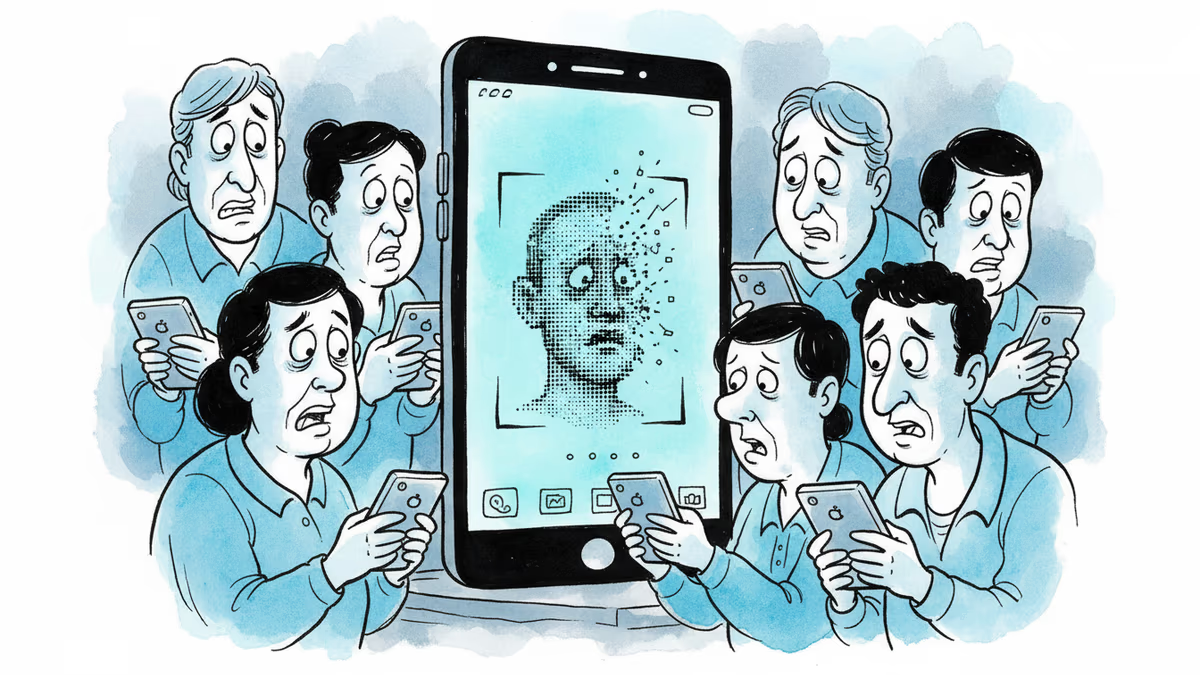
Discord Mandates Face Scans for Adult Content Access
Discord requires video selfies or government IDs for adult content starting March 2026. AI facial recognition sparks privacy concerns among 150M users worldwide.
150 million users will soon need to submit video selfies or government IDs to access adult content on Discord. The gaming-focused chat platform announced that starting March 2026, all users globally will be defaulted to "teen-appropriate" experiences unless they verify their age through AI-powered facial recognition.
The verification process works two ways: AI analyzes facial structure from a video selfie, or compares a selfie to an uploaded government ID. Discord emphasizes that selfie data never leaves the user's device and both forms of data are "promptly deleted" after age estimation.
The Privacy Paradox
The announcement triggered immediate backlash from Discord's core user base. Privacy advocates argue this fundamentally changes Discord's appeal as a pseudonymous platform where users could maintain separate online identities.
"This isn't just about age verification—it's about the erosion of anonymous spaces online," said Electronic Frontier Foundation researcher Sarah Chen. Cybersecurity professionals worry about the implications of collecting biometric data, even temporarily.
Parents and child safety organizations, however, welcomed the move. Common Sense Media called it "a necessary step to protect minors from inappropriate content." The timing aligns with increasing regulatory pressure worldwide, from the UK's Online Safety Act to various US state laws targeting social media platforms.
Gaming Communities in Limbo

The change particularly impacts gaming communities that rely on Discord for organizing. Many adult-oriented gaming servers, streaming communities, and creative spaces now face uncertainty about their user base.
"We're looking at potentially losing 30-40% of our community members who won't want to verify," said Jake Morrison, who runs a popular indie game development server. "The barrier to entry just got significantly higher."
Competing platforms like Telegram and newer Discord alternatives are already seeing increased interest, though none match Discord's feature set for gaming communities.
The Broader Tech Trend
Discord's move reflects a wider industry shift toward age verification. Instagram and TikTok have implemented similar measures, while YouTube requires phone verification for certain features. The question isn't whether other platforms will follow—it's how quickly.
This creates a generational divide: older users who grew up with anonymous internet culture versus younger users who've always shared personal data online. Gen Z users, surprisingly, show less resistance to biometric verification than millennials.
What happens when every platform requires your face to participate?
Authors
Related Articles
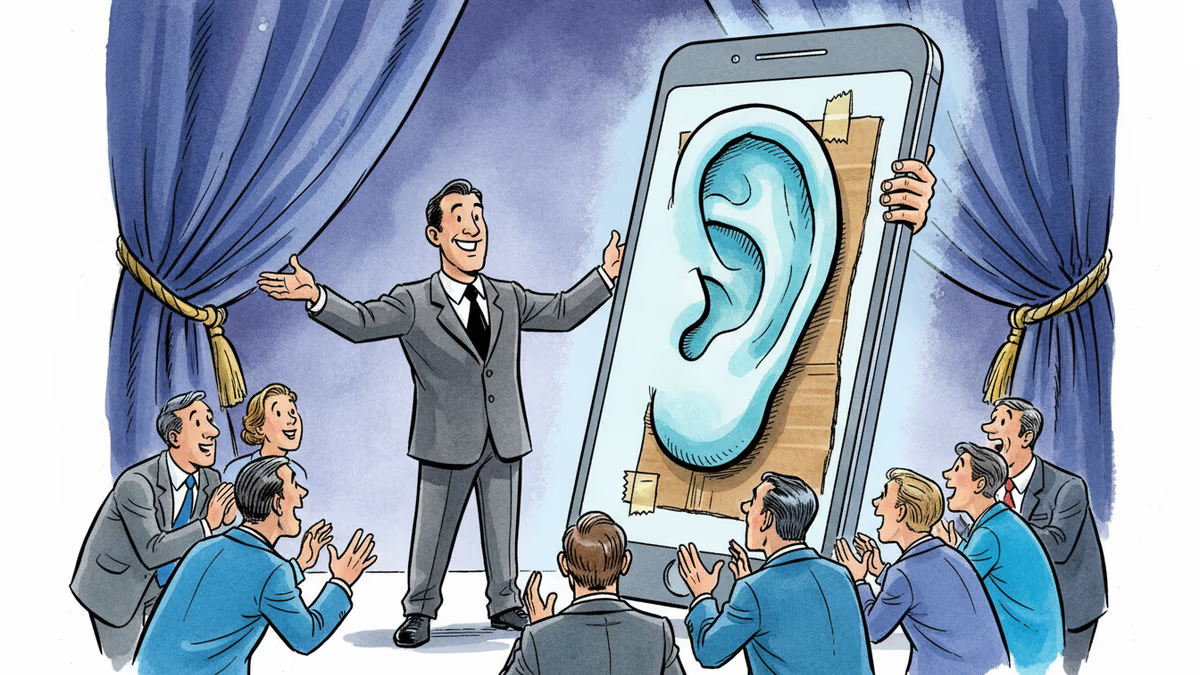
The FTC fined Cox Media and two ad firms $930,000 — not for actually eavesdropping on users, but for falsely claiming they could. The case raises uncomfortable questions about surveillance capitalism.
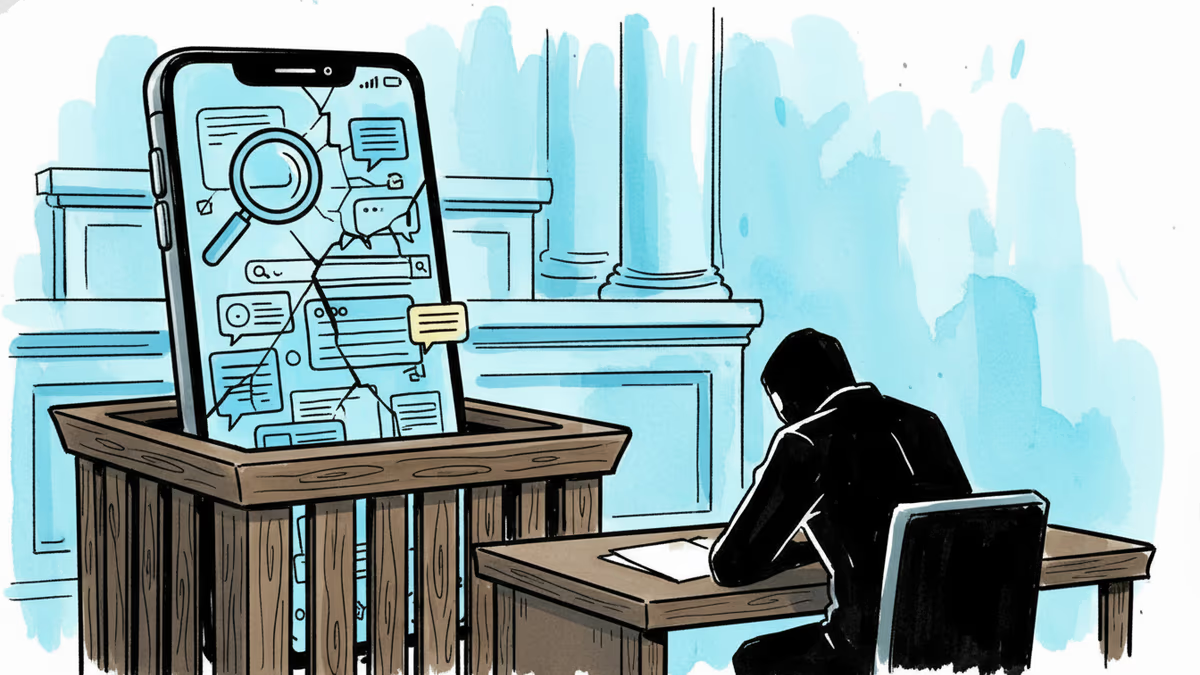
A Utah woman was sentenced to life in prison partly because of her Google searches and deleted texts. The Kouri Richins case reveals how digital footprints have become the courtroom's most reliable witness.
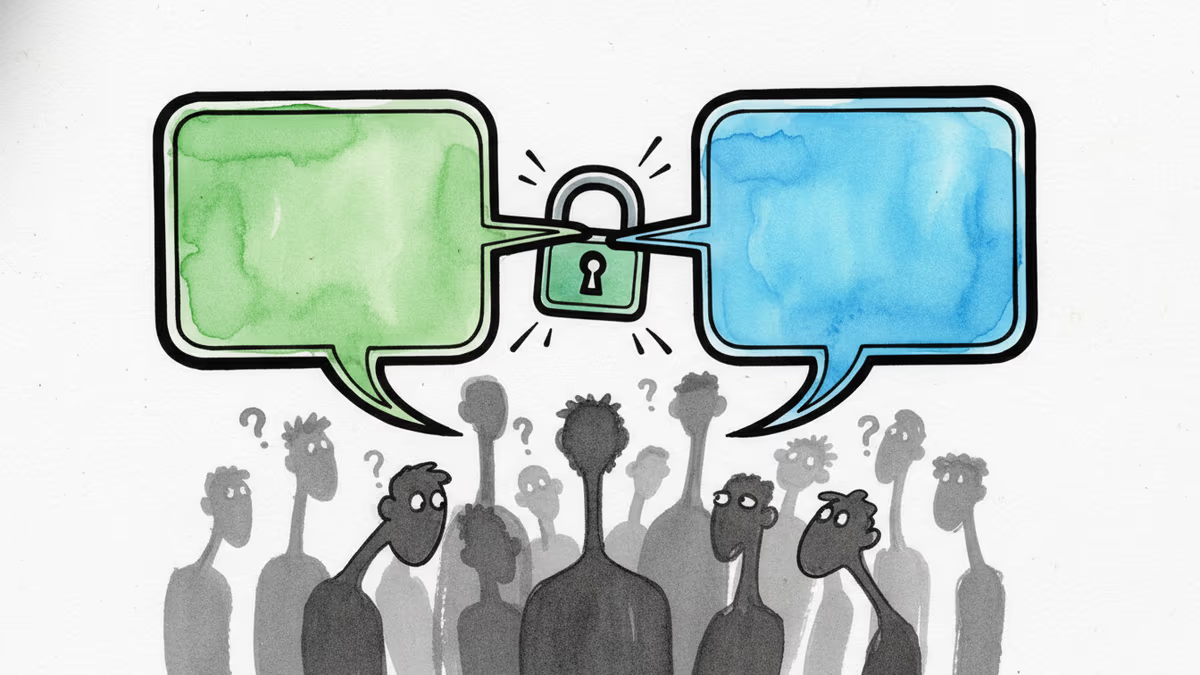
After 15 years of fragmented mobile messaging, Apple and Google are rolling out end-to-end encrypted RCS messaging between iPhones and Android devices. Here's what changed, why it took so long, and what it means for your privacy.
New Mexico already won $375 million from Meta. Now it wants something harder to give: a court order forcing Facebook, Instagram, and WhatsApp to redesign themselves. A three-week trial starts Monday.
The FTC fined Cox Media and two ad firms $930,000 — not for actually eavesdropping on users, but for falsely claiming they could. The case raises uncomfortable questions about surveillance capitalism.
A Utah woman was sentenced to life in prison partly because of her Google searches and deleted texts. The Kouri Richins case reveals how digital footprints have become the courtroom's most reliable witness.
After 15 years of fragmented mobile messaging, Apple and Google are rolling out end-to-end encrypted RCS messaging between iPhones and Android devices. Here's what changed, why it took so long, and what it means for your privacy.
New Mexico already won $375 million from Meta. Now it wants something harder to give: a court order forcing Facebook, Instagram, and WhatsApp to redesign themselves. A three-week trial starts Monday.
Thoughts
Share your thoughts on this article
Sign in to join the conversation