
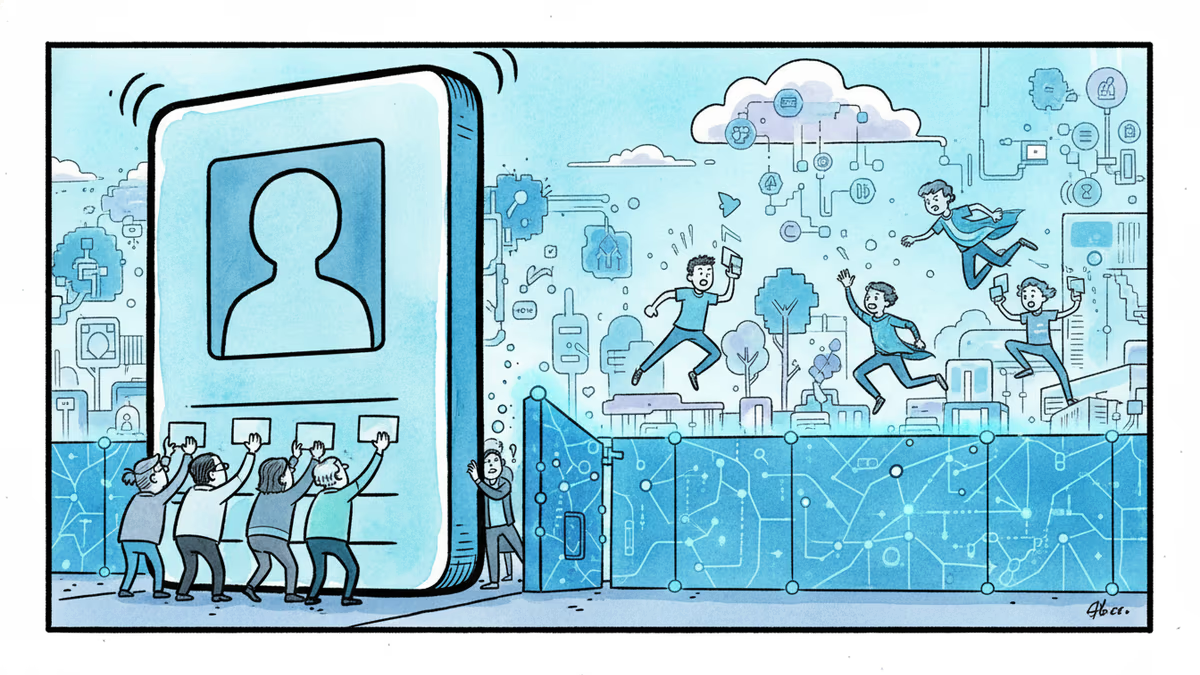
Discord Just Made Age Verification a Hard Choice for Users
Discord begins restricting features for unverified users, setting a new precedent for age-gated internet platforms worldwide.
200 Million Users Face a Digital Ultimatum
Starting next month, Discord users will face a stark choice: accept restricted features or submit to face scans and government ID checks. It's not just another policy update—it's potentially the strongest age-verification clampdown by a major platform, and it could reshape how we think about identity on the internet.
Users who don't verify their age will lose access to age-restricted servers and channels, can't speak in Discord's "stage" channels, and will see automatic filters on graphic or sensitive content. Essentially, they'll be treated as minors by default until proven otherwise.
Why This Matters Right Now
Discord's move isn't happening in a vacuum. Platforms worldwide are facing mounting pressure to protect minors online. The UK's Online Safety Act, proposed US COPPA updates, and a wave of lawsuits have made "teen safety" the new regulatory battleground.
But Discord's approach is different. While Meta, YouTube, and TikTok have made adult verification optional, Discord is flipping the script—assume everyone's a minor unless they prove otherwise. It's a "teen-by-default" system that puts the burden of proof on users.
The timing isn't coincidental. Discord has faced criticism for hosting servers with adult content easily accessible to minors. By creating this verification wall, they're essentially building legal armor against future liability.
The Stakeholder Divide
Parents and Safety Advocates: They're largely celebrating. "Finally, a platform that takes teen protection seriously," says one parent advocacy group. The automatic content filtering could prevent kids from stumbling into inappropriate communities.
Privacy Groups: They're sounding alarms. The Electronic Frontier Foundation calls it "surveillance overreach disguised as safety." Storing biometric data and government IDs creates new privacy risks that could outweigh the protection benefits.
Teen Users: They're caught in the middle. Many legitimate teen users will lose access to communities they've been part of for years. Gaming clans, study groups, hobby servers—all potentially behind an age gate they can't cross.

Content Creators: They face a dilemma. Creators who rely on Discord for community building now must choose between restricting their audience or keeping content "teen-safe" to maintain reach.
The Broader Tech Industry Response
Other platforms are watching closely. If Discord's approach succeeds without major user exodus, expect copycats. Twitch, Reddit, and even Twitter could implement similar systems.
The verification technology itself is evolving rapidly. Companies like Yoti and Jumio are seeing increased demand for age verification APIs. But the accuracy isn't perfect—facial recognition can misidentify ages by several years, especially for people of color and those with certain medical conditions.
Investors are paying attention too. Stocks of identity verification companies have seen upticks following Discord's announcement, while some social media stocks dipped on concerns about similar restrictions spreading.
What This Means for Internet Culture
We might be witnessing the end of the "open internet" era. For decades, the web has operated on pseudonymity—you could be anyone, any age, from anywhere. Discord's move pushes us toward a "verified internet" where your real identity becomes a prerequisite for full participation.
This shift raises uncomfortable questions about digital inequality. Teens without government IDs, users in countries with unreliable document systems, and privacy-conscious individuals could become second-class digital citizens.
The precedent also extends beyond age. If platforms can gate-keep based on age verification, what stops them from requiring income verification, location verification, or political affiliation checks?
The Global Implications
Different countries will likely respond differently. The EU's Digital Services Act already requires age verification for certain content. China's internet has long required real-name registration. But the US has traditionally resisted such measures, citing First Amendment concerns.
Discord's approach could accelerate the "splinternet"—where different regions of the internet operate under vastly different rules. A teen in Germany might have a completely different Discord experience than one in the US or Singapore.
For emerging markets, this could be particularly problematic. Many users in developing countries lack formal identification documents, potentially excluding them from global digital communities.
Authors
Related Articles
The FTC fined Cox Media and two ad firms $930,000 — not for actually eavesdropping on users, but for falsely claiming they could. The case raises uncomfortable questions about surveillance capitalism.
A Utah woman was sentenced to life in prison partly because of her Google searches and deleted texts. The Kouri Richins case reveals how digital footprints have become the courtroom's most reliable witness.
After 15 years of fragmented mobile messaging, Apple and Google are rolling out end-to-end encrypted RCS messaging between iPhones and Android devices. Here's what changed, why it took so long, and what it means for your privacy.
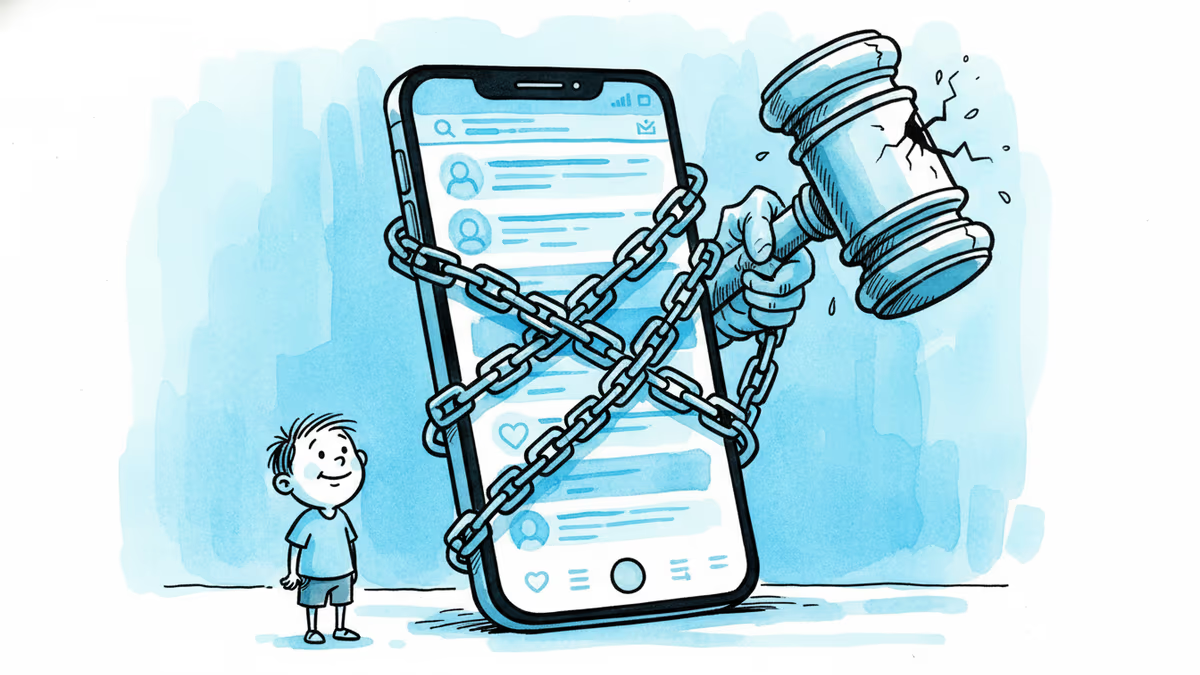
New Mexico already won $375 million from Meta. Now it wants something harder to give: a court order forcing Facebook, Instagram, and WhatsApp to redesign themselves. A three-week trial starts Monday.
The FTC fined Cox Media and two ad firms $930,000 — not for actually eavesdropping on users, but for falsely claiming they could. The case raises uncomfortable questions about surveillance capitalism.
A Utah woman was sentenced to life in prison partly because of her Google searches and deleted texts. The Kouri Richins case reveals how digital footprints have become the courtroom's most reliable witness.
After 15 years of fragmented mobile messaging, Apple and Google are rolling out end-to-end encrypted RCS messaging between iPhones and Android devices. Here's what changed, why it took so long, and what it means for your privacy.
New Mexico already won $375 million from Meta. Now it wants something harder to give: a court order forcing Facebook, Instagram, and WhatsApp to redesign themselves. A three-week trial starts Monday.
Thoughts
Share your thoughts on this article
Sign in to join the conversation