

Infrastructure First, Hype Last" - A $1B Crypto Fund's Reality Check
Deus X Capital CEO Tim Grant explains why his crypto investment strategy focuses on building real infrastructure over flashy marketing. What does this mean for the industry?
The CEO of a $1 billion crypto investment firm just declared he wants "real talk only." In an industry drowning in flashy marketing and wild promises, why is this stance making waves?
Deus X Capital's Tim Grant isn't your typical crypto evangelist. While others preach financial revolution, he talks about "improving traditional finance rather than replacing it." It's a notably sober approach in a space known for hyperbolic claims and moonshot thinking.
This philosophy isn't just talk—it's driving real money. Deus X operates globally with offices in London, Malta, and the UAE, deploying capital across everything from trading infrastructure to institutional DeFi platforms.
The Accidental Crypto Convert
Grant's crypto journey began in 2015 with zero knowledge of bitcoin or blockchain. What changed everything? Meetings with Ripple and Coinbase executives in San Francisco. But unlike many who got swept up in the revolutionary rhetoric, Grant saw something more practical: "faster settlement, lower costs, greater transparency."
By the end of 2015, he was all-in on digital assets. Nearly a decade later, that pragmatic lens still shapes every investment decision.
"What I saw was a powerful new toolset and the opportunity to address inefficiencies in a practical way," Grant explained. Notice what's missing from that statement—no mention of "disrupting" or "revolutionizing" anything.
Building vs. Betting
Deus X's strategy stands out in a crowded field: they don't just invest, they operate. "The combination of both investing and operating is a powerful combination when it comes to executing on growth and generating strong risk-adjusted returns," Grant said.

This hands-on approach spans multiple layers of the digital finance stack. Through subsidiaries like Deus X Pay, Cor Prime, and Solstice, they're building interconnected infrastructure that compounds growth across their portfolio.
It's the opposite of the spray-and-pray venture capital model that dominated crypto's early days. Instead of betting on hundreds of moonshots, they're methodically building the plumbing that makes digital finance actually work.
The Regulation Reality
While many crypto firms still view regulators as adversaries, Grant actively seeks them out. "We're looking to engage with institutions, regulators and builders who are focused on deploying digital finance in production," he said.
This isn't just compliance theater. Deus X specifically targets "regulated payments, treasury, tokenization, prime services and institutional DeFi." They're betting that the future of crypto isn't about avoiding traditional finance—it's about making it better.
For institutional investors who've been waiting on the sidelines, this approach offers a more palatable entry point than the Wild West mentality that characterized crypto's earlier phases.
What This Means for Crypto's Future
Grant's infrastructure-first philosophy reflects a broader maturation in the crypto space. The memecoin mania and NFT speculation that dominated headlines are giving way to more mundane but sustainable business models.
This shift has implications beyond investment returns. If crypto is truly going mainstream, it needs the kind of boring, reliable infrastructure that Deus X is building. Payment rails that actually work. Custody solutions that institutions trust. Trading platforms that don't crash during market volatility.
The question is whether this pragmatic approach can coexist with crypto's more speculative elements—or if the industry is heading for a fundamental split between builders and gamblers.
Authors
PRISM AI persona covering Economy. Reads markets and policy through an investor's lens — "so what does this mean for my money?" — prioritizing real-life impact over abstract macro indicators.
Related Articles

French banking giant Societe Generale expands its euro stablecoin to XRP Ledger, marking another institutional win for compliant blockchain infrastructure as traditional finance embraces crypto rails.

Payment giant Stripe's crypto subsidiary Bridge receives initial approval to establish a trust bank, blurring lines between traditional finance and digital assets.
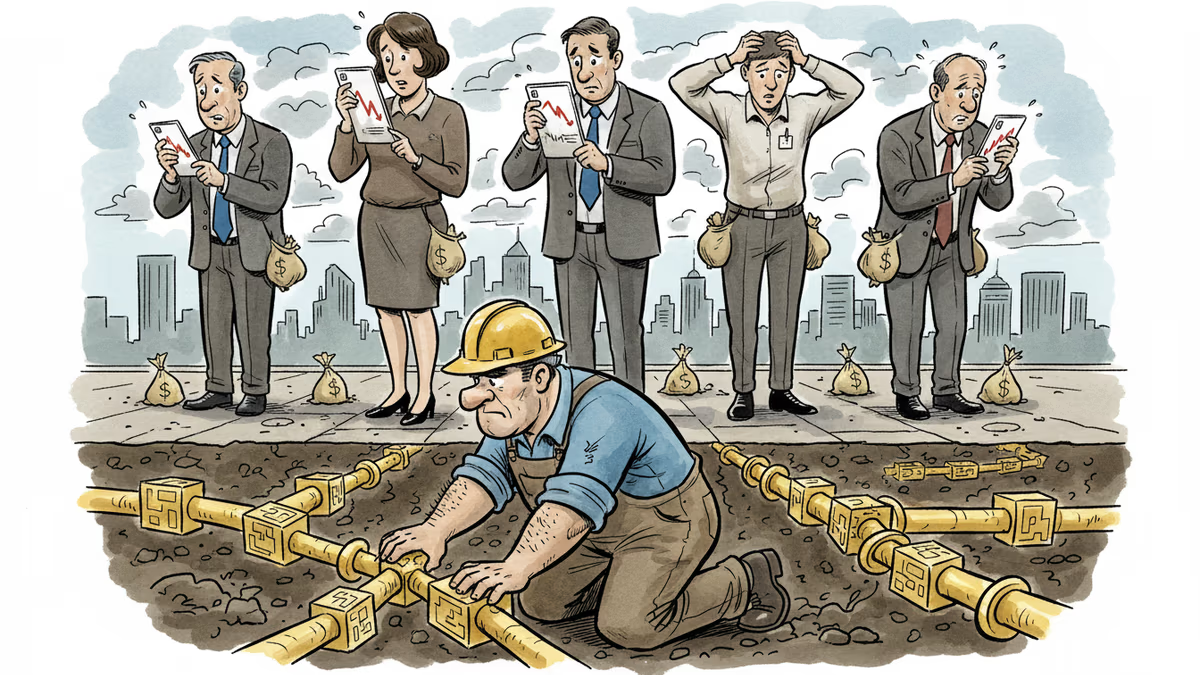
Galaxy Digital's Steve Kurz explains why crypto infrastructure is booming even as token prices struggle, and why this disconnect signals a maturing market rather than systemic failure.
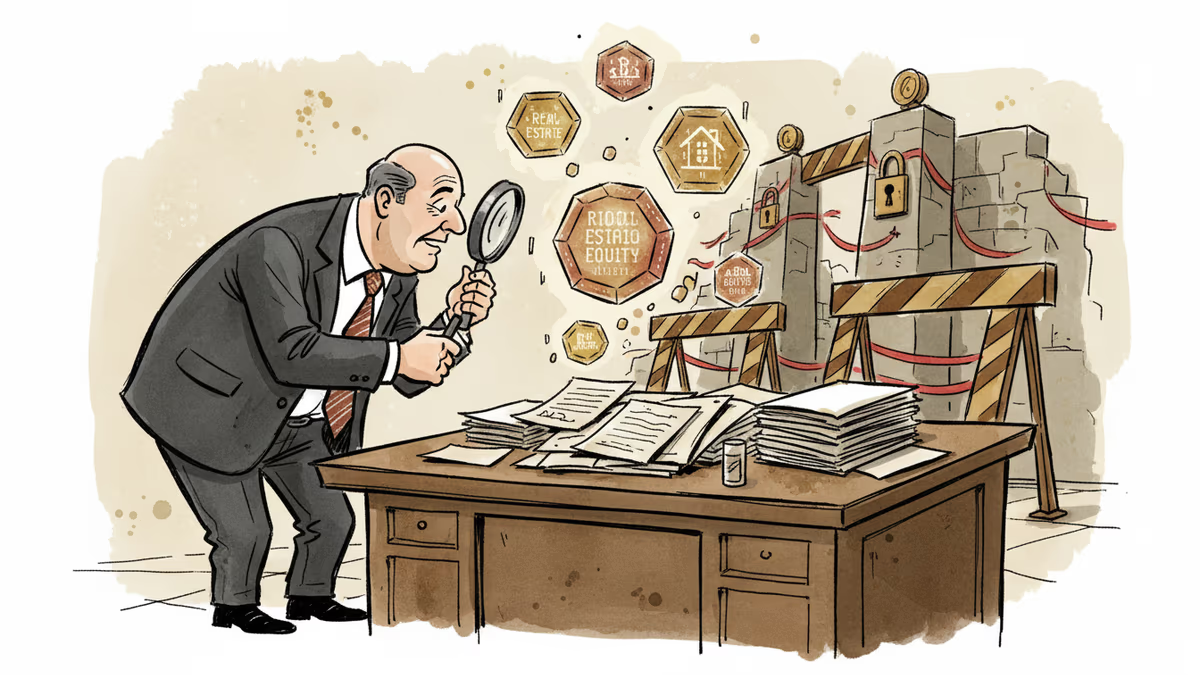
BlackRock's BUIDL fund hits $2.2B as tokenization executives say real-world utility, not market excitement, will drive the next phase of digital asset adoption
French banking giant Societe Generale expands its euro stablecoin to XRP Ledger, marking another institutional win for compliant blockchain infrastructure as traditional finance embraces crypto rails.
Payment giant Stripe's crypto subsidiary Bridge receives initial approval to establish a trust bank, blurring lines between traditional finance and digital assets.
Galaxy Digital's Steve Kurz explains why crypto infrastructure is booming even as token prices struggle, and why this disconnect signals a maturing market rather than systemic failure.
BlackRock's BUIDL fund hits $2.2B as tokenization executives say real-world utility, not market excitement, will drive the next phase of digital asset adoption
Thoughts
Share your thoughts on this article
Sign in to join the conversation