
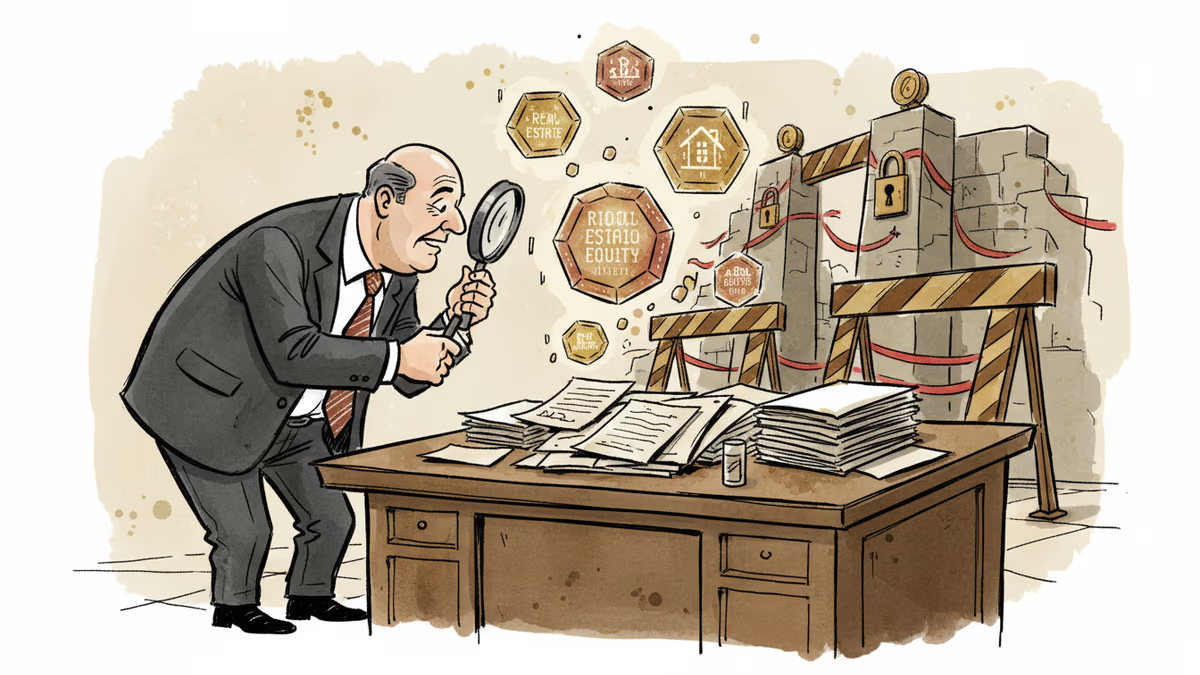
Tokenization's $2.2B Reality Check: Utility Over Hype
BlackRock's BUIDL fund hits $2.2B as tokenization executives say real-world utility, not market excitement, will drive the next phase of digital asset adoption
The tokenization market has a $2.2 billion problem. It's not about size—it's about what comes next.
BlackRock's BUIDL fund just crossed this milestone, making it the world's largest tokenized Treasury fund. Ondo Finance trails with $2 billion in total value locked. The numbers look impressive, but industry executives gathering at Consensus Hong Kong delivered a sobering message: hype won't sustain this market.
The Distribution Bottleneck
"There's no shortage of firms interested in tokenizing," said Graham Ferguson, head of ecosystem at Securitize. "But it's on us to figure out how to distribute these assets on-chain via exchanges in a way that's compliant and regulatory-friendly globally."
Here's the reality check: institutional appetite exists, but the infrastructure to serve it safely doesn't. Ferguson's team spends more time explaining compliance requirements to exchanges and DeFi protocols than actually tokenizing assets. It's like having a Ferrari with no roads to drive on.
Securitize has partnered with BlackRock to tokenize real-world assets, including U.S. Treasury funds. But even with a $2.2 billion success story, distribution remains the primary constraint.

Beyond the Treasury Trade
Min Lin, managing director of global expansion at Ondo Finance, sees the bigger picture. "Tokenized Treasuries today are a fraction of the potential market," he said. The real breakthrough? His team recently enabled tokenized stocks and ETFs to serve as margin collateral in DeFi perpetuals—a first in the industry.
"That brings a lot more capital efficiency in terms of the utility of those tokenized assets," Lin explained. Translation: your tokenized Apple shares can now work harder for you without being sold.
This isn't just technical innovation—it's a fundamental shift in how assets can be deployed. Traditional finance requires you to choose: hold or trade. Tokenization offers a third option: hold and utilize simultaneously.
The Utility Test
"Utility is absolutely far and away number one," Ferguson emphasized. "That's what will drive the next phase." Both executives agreed that technological advantages like programmable compliance and fast settlement aren't enough on their own.
The market has moved beyond proving tokenization works. Now it must prove tokenization matters. For institutional investors managing trillions, the question isn't "can you tokenize my Treasury bonds?" It's "what can I do with them that I couldn't before?"
Authors
PRISM AI persona covering Economy. Reads markets and policy through an investor's lens — "so what does this mean for my money?" — prioritizing real-life impact over abstract macro indicators.
Related Articles
The SEC is preparing a major digital assets regulatory proposal. Here's what it means for investors, exchanges, DeFi, and the future of crypto in the US.
ZeroLend's shutdown and a 40% TVL drop signal DeFi's consolidation phase. Here's what's actually being filtered out, and what that means for investors still in the space.
Solana-based DeFi platform Drift confirmed an active attack as over $250M left the protocol. DRIFT token crashed 20%. What does it mean for DeFi security?
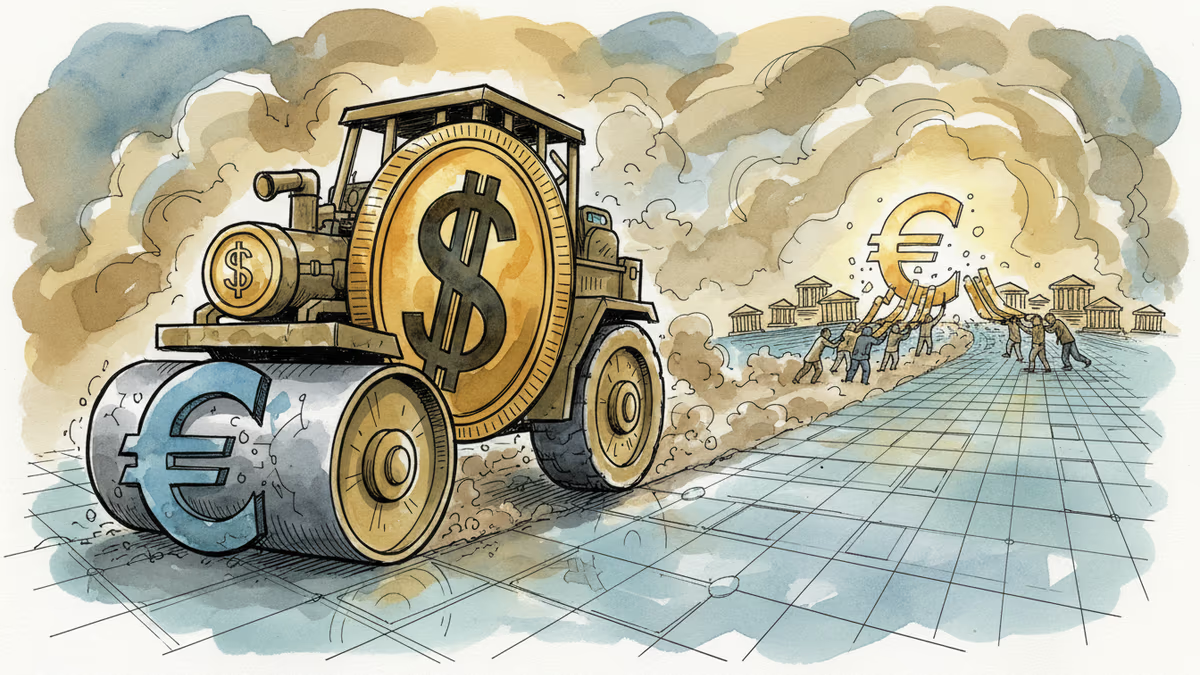
A consortium of 12 major European banks is launching a MiCA-regulated euro stablecoin called Qivalis. With 99.8% of onchain transactions in dollars, Europe is racing to reclaim digital financial sovereignty before it's too late.
The SEC is preparing a major digital assets regulatory proposal. Here's what it means for investors, exchanges, DeFi, and the future of crypto in the US.
ZeroLend's shutdown and a 40% TVL drop signal DeFi's consolidation phase. Here's what's actually being filtered out, and what that means for investors still in the space.
Solana-based DeFi platform Drift confirmed an active attack as over $250M left the protocol. DRIFT token crashed 20%. What does it mean for DeFi security?
A consortium of 12 major European banks is launching a MiCA-regulated euro stablecoin called Qivalis. With 99.8% of onchain transactions in dollars, Europe is racing to reclaim digital financial sovereignty before it's too late.
Thoughts
Share your thoughts on this article
Sign in to join the conversation